2026 · Harvard University
Wearable Systems · Product Design
Physical Intelligence · Speculative Design
Role: Design, Speculative Research, Material Research, E-Textile Fabrication Sensing and Electrical Engineering
A physical intelligence wearable and a second skin system for female athletes and operators navigating through extreme environments.
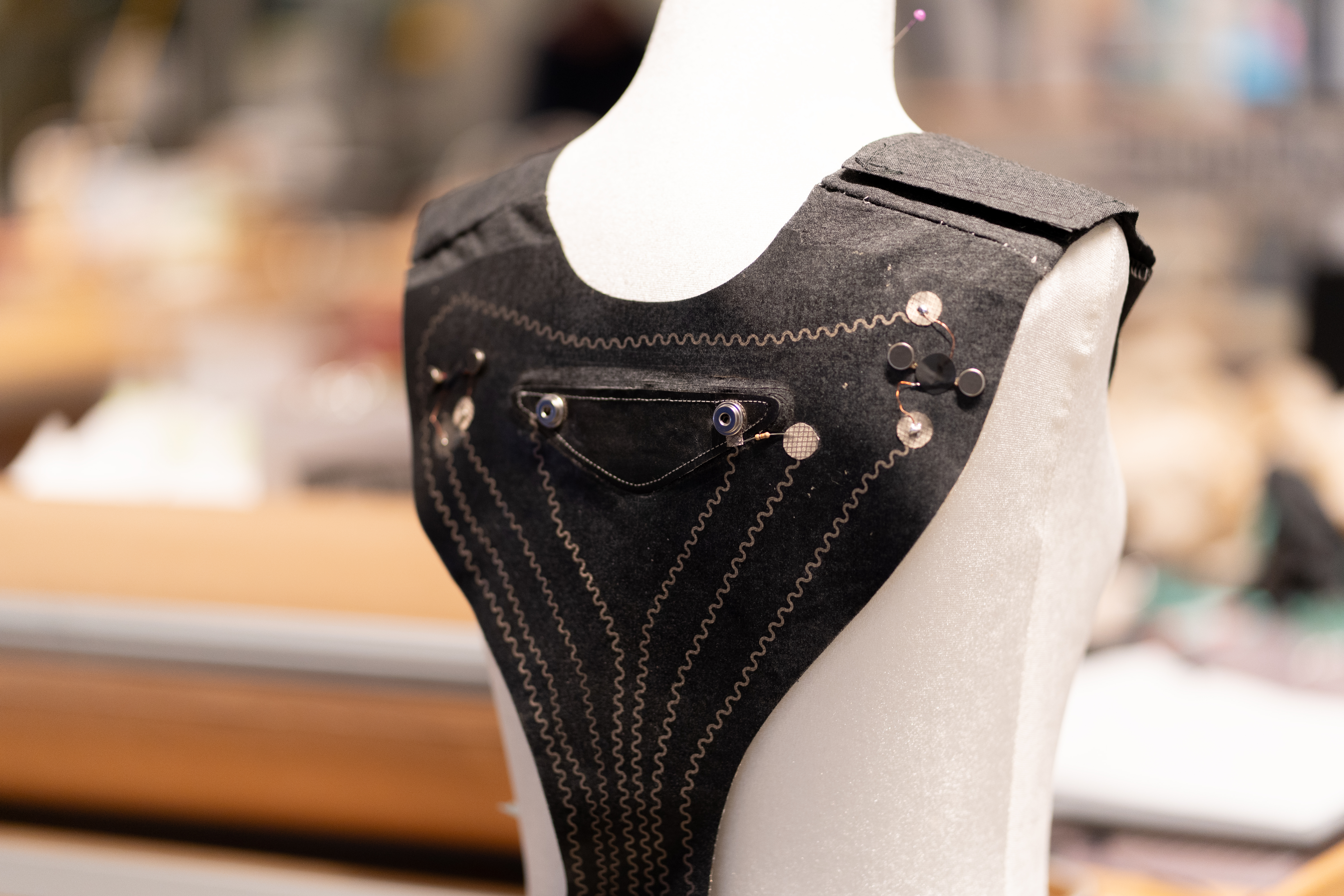
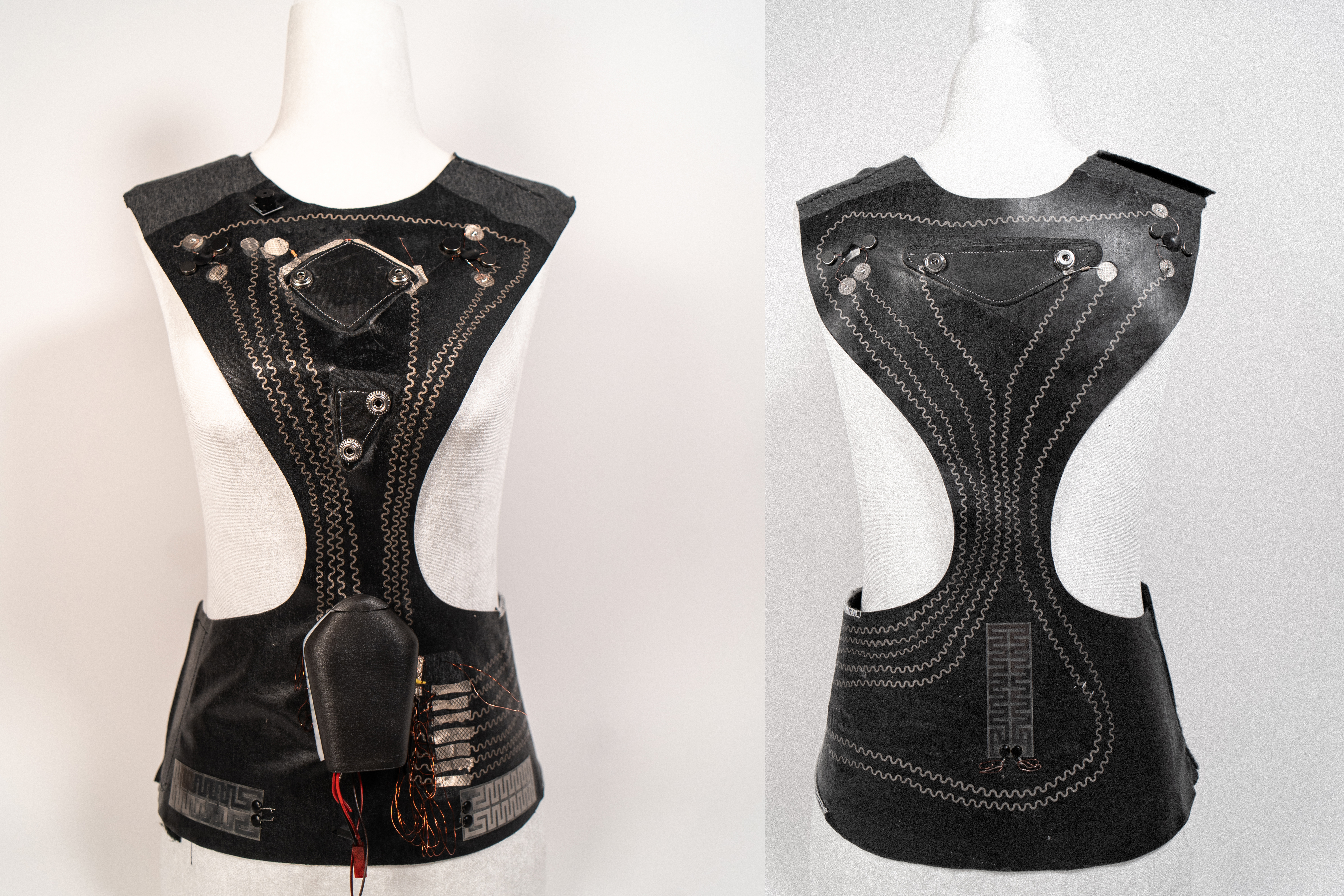
SIXTH is a full-stack biosensing and actuation system designed for female athletes operating in high-performance and extreme environments. The project addresses a critical gap: existing wearable technology is predominantly designed around male physiology, leaving female athletes without reliable real-time intelligence about their own bodies during exertion.
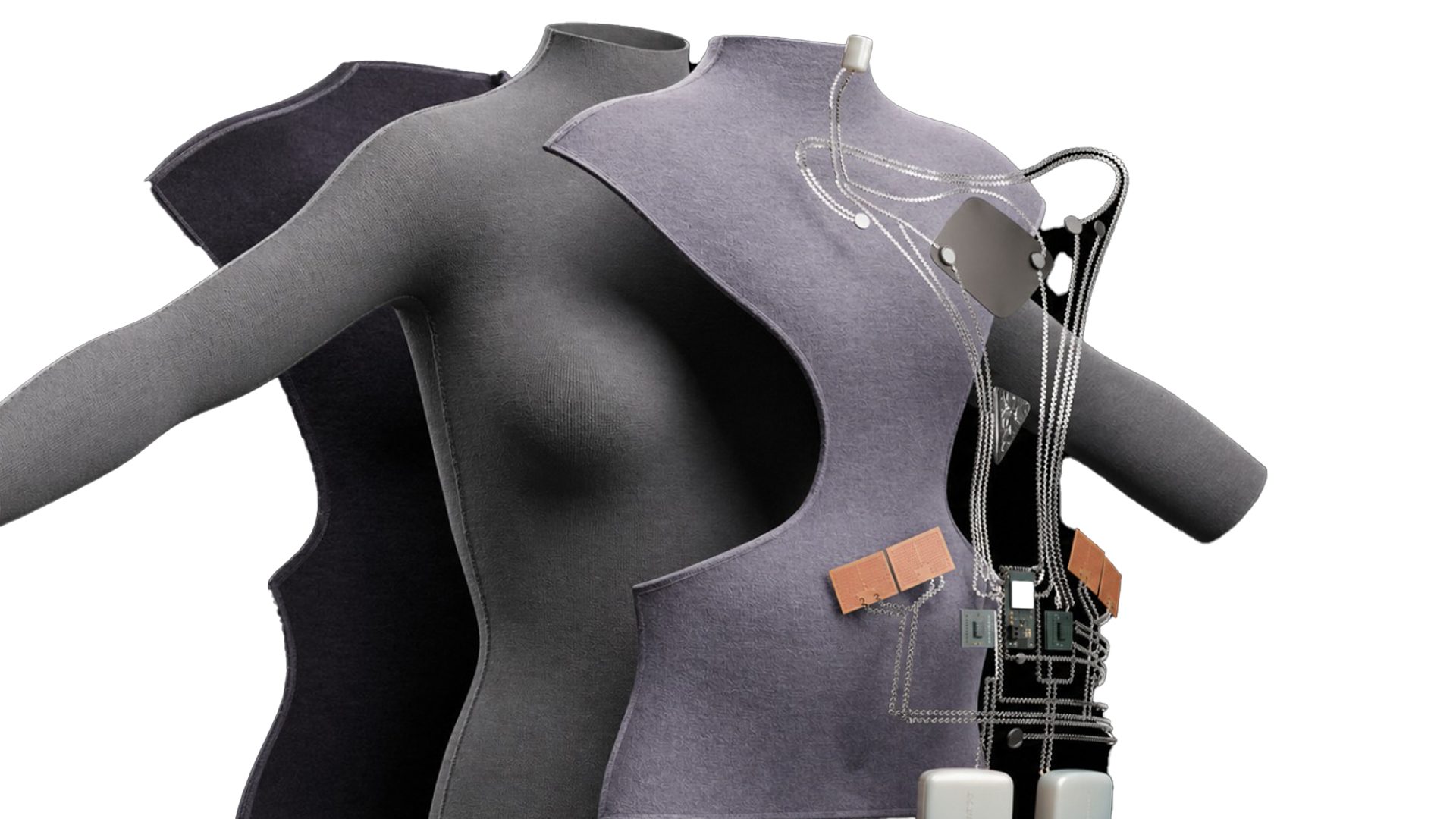
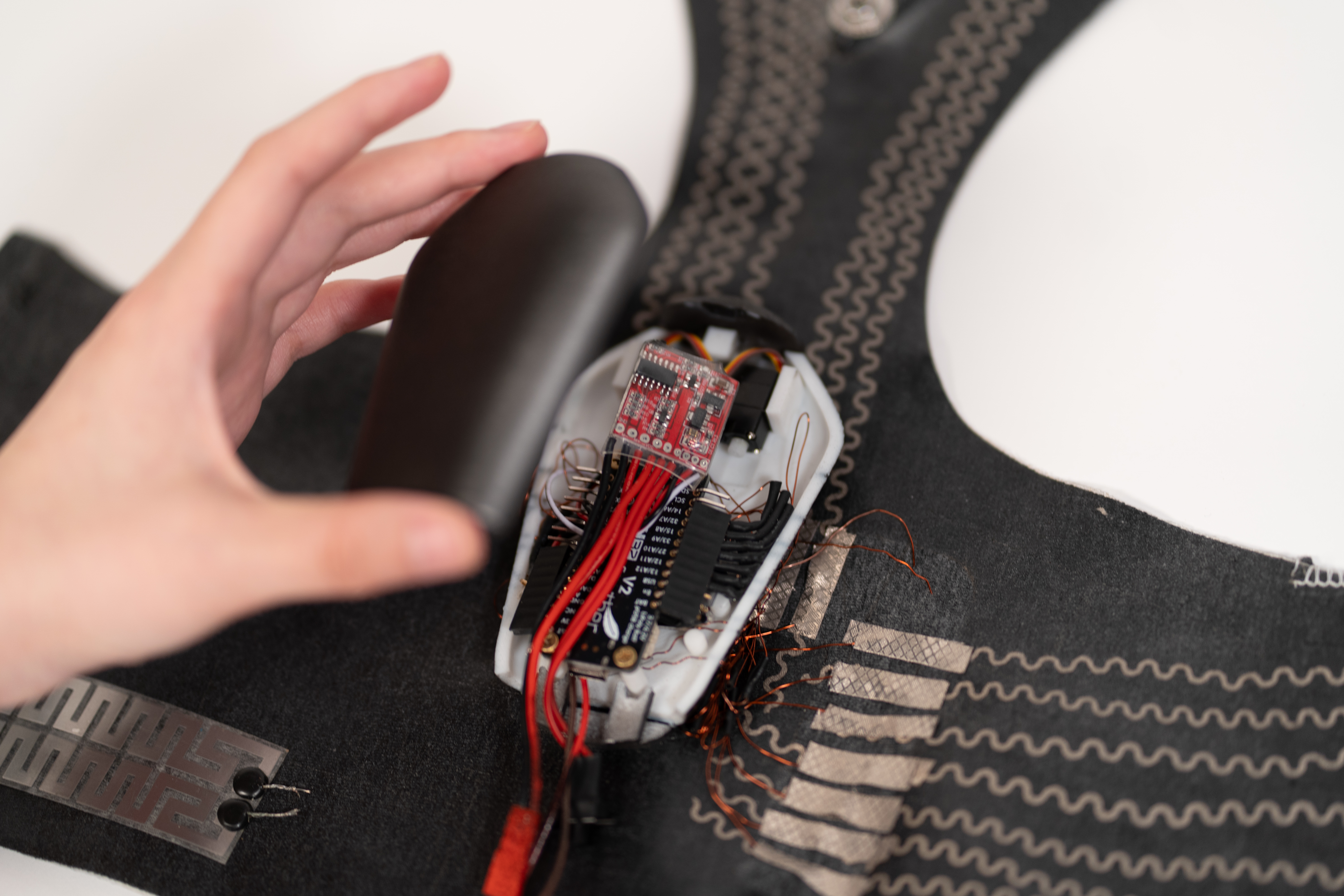
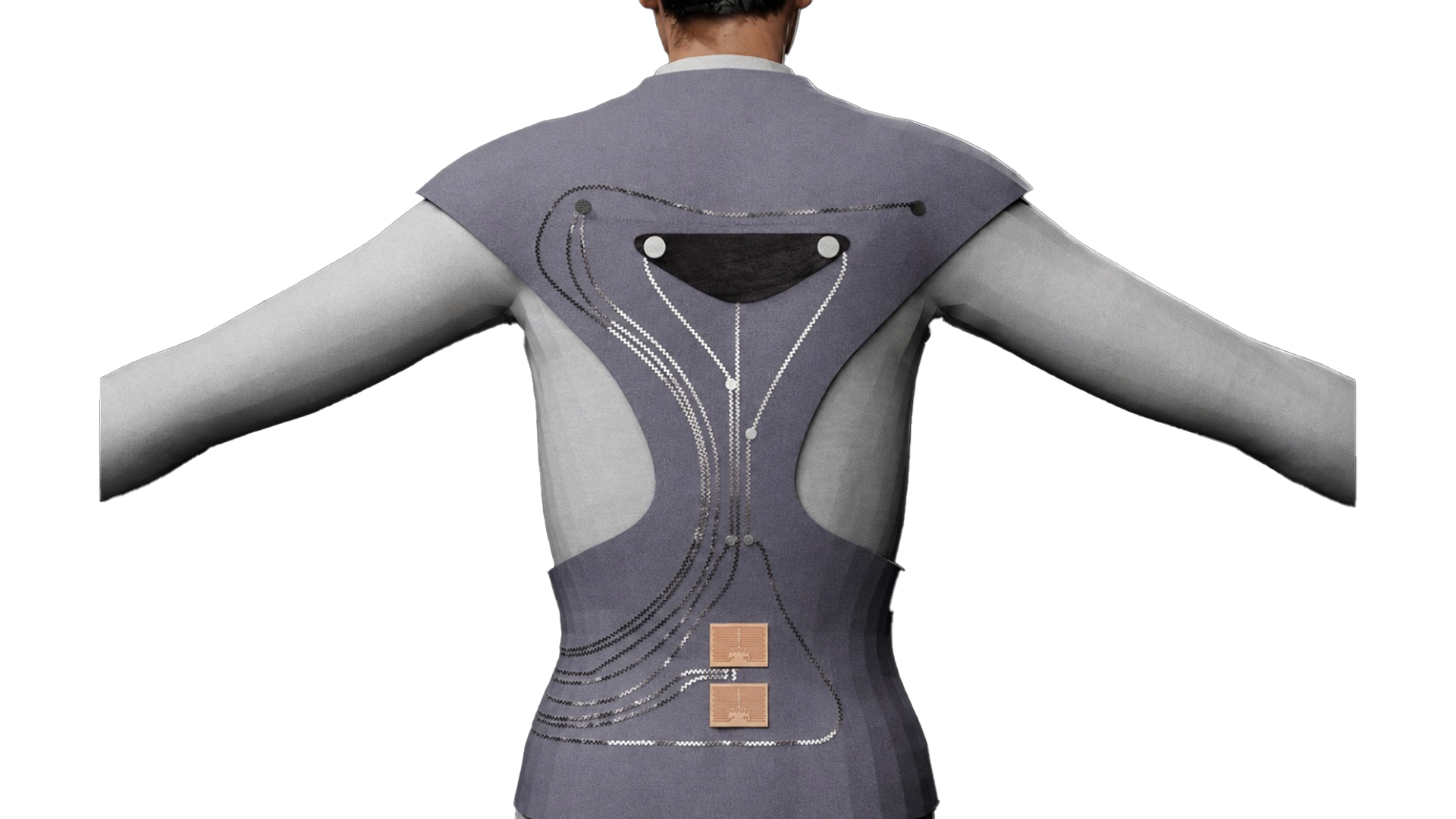
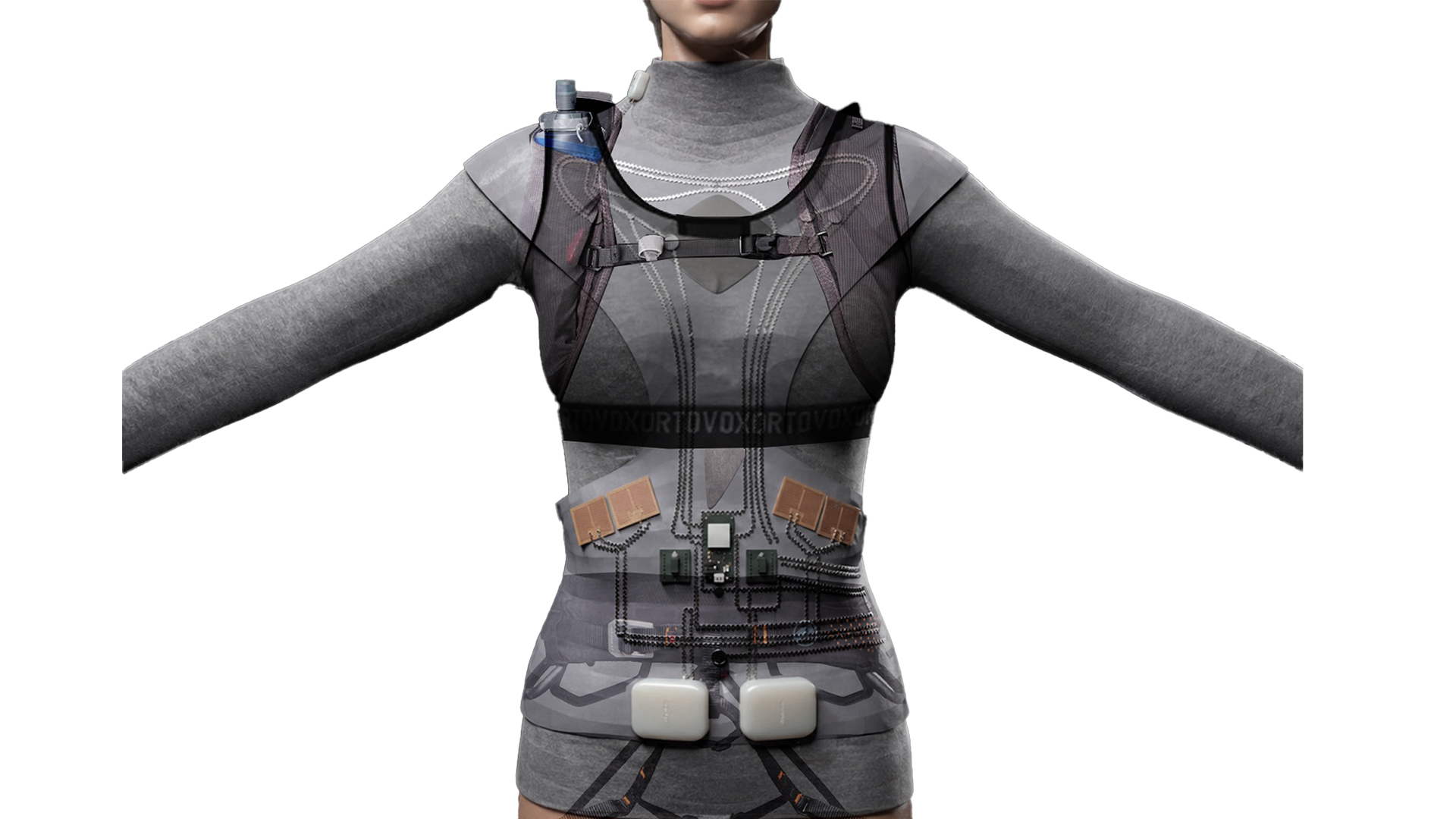
The system integrates SpO₂, HRV, core temperature, and sweat sodium sensing into a seamless electronic-textile assembly, and closes the loop through an actuation layer of haptic actuators, thermal controls, and spatial audio communicating physiological state directly through the body, without requiring visual attention.
Hardware
ESP32 V2MAX30102 Pulse Detection SensorLM393 Soil Moisture SensorNTC Thermistors ResistorsPiezoelectric Buzzer
Software
Rhino 7BlenderPython
Fabrication
Laser CuttingDigital EmbroideryMachine-SewingHeat PressingPU CoatingHigh Temp Baking
Materials
Conductive High Temp FabricNylon Spandex FabricCottonCarbon Black InkUltimate Polyurethane
Context
Female Athletic PerformanceExtreme Environments
System
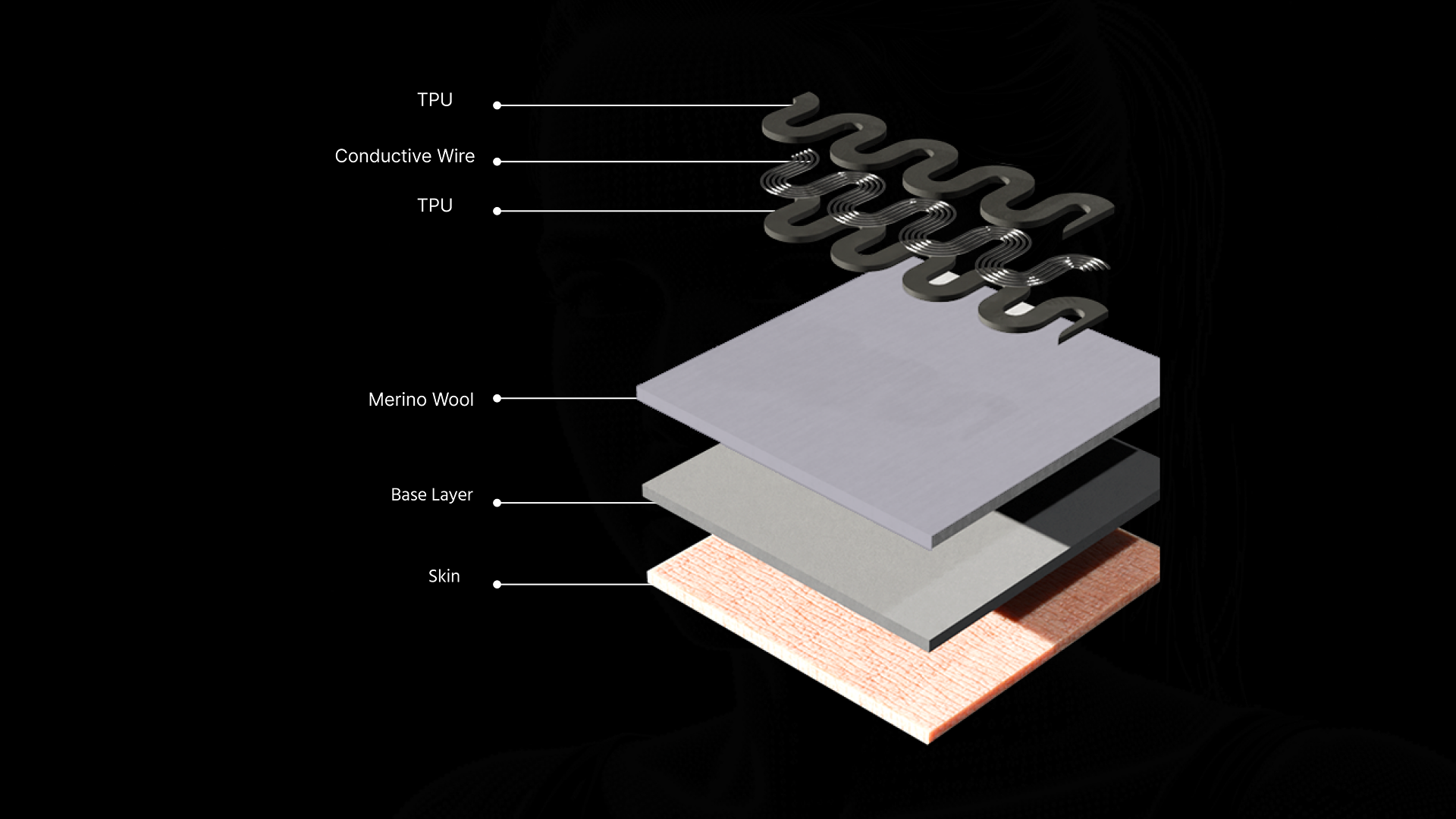
Sensing → Processing → Actuation pipeline
Making
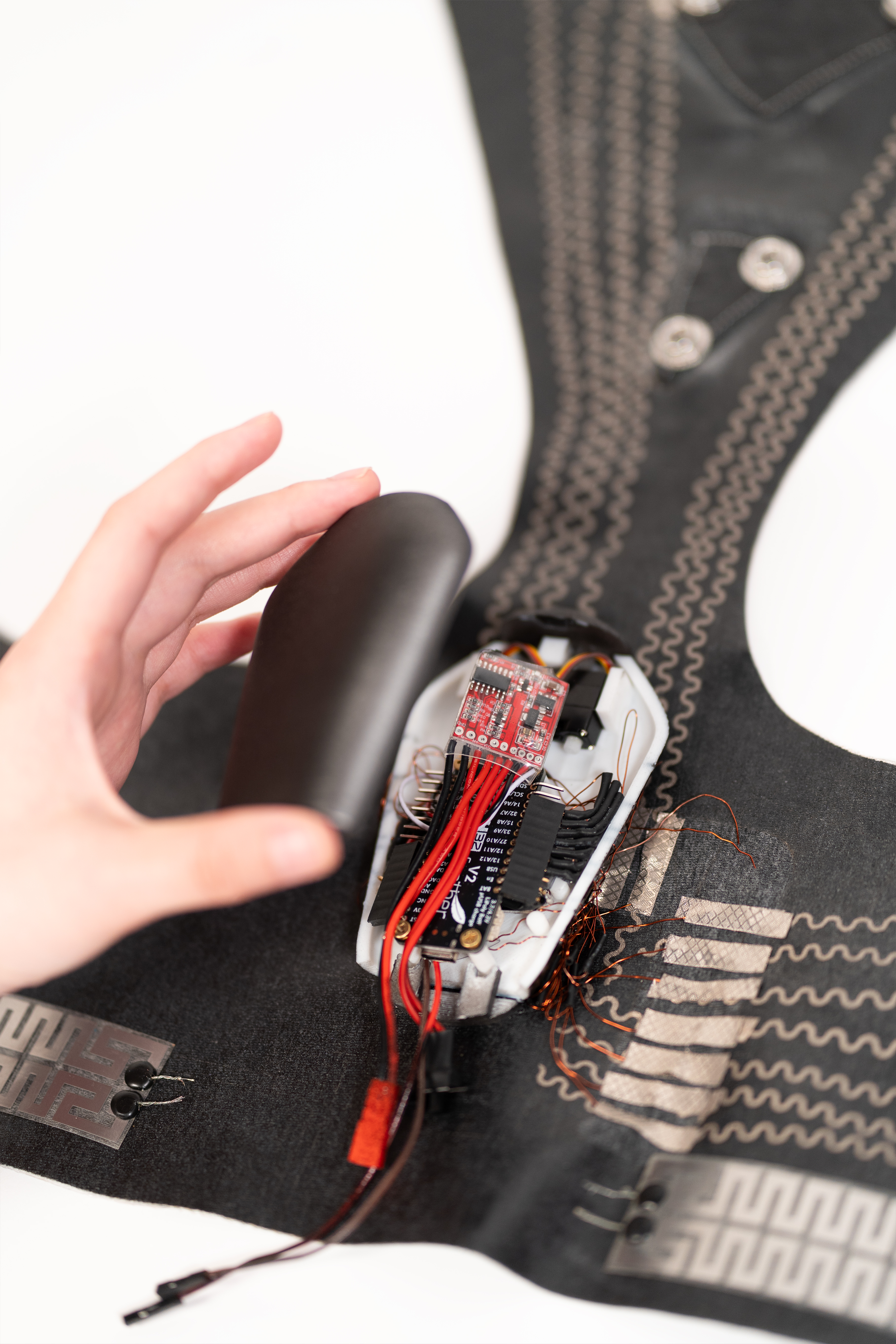
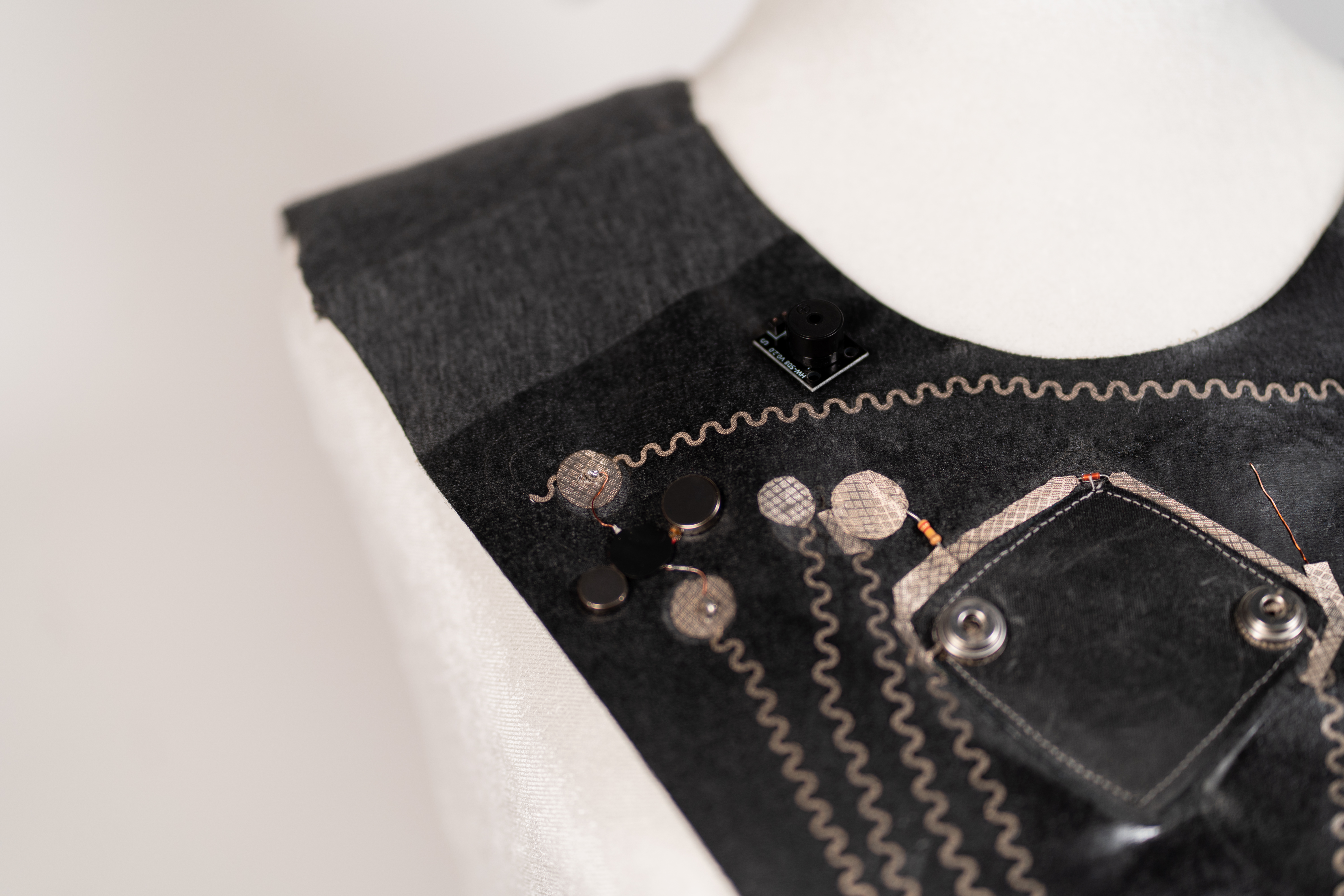
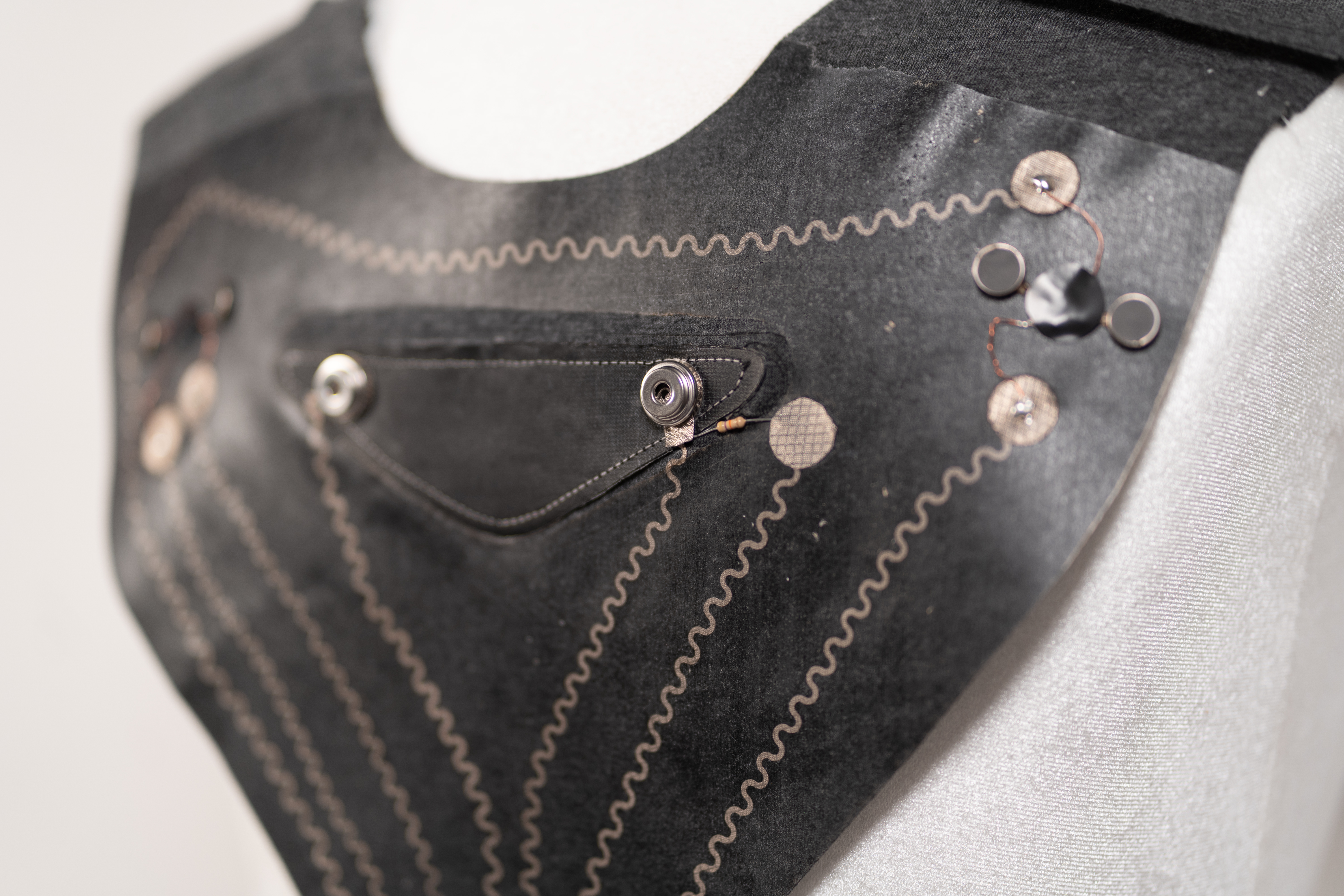
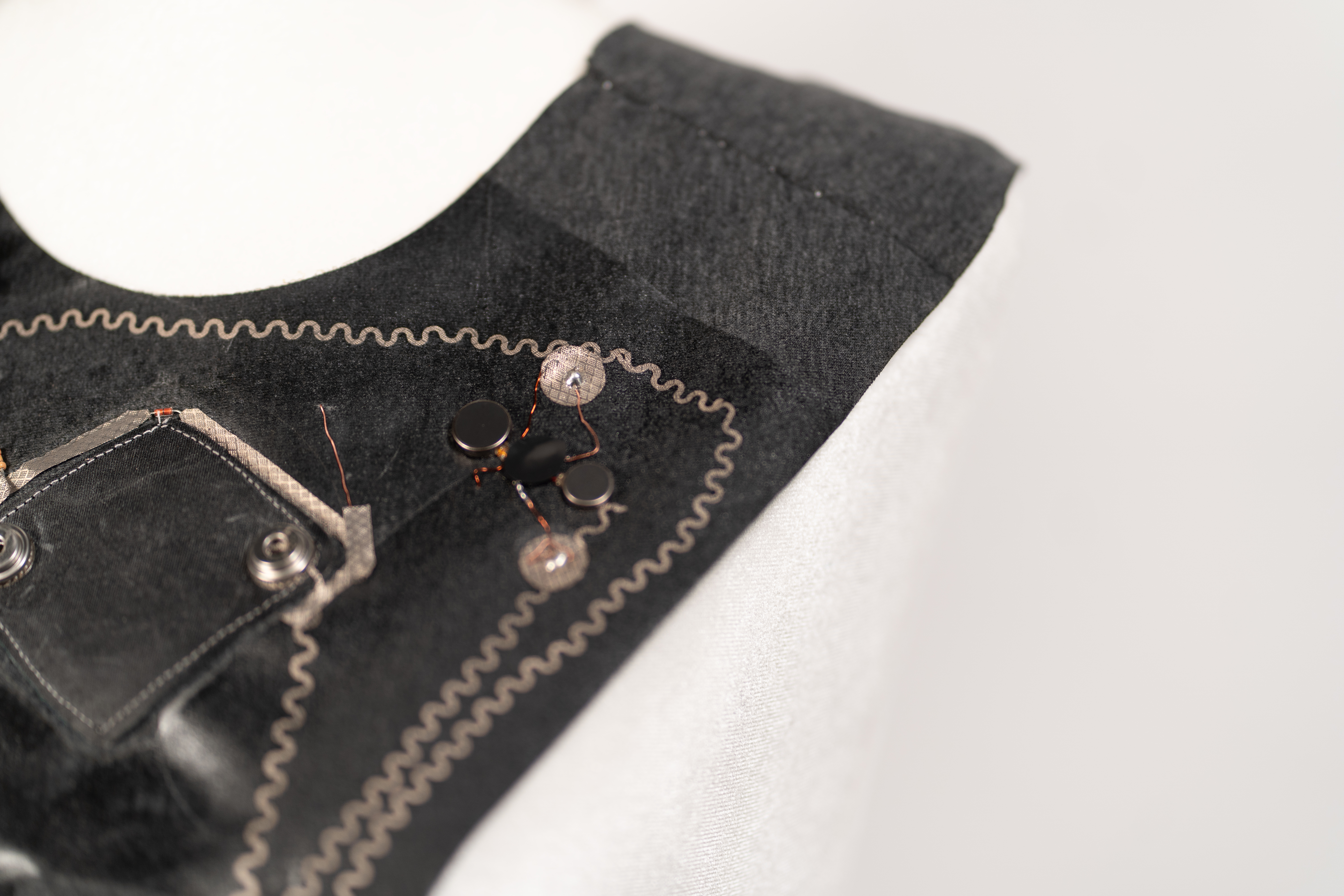
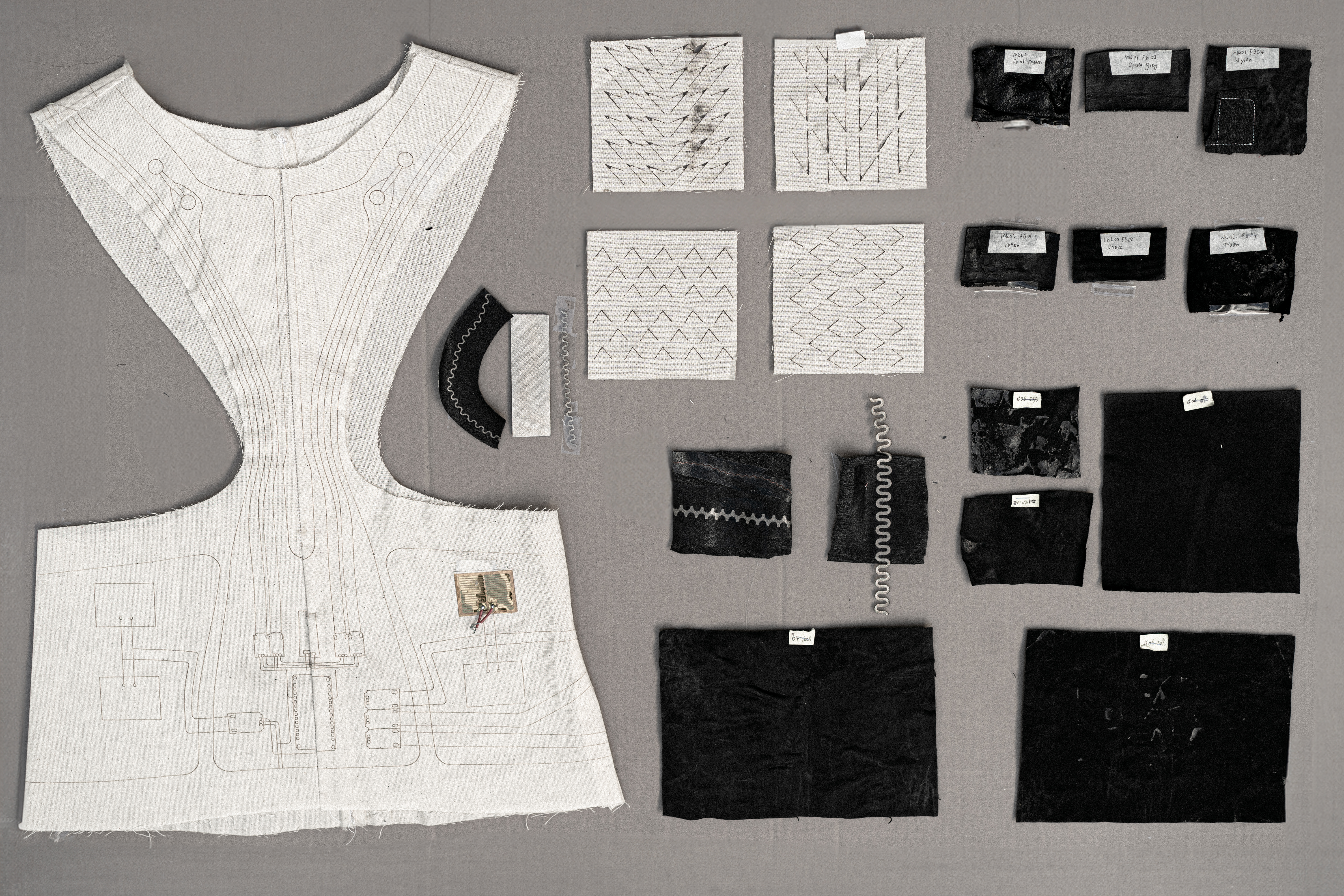
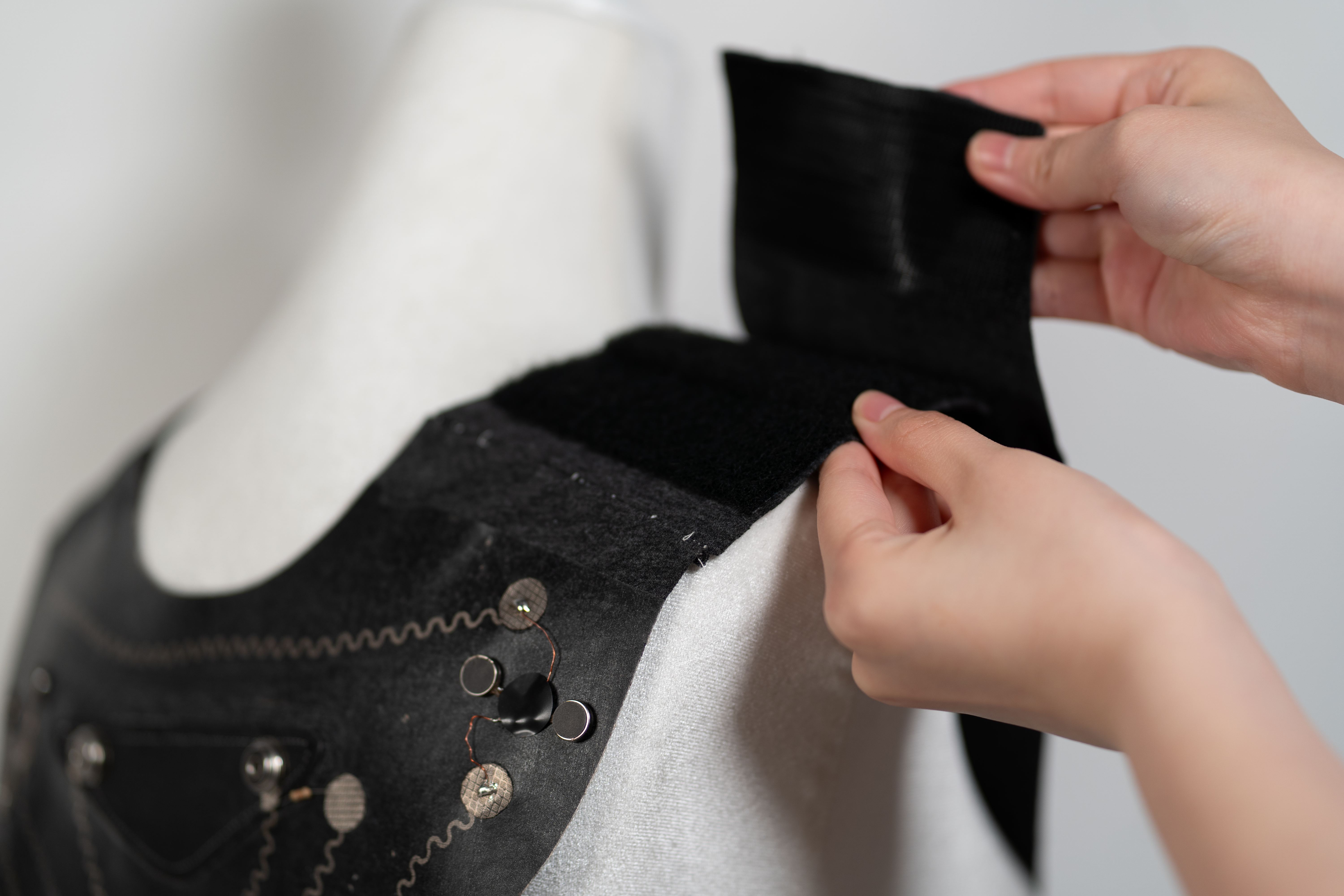
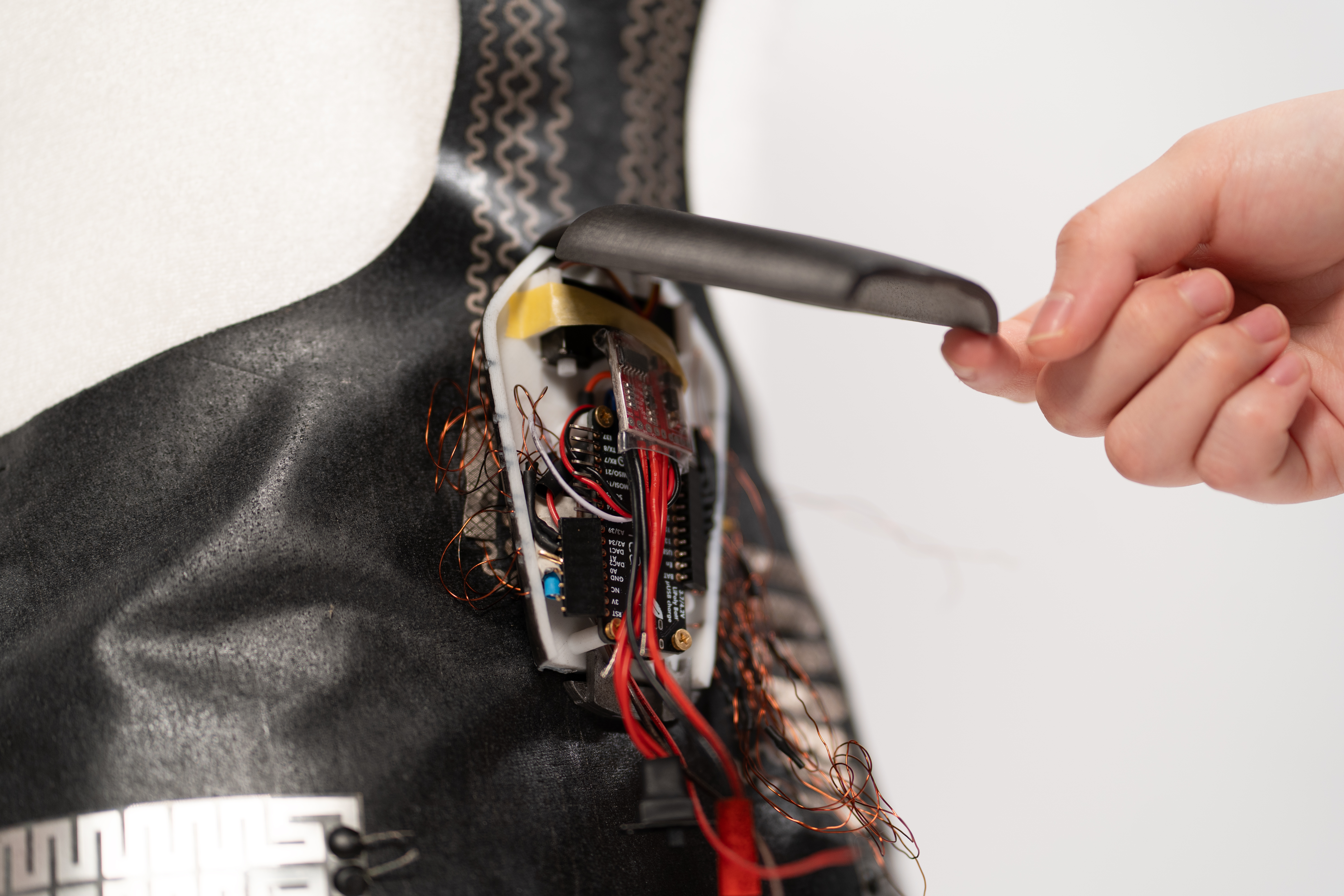
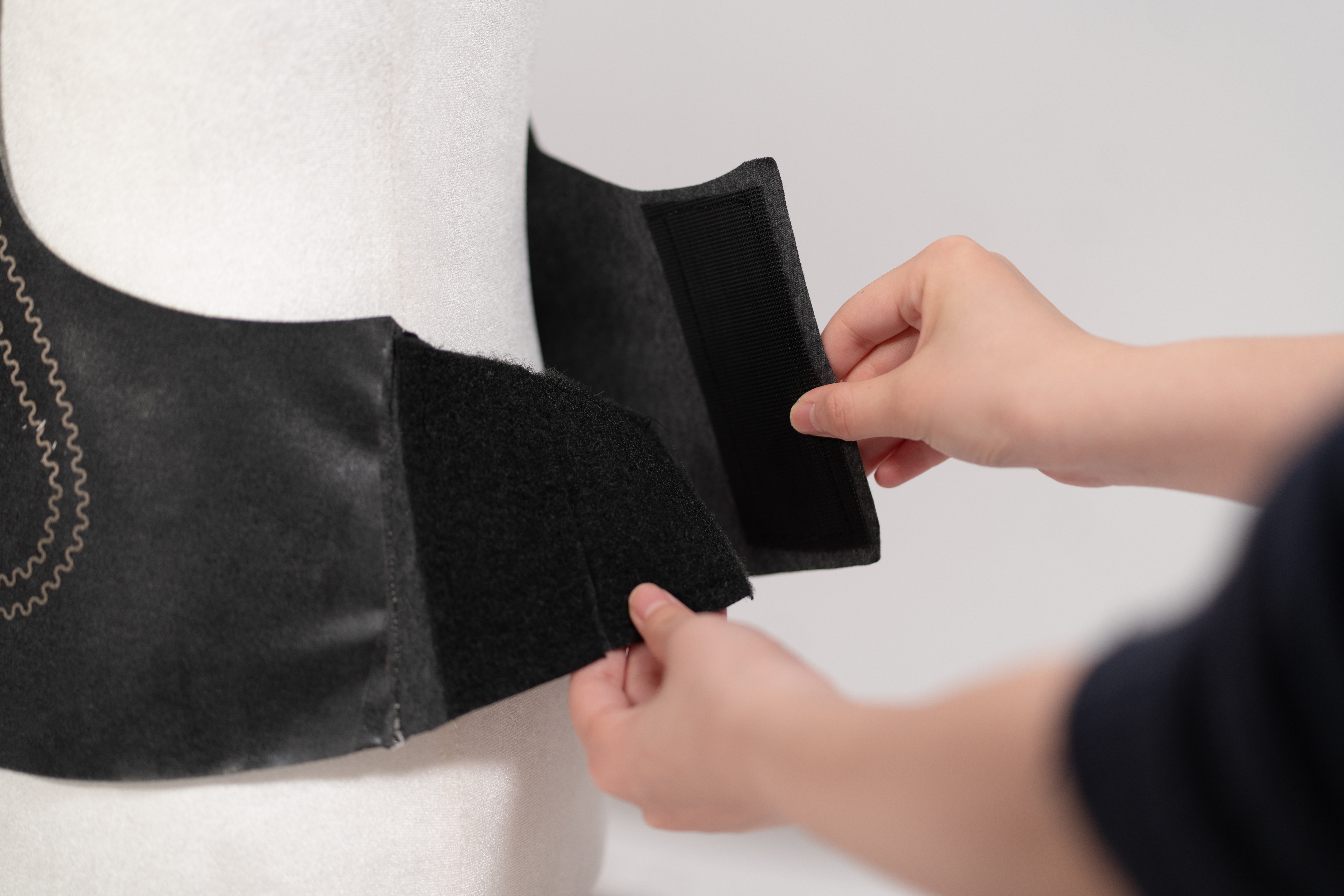
Process Videos
01Laser cutting — first pass, textile pattern
02Laser cutting — second pass, electrode geometry
03Laser cutting — final trim, sensor patch
04Machine sewing — bonding textile layers
05Soldering — electronics onto textile substrate
06Rendered simulation — full product overview
Speculative Design
Intelligent wearable system for assisted decision making, with embodied sensing, physical experience and biosignals.
Contemporary artificial intelligence reasons without a body. It processes language, pattern, and symbol, but remains severed from the physiological substrate that grounds human judgment in the world. SIXTH begins from a different premise: that genuine intelligence is not computational alone, but embodied, shaped by sensation, accumulated through physical experience, and expressed through instinct before it is ever articulated as thought.
Beyond a product design, the project proposes a foundational design paradigm for physical intelligence: a new class of wearable systems in which the body itself becomes the sensing, processing, and communicative layer. Instead of augmenting cognition through screens or explicit feedback, SIXTH operates as an exoskin, which is a fabric-integrated biosensing architecture that reads physiological state continuously and translates it into perceptible, pre-conscious guidance.
The system senses across multiple modalities: biochemical markers, thermal gradients, cardiovascular rhythms, and environmental conditions, weaving them into a coherent inference of the wearer's condition in real time. This is speculative design in the applied sense, with a working prototype that materialises a hypothesis: that closing the gap between body and machine requires dissolving the interface entirely, embedding intelligence into textile, skin, and breath.
The extreme mountaineering context serves as a methodological probe, a domain of high physiological stakes and compressed decision windows that sharpens the design questions without confining them. The modular architecture is deliberately transferable, opening toward firefighting, deep-sea diving, spaceflight, and any environment where the cost of delayed cognition is irreversible.
Instructors
Justin Cook Instructor at Harvard MDE
Monique Fuchs Instructor at Harvard MDE
Special Thanks
Karen Reuther Instructor at Harvard MDE
Xiaoyu Chen AI Product Designer at Whoop
Sue Sima Designer at Lululemon
Yue Yang Postdoc at MIT Media Lab
Gongyu Wang ML Engineer at Tenstorrent
Mountaineer Interviewees
Anja Blacha Youngest German to complete the Seven Summits
Prakash Gurung IFMGA-certified Mountain Guide · 5× Everest Summiteer
Siyi Wang Amateur Base Camp Summiteer
Michelle Yang Harvard Climbing Club Captain · Biomedical Researcher