2025
AI · Digital Heritage · Sensory Ethnography
Installation Art · LLM · Gender Studies
Data Materialization and Visualization · Linguistic
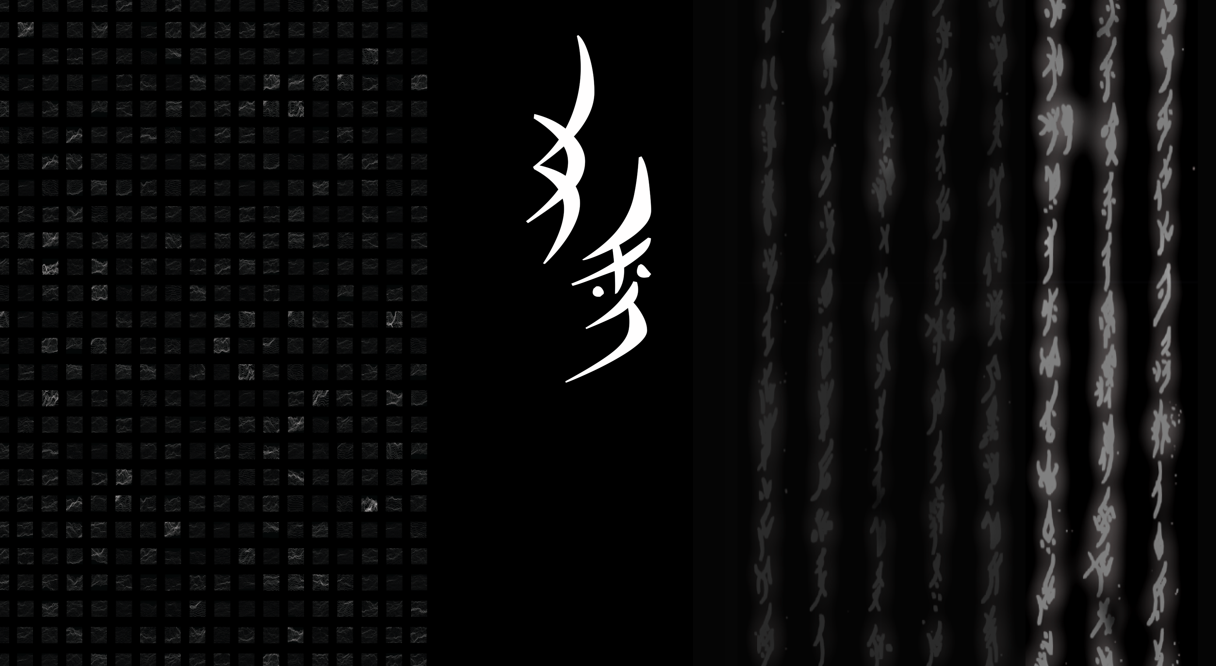
Revitalize endangered women-only language Nüshu with AI reconstructed voice and multi-sensory experience.
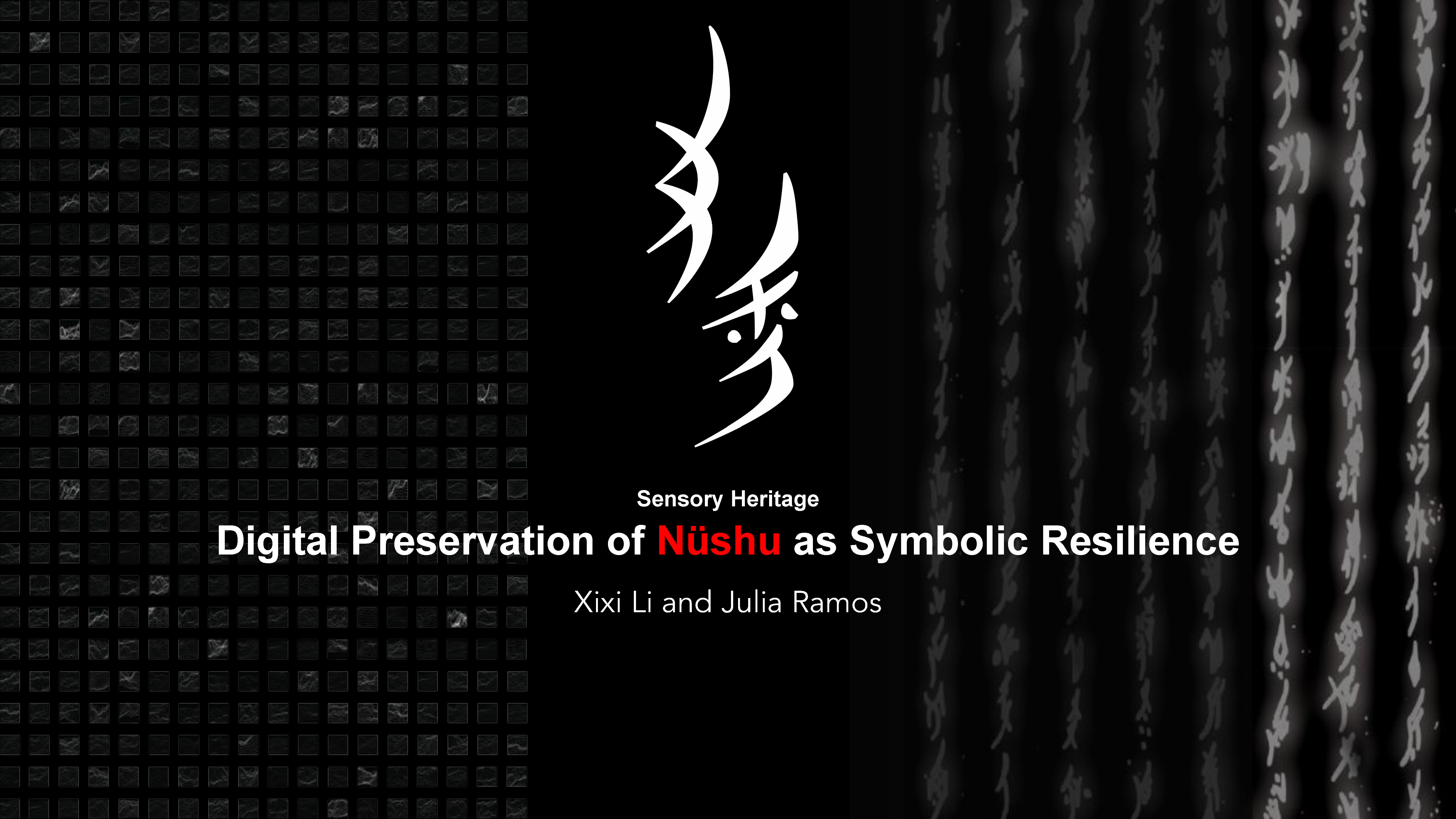
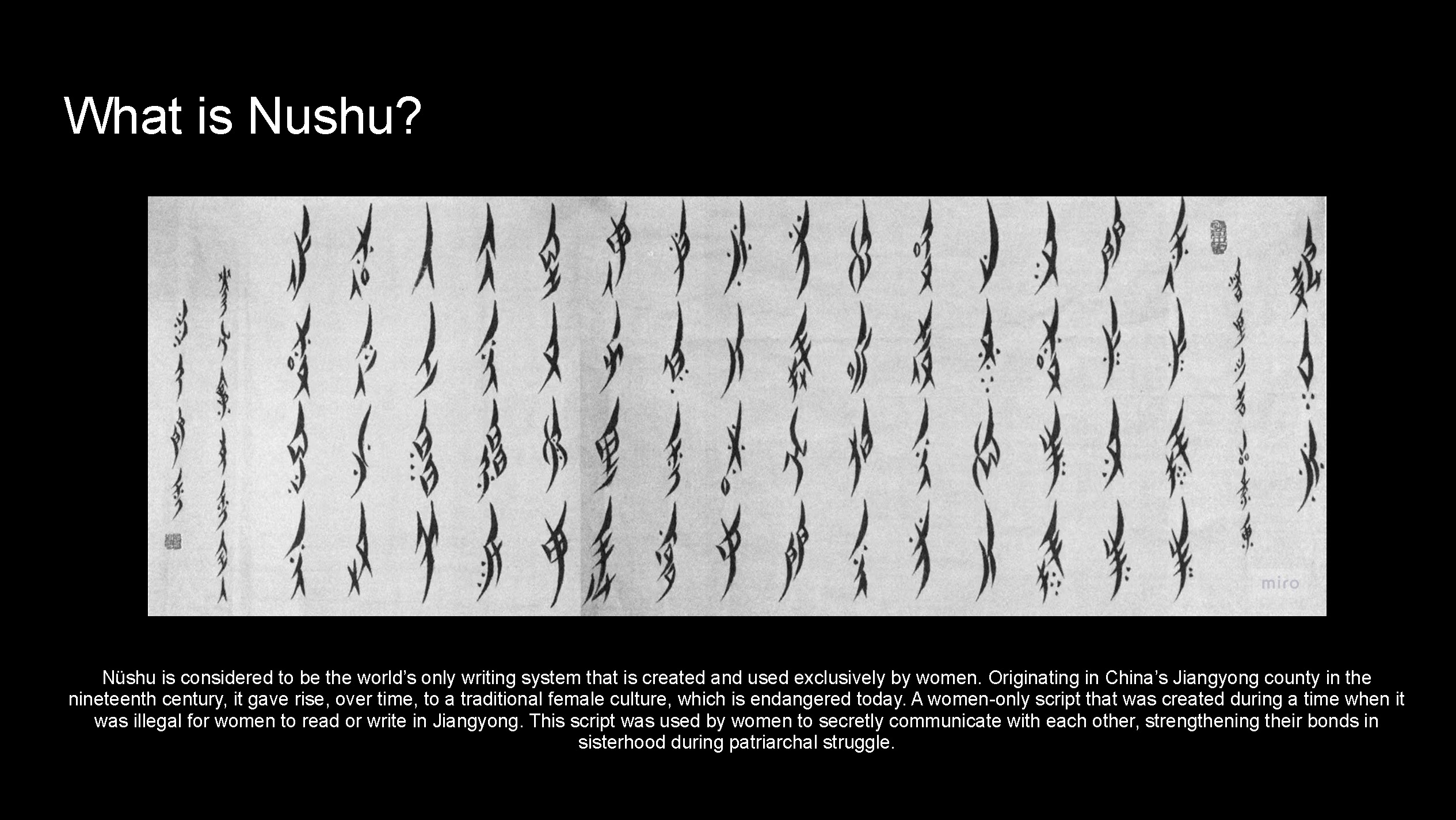
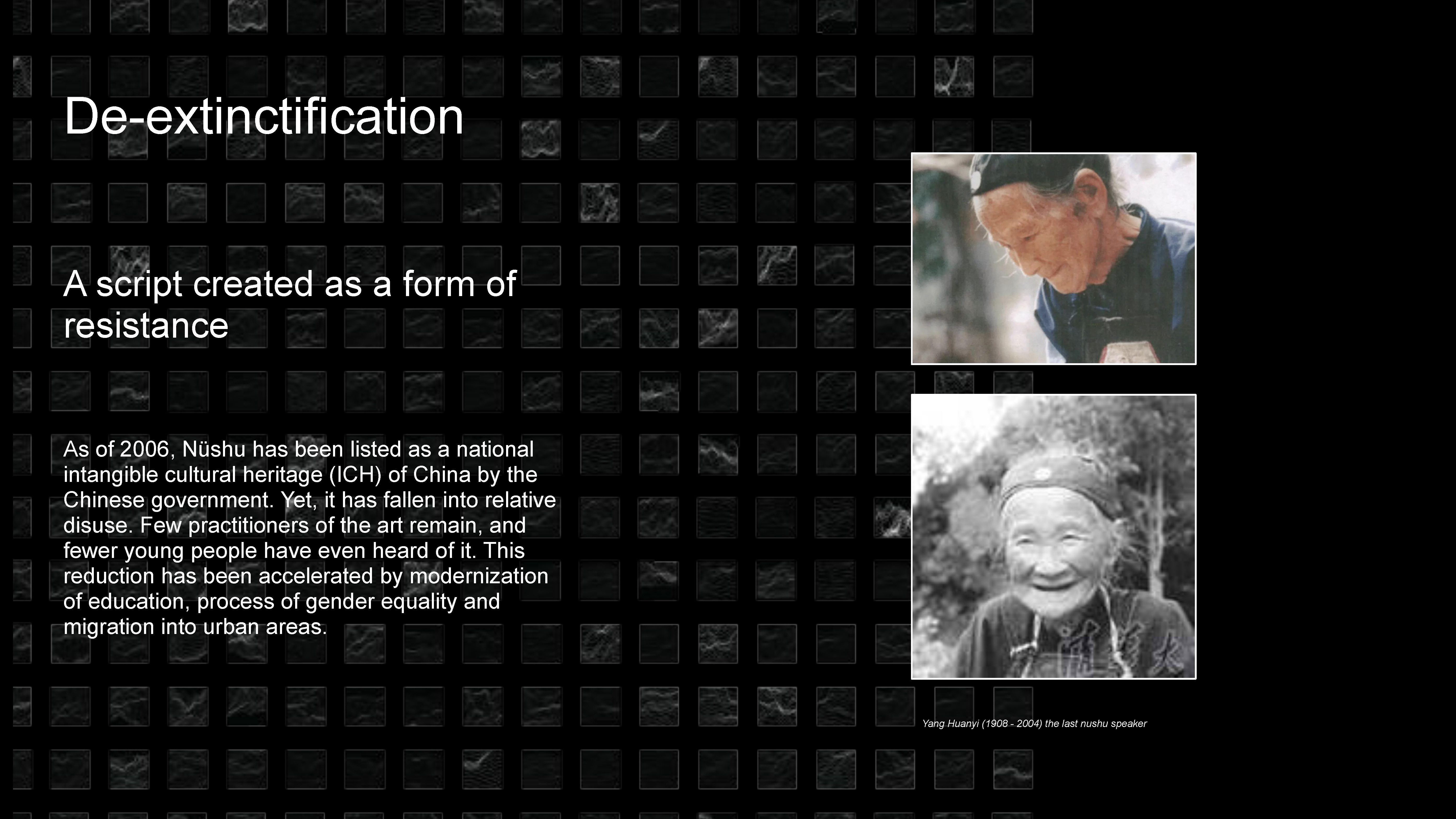
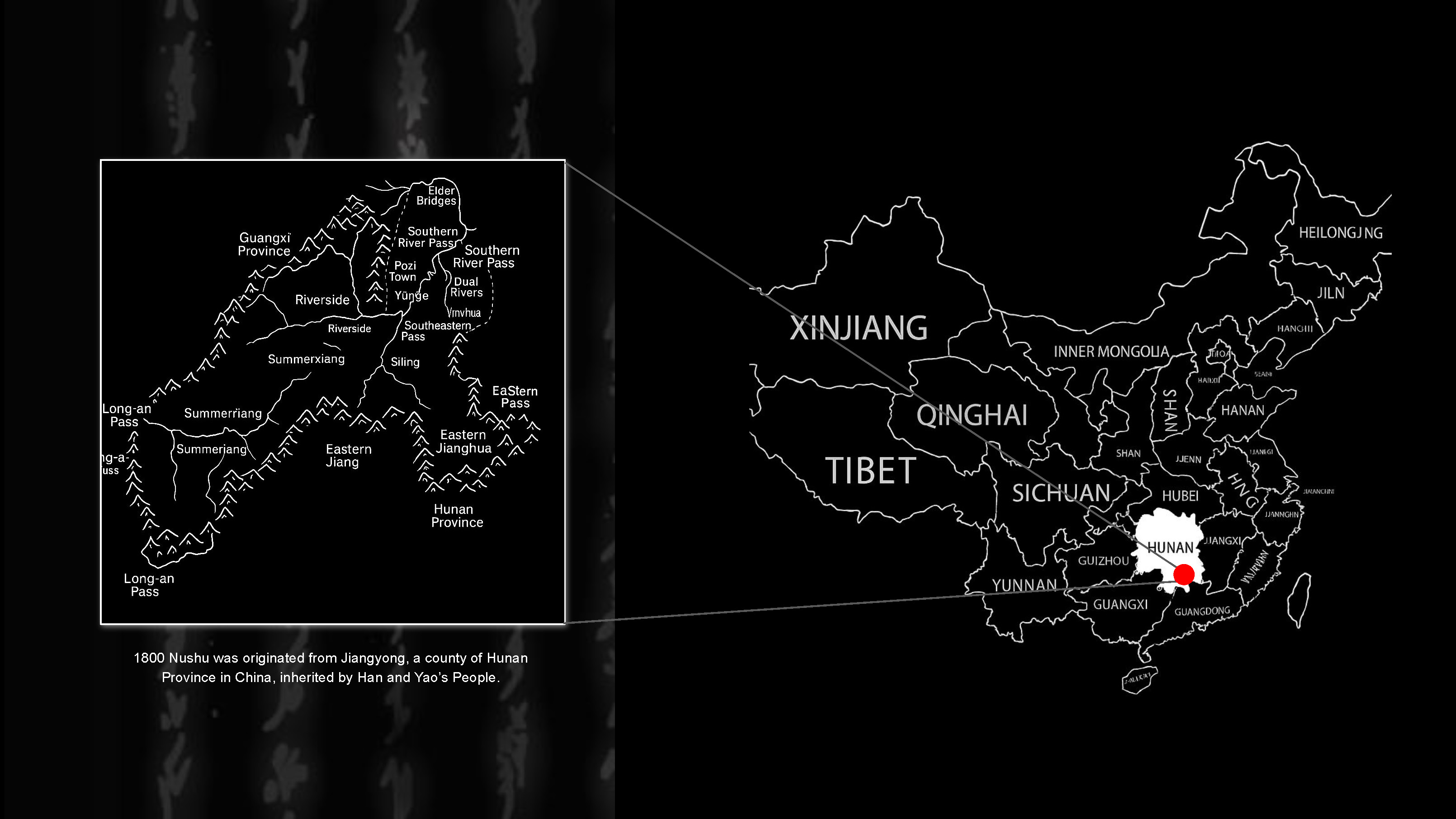
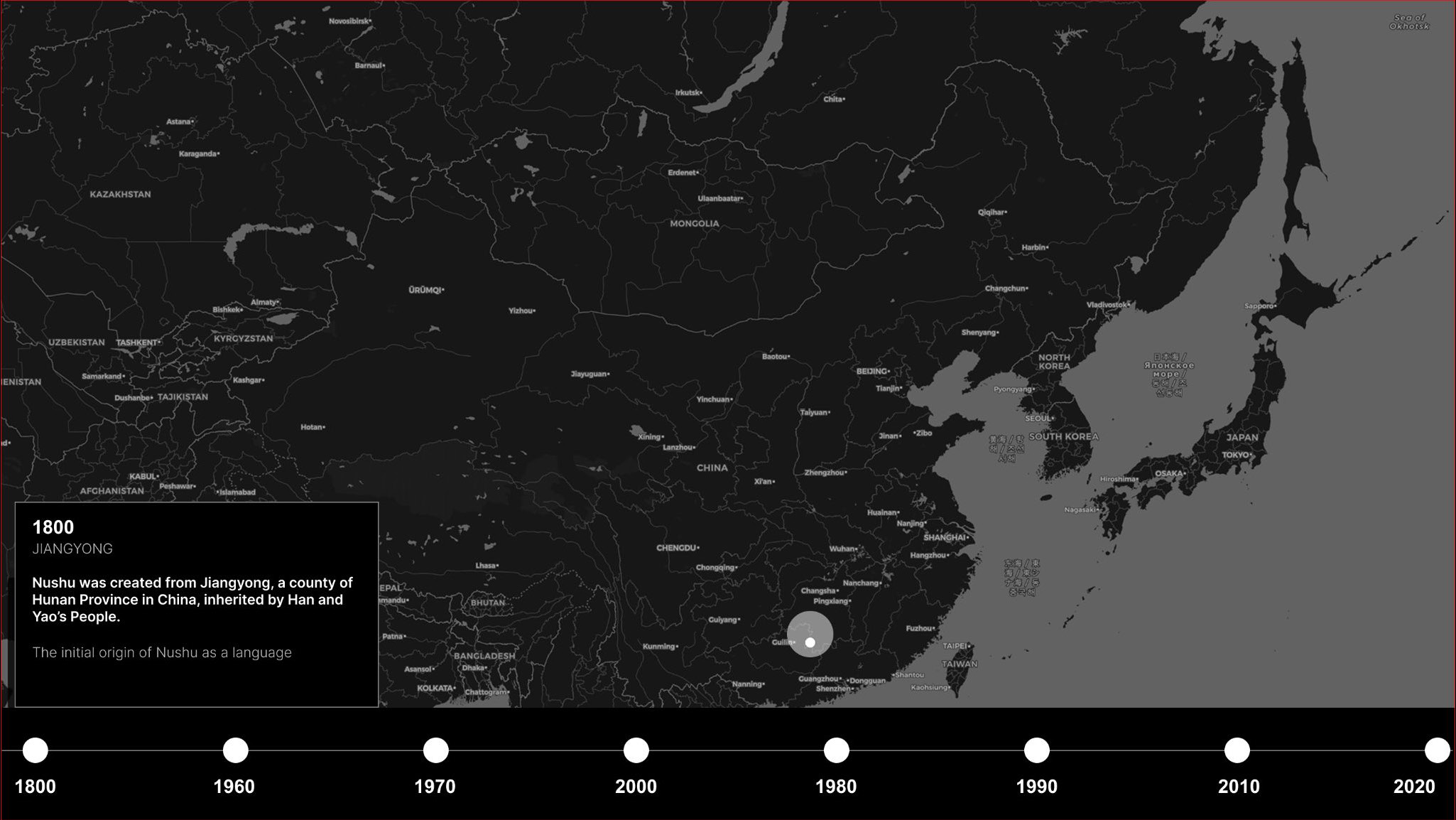
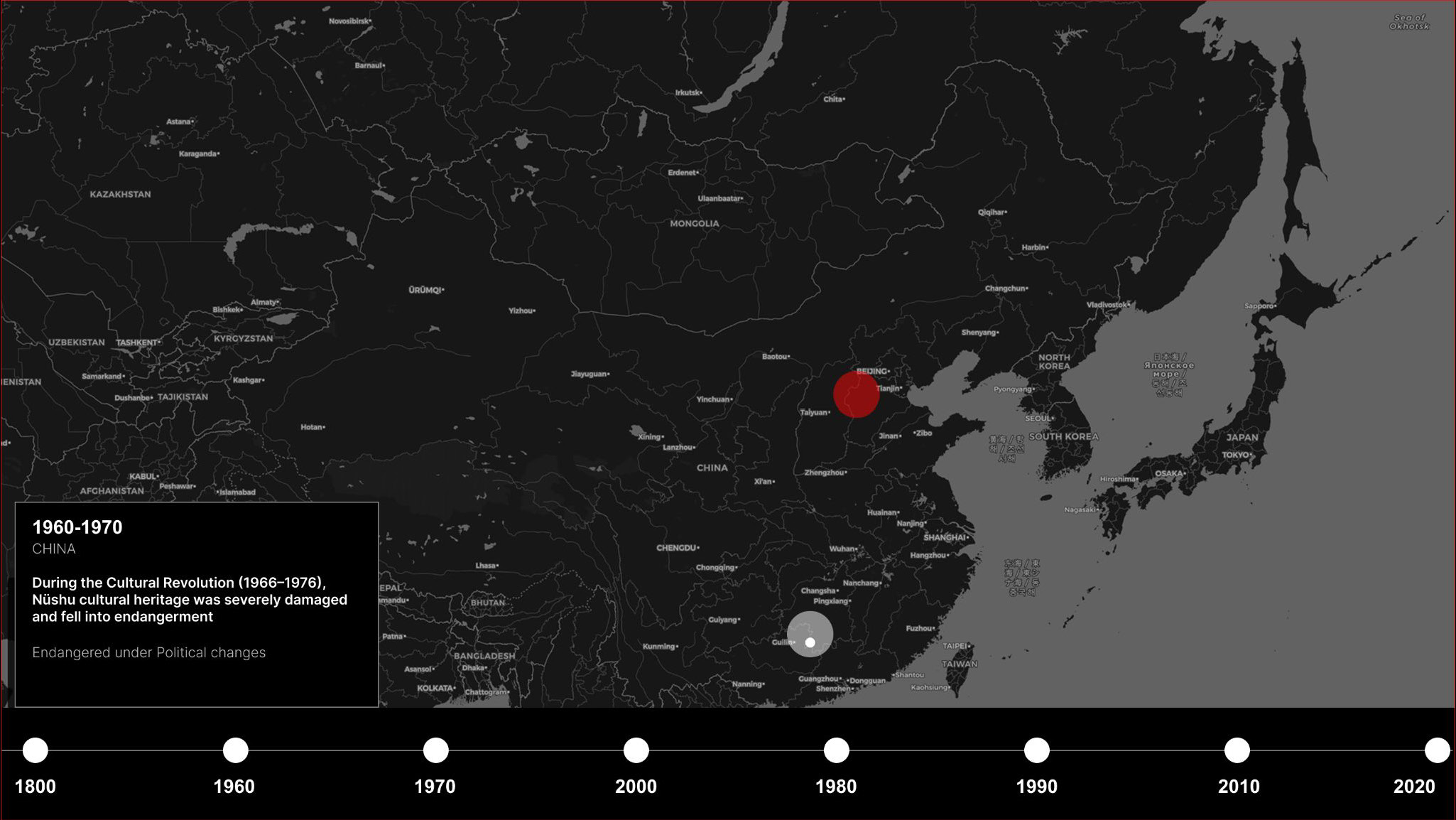
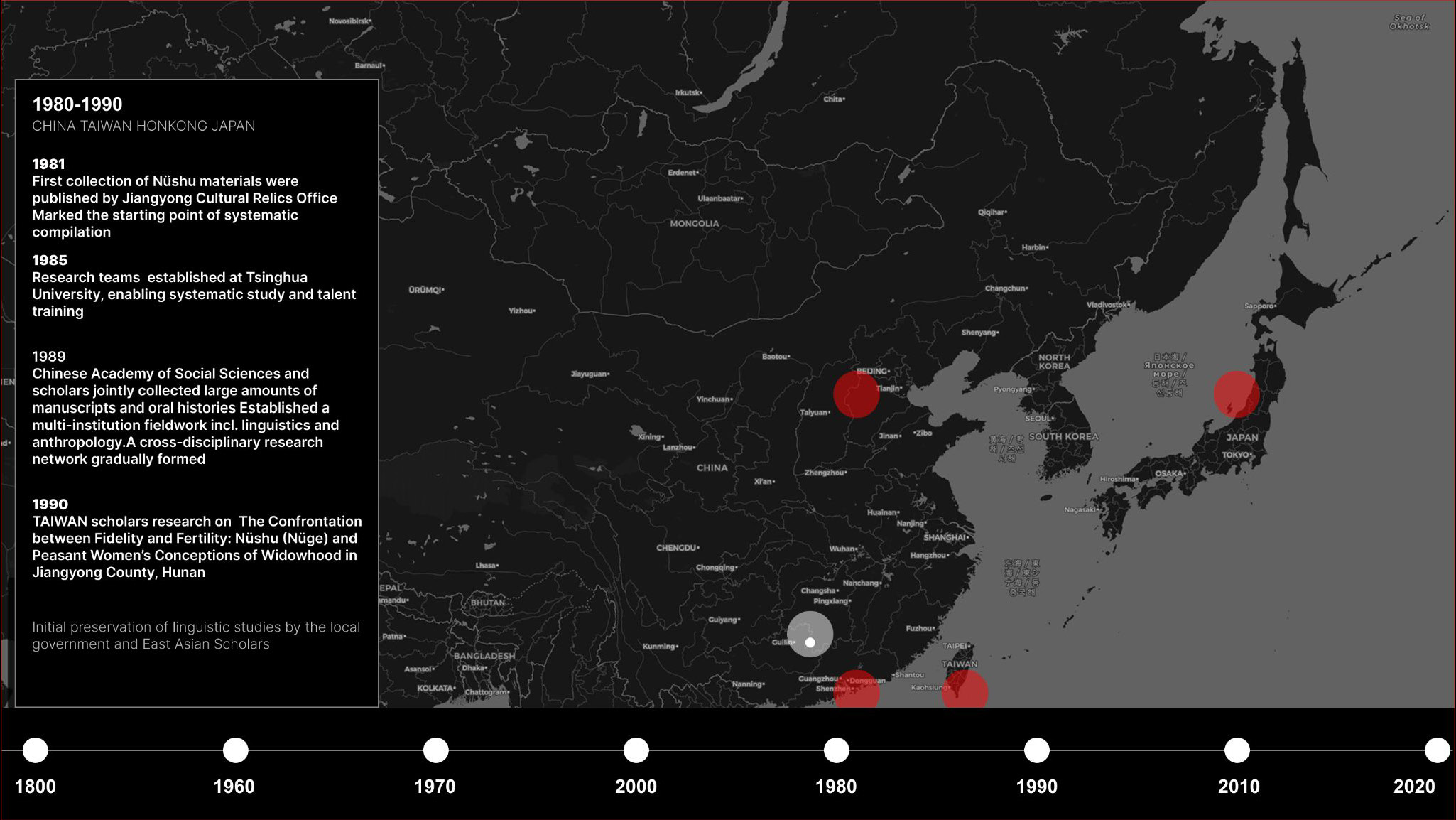
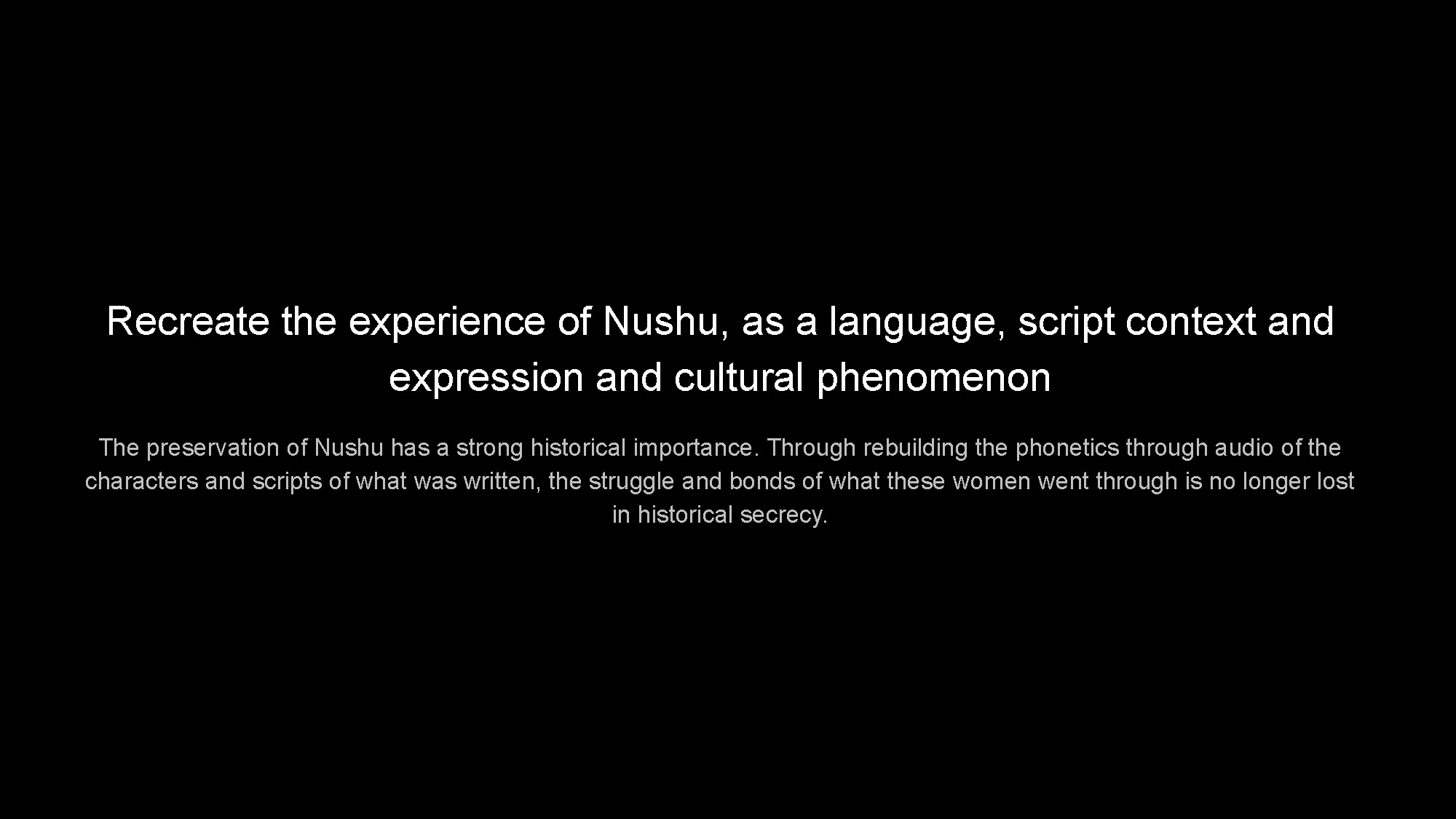
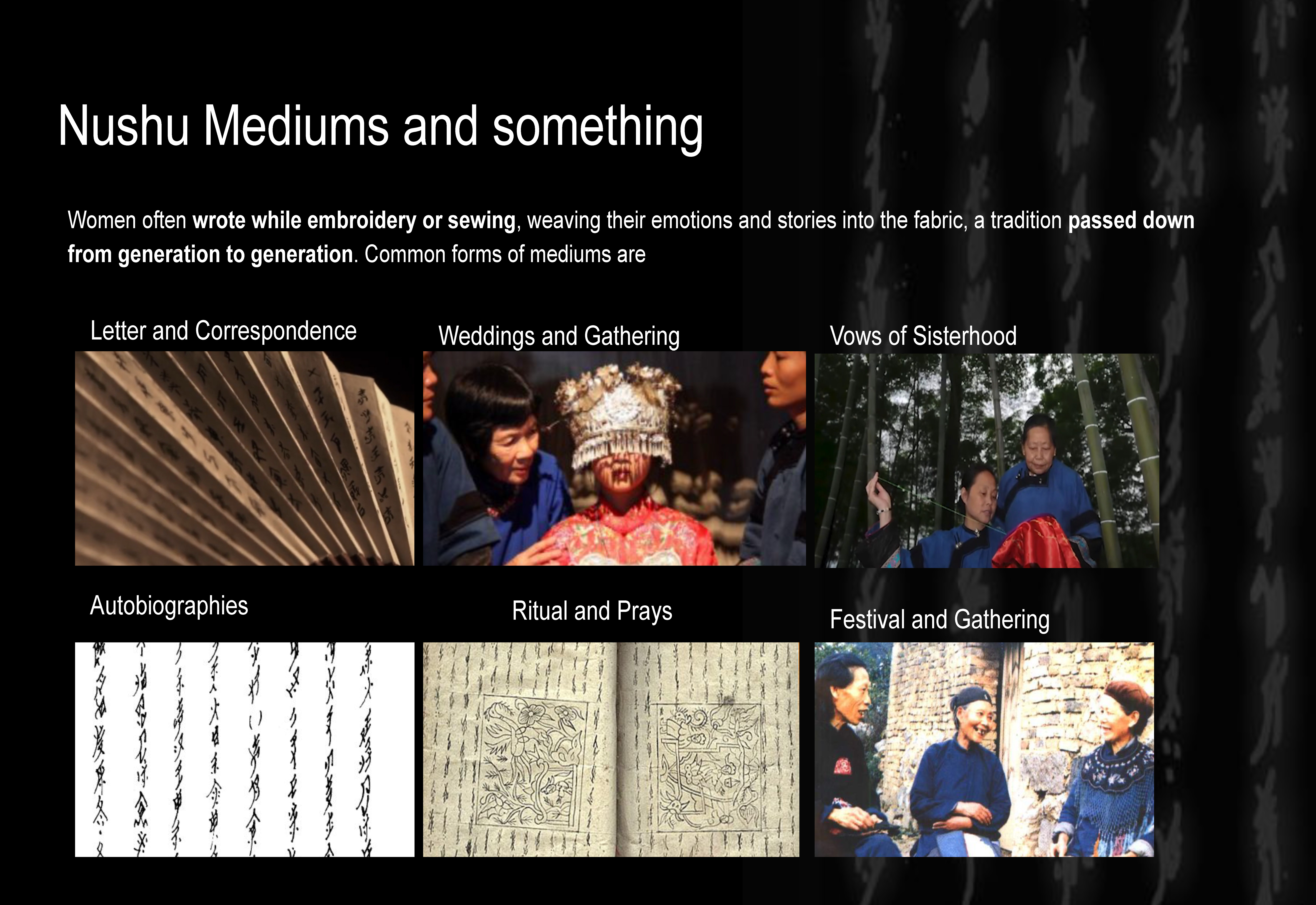
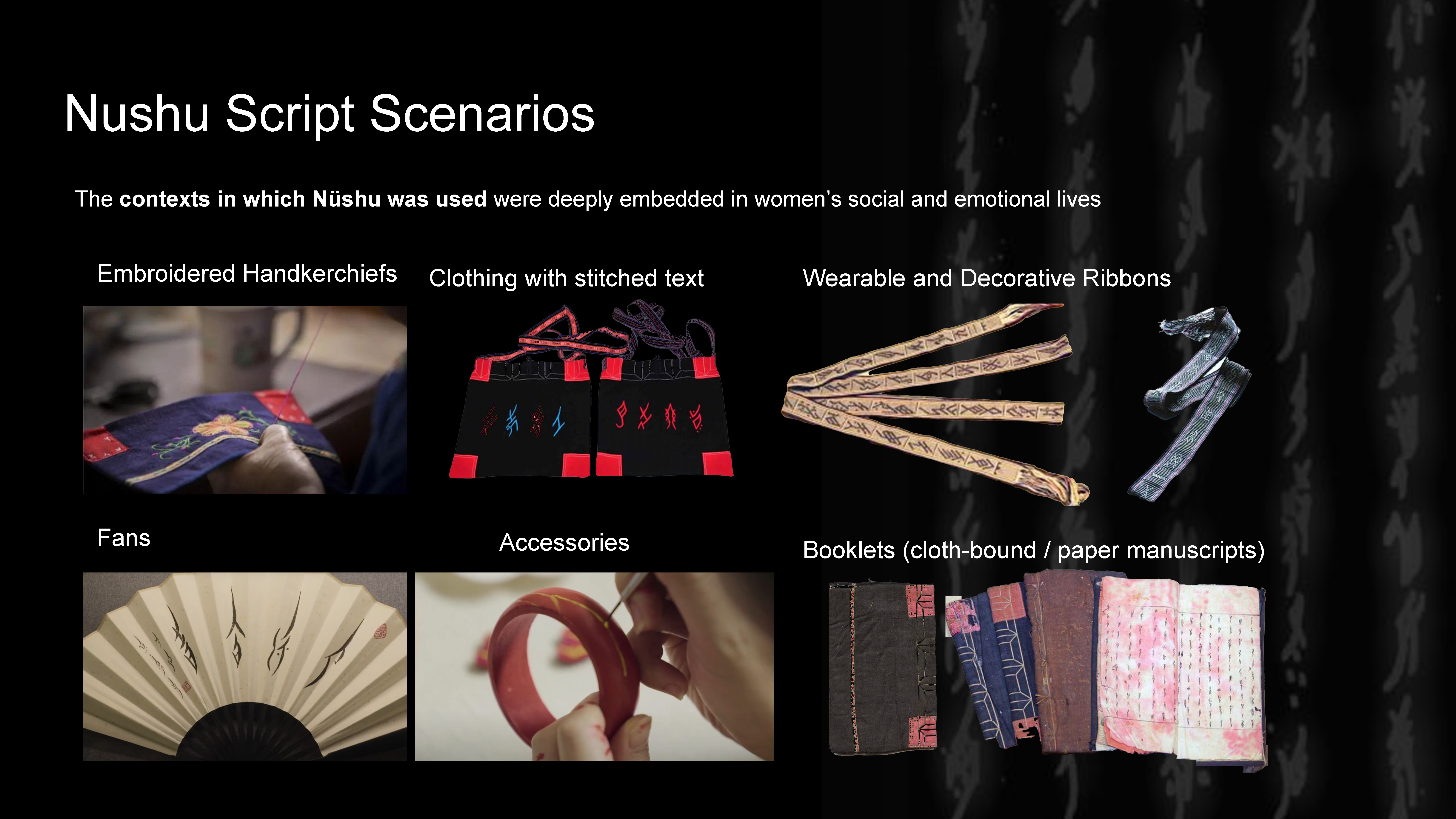
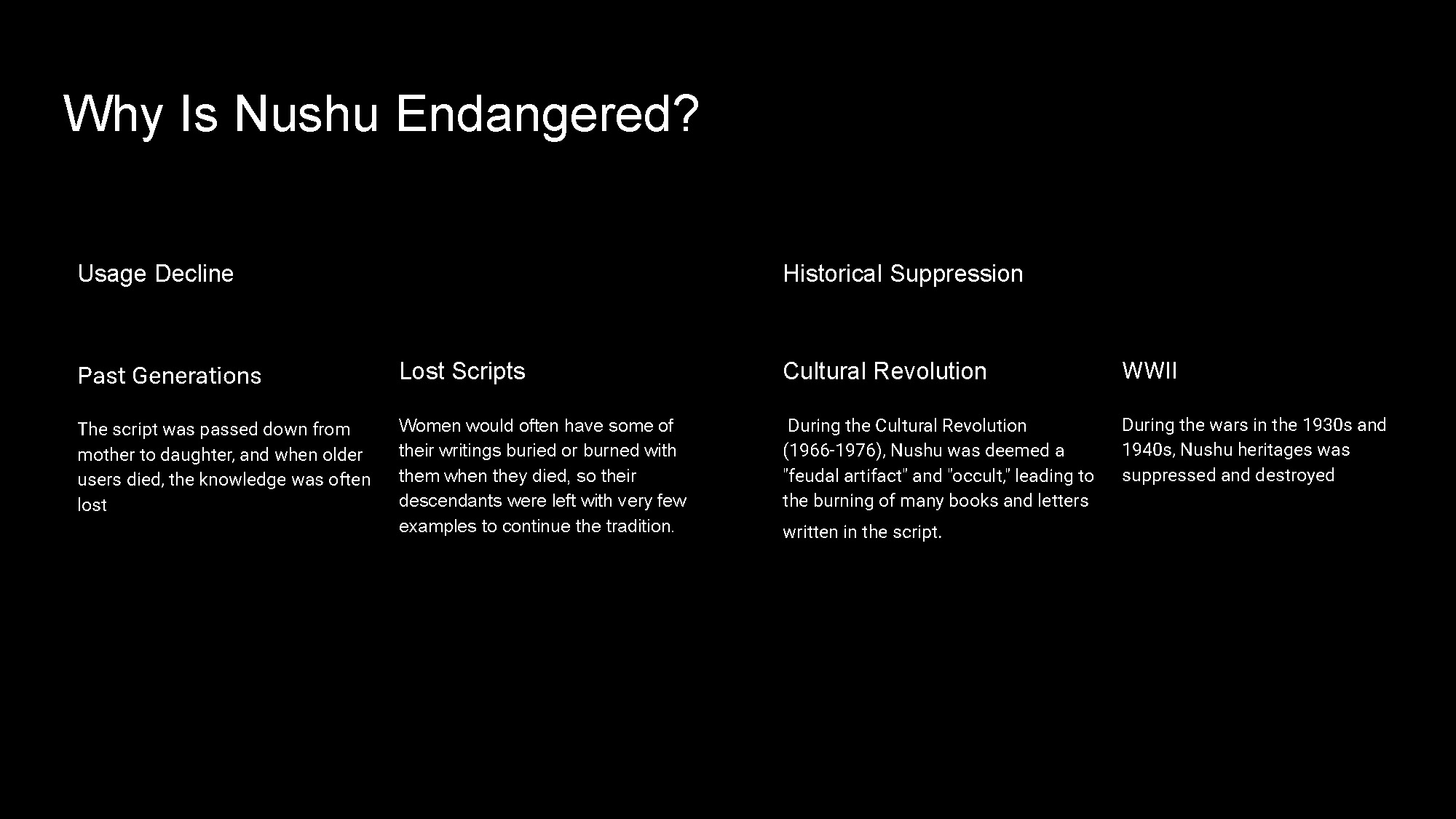
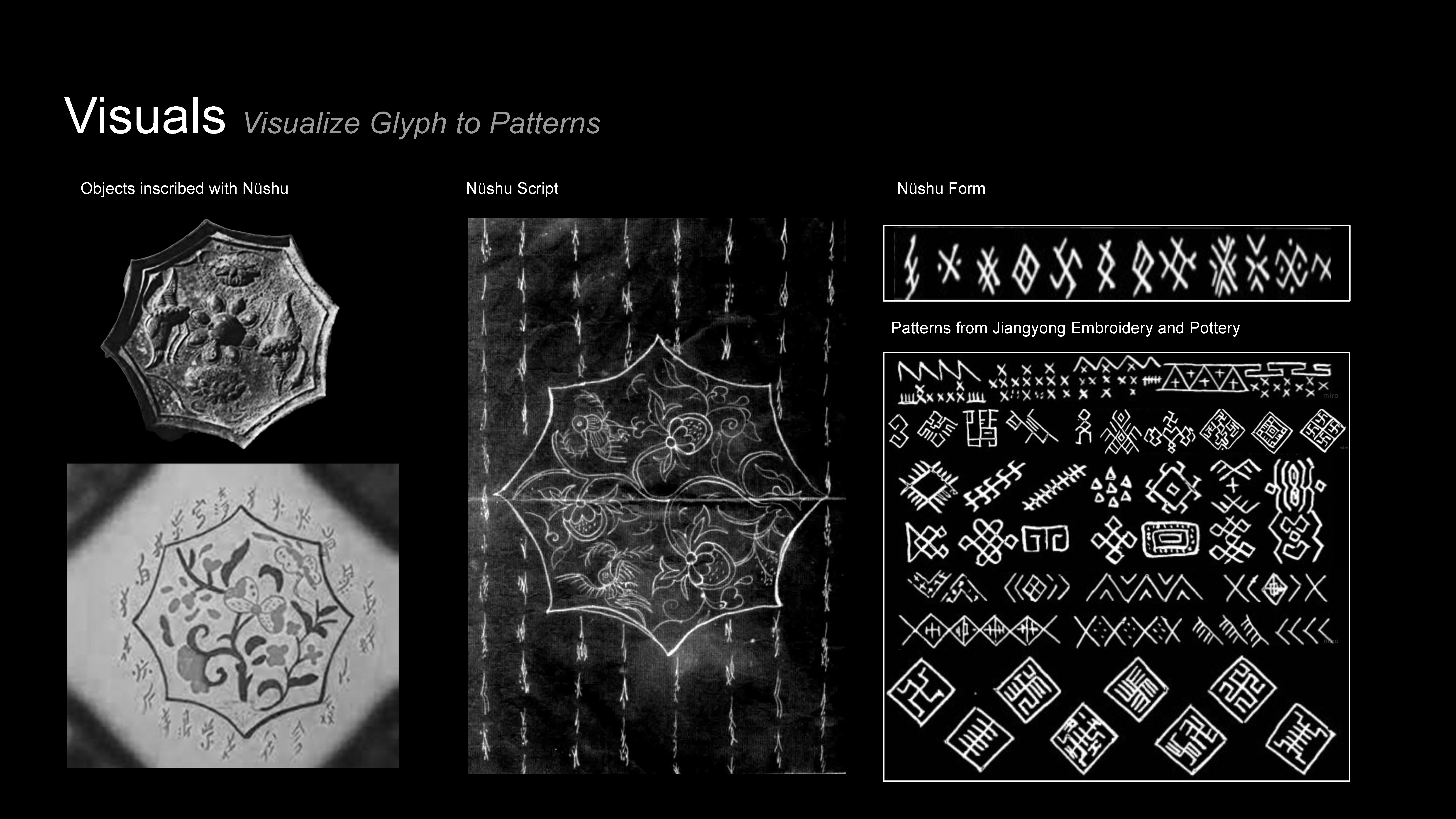
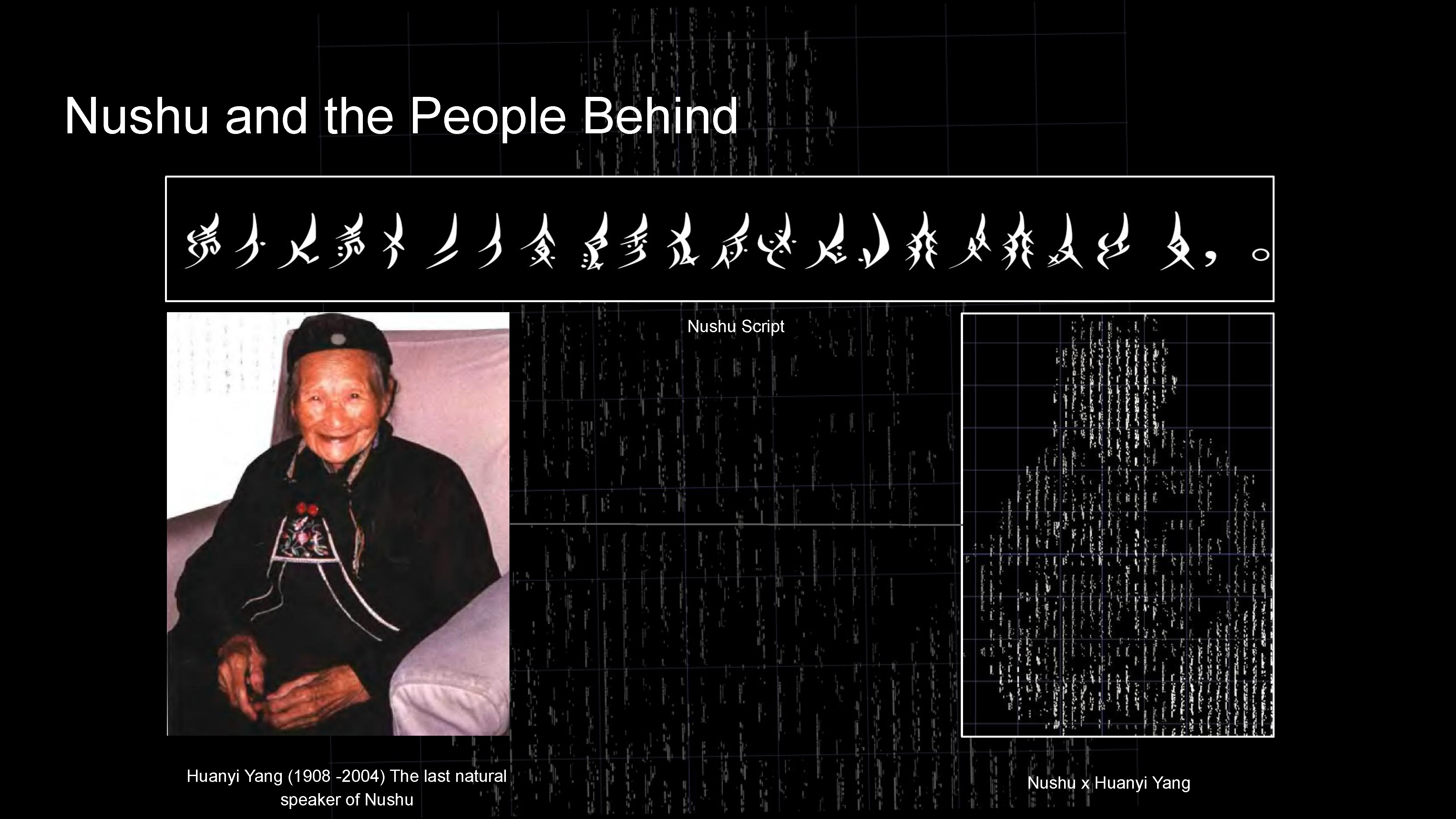
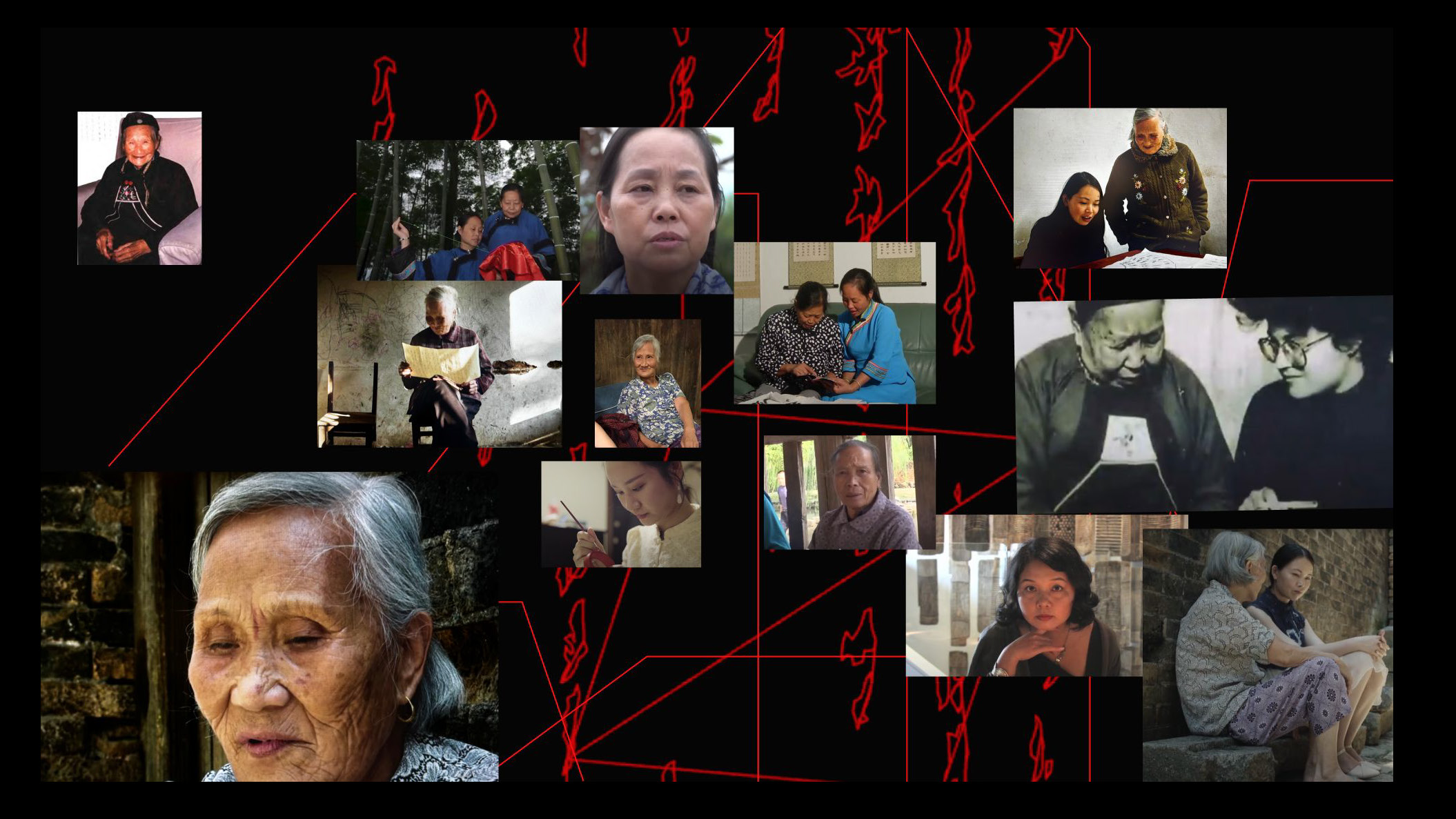
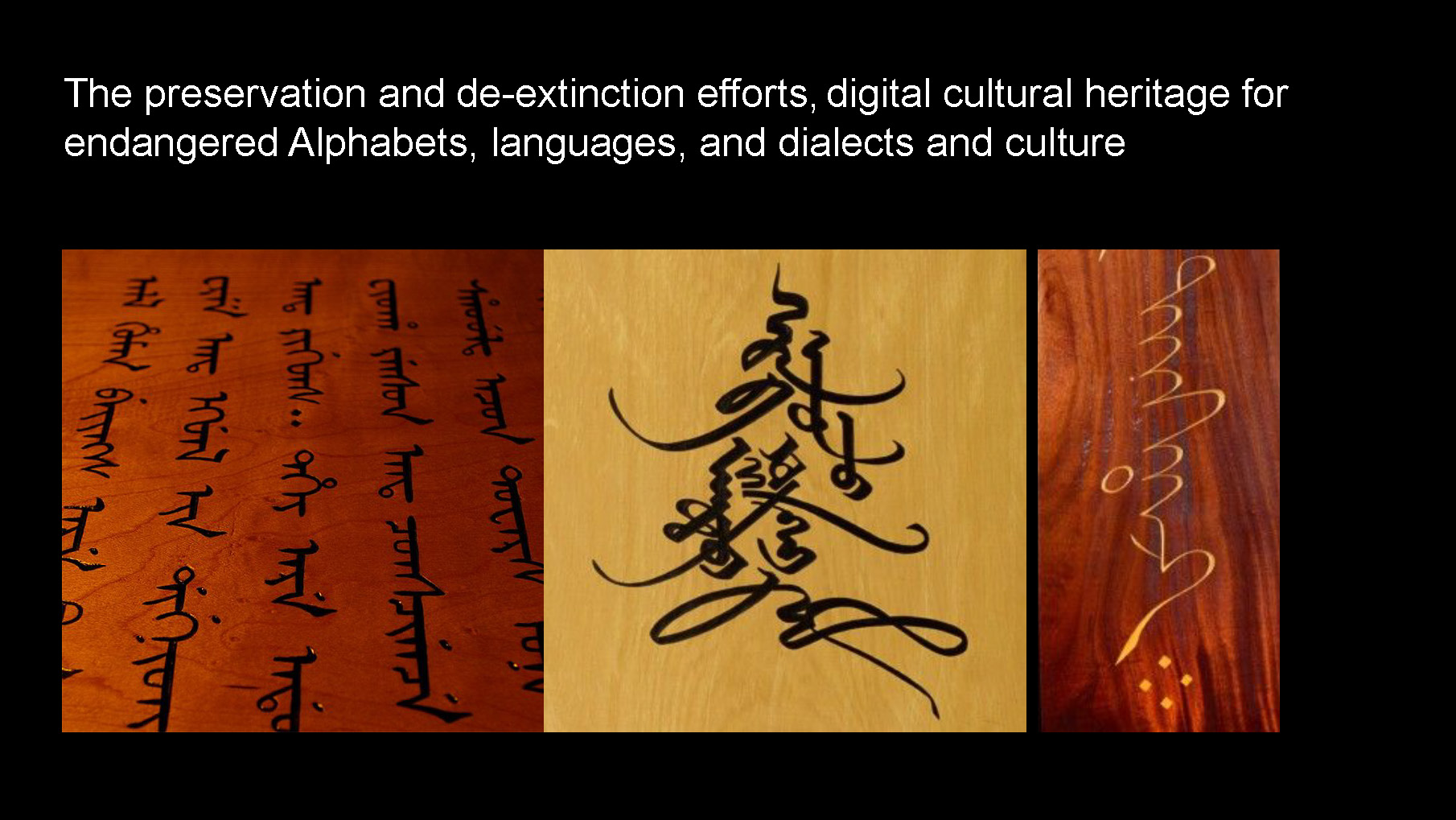
This project explores how artificial intelligence and digital media can preserve and reinterpret Nüshu, the secret script created by women in Jiangyong, China. Emerging in a historical context where women were forbidden to read or write, Nüshu became a unique symbolic system through which women recorded emotions, memories, and social bonds. Written on fans, cloth, and embroidered objects, the script carried voices that were otherwise excluded from official history.
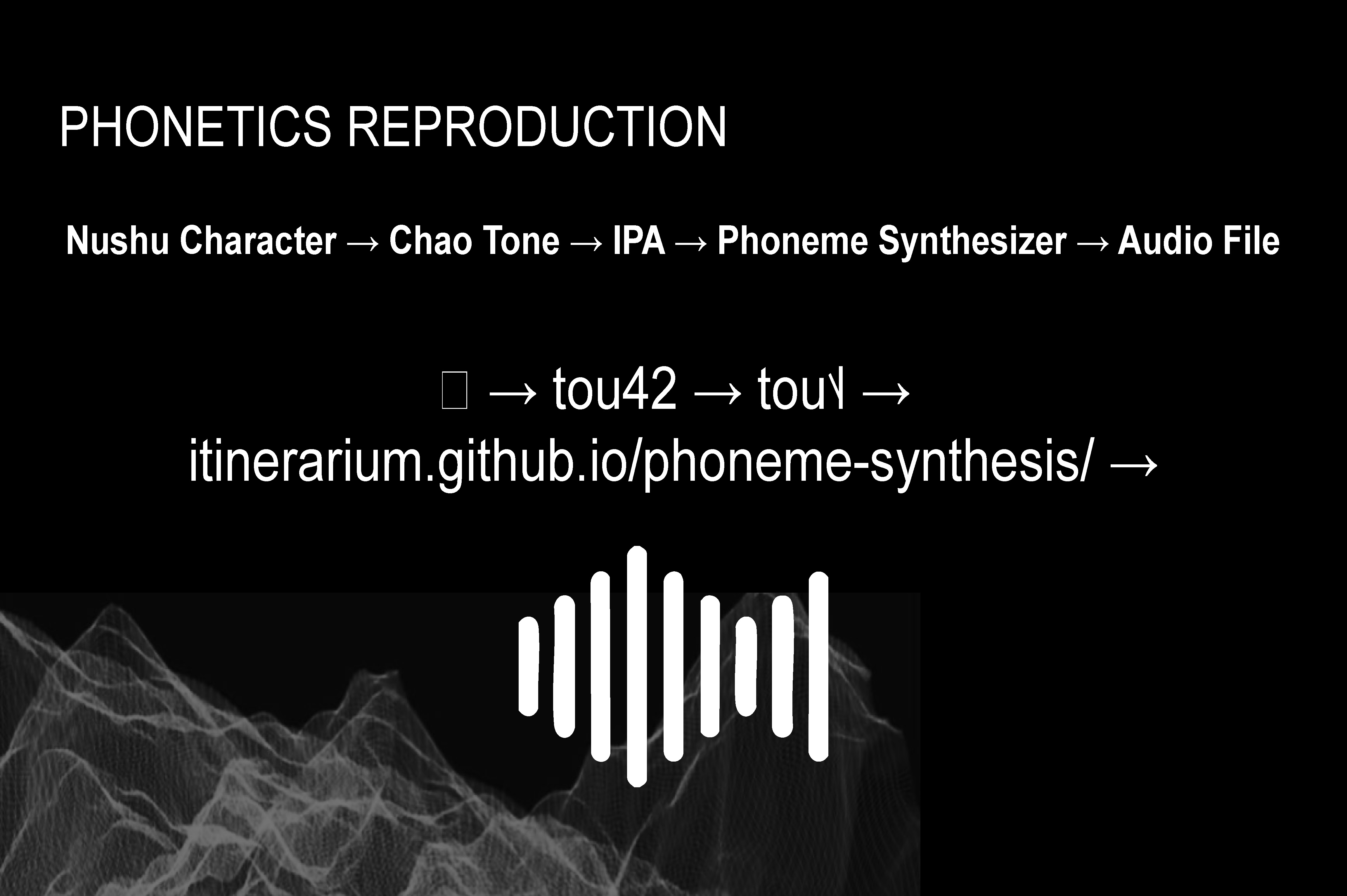
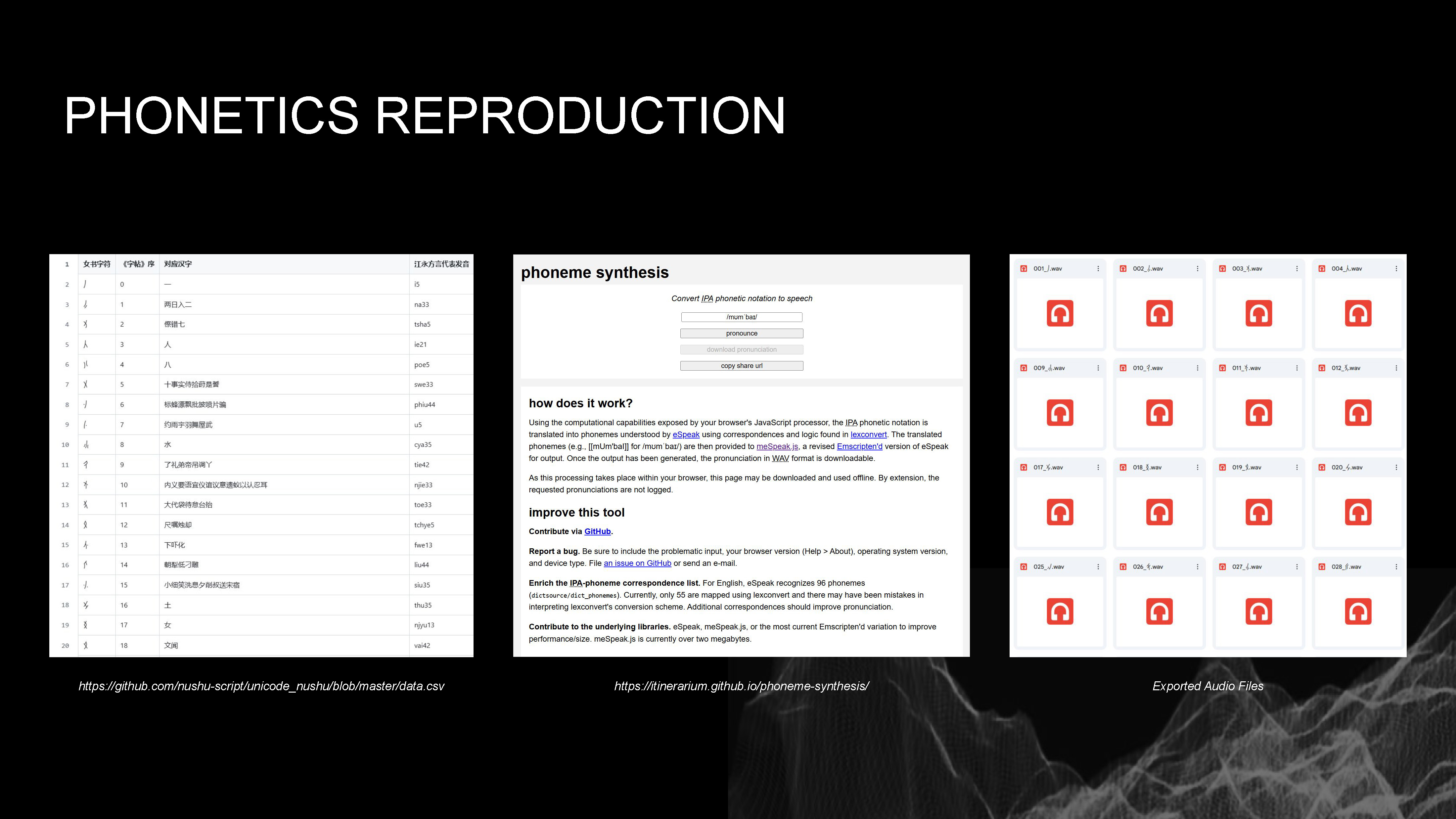
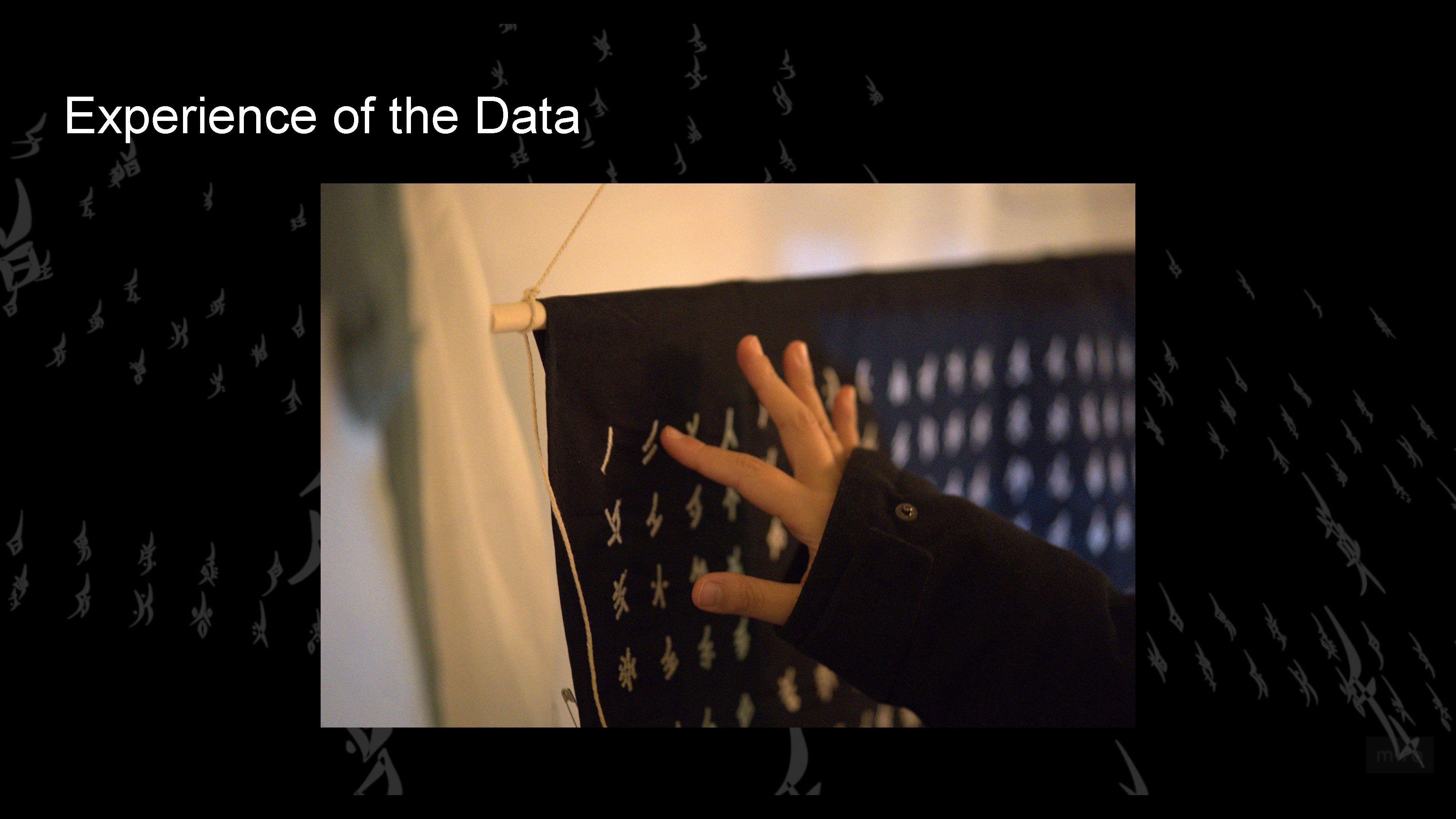
By combining computational linguistics, phonetic reconstruction, and visual digitization, this project rebuilds Nüshu as a digital heritage system. Through data analysis, sound reconstruction, and interactive visualization, we seek not only to archive the script but also to reanimate the sensory experiences embedded within it. In doing so, the project reflects on the human ability to transform lived experience into symbolic language, and how digital technologies can extend that symbolic resilience into the future.
Project Specs
Themes
Fabrics, Data Art, Digital Heritage
Materials
Physical
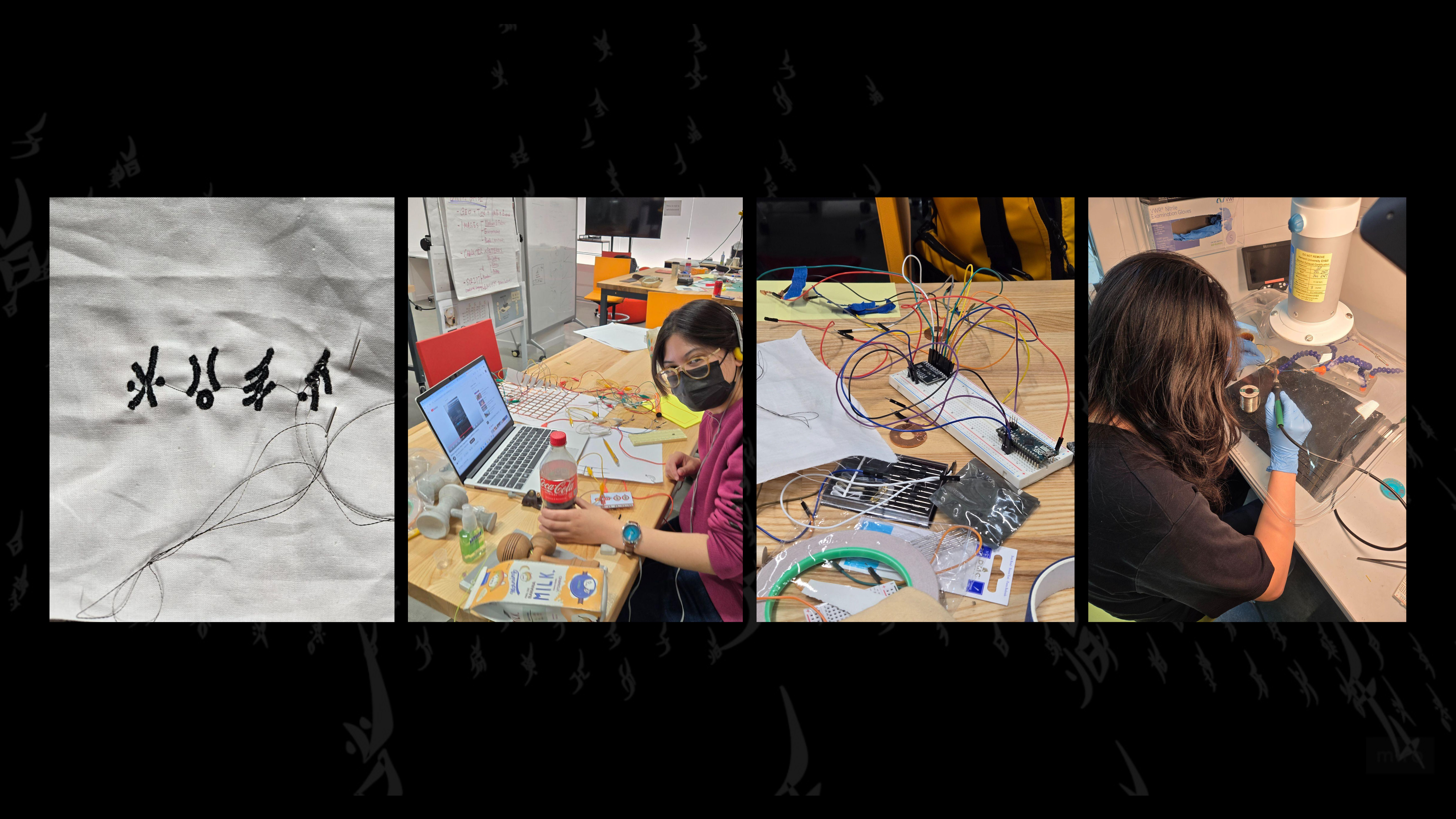
Yarn, Embroidery, Conductive Wires, Sewing
Digital
Generative AI
Data
Calligraphy Scan, Unicode
Systems
Software
Processing, TouchDesigner, Python, HTML, Blender
Hardware
Arduino
Fabrication
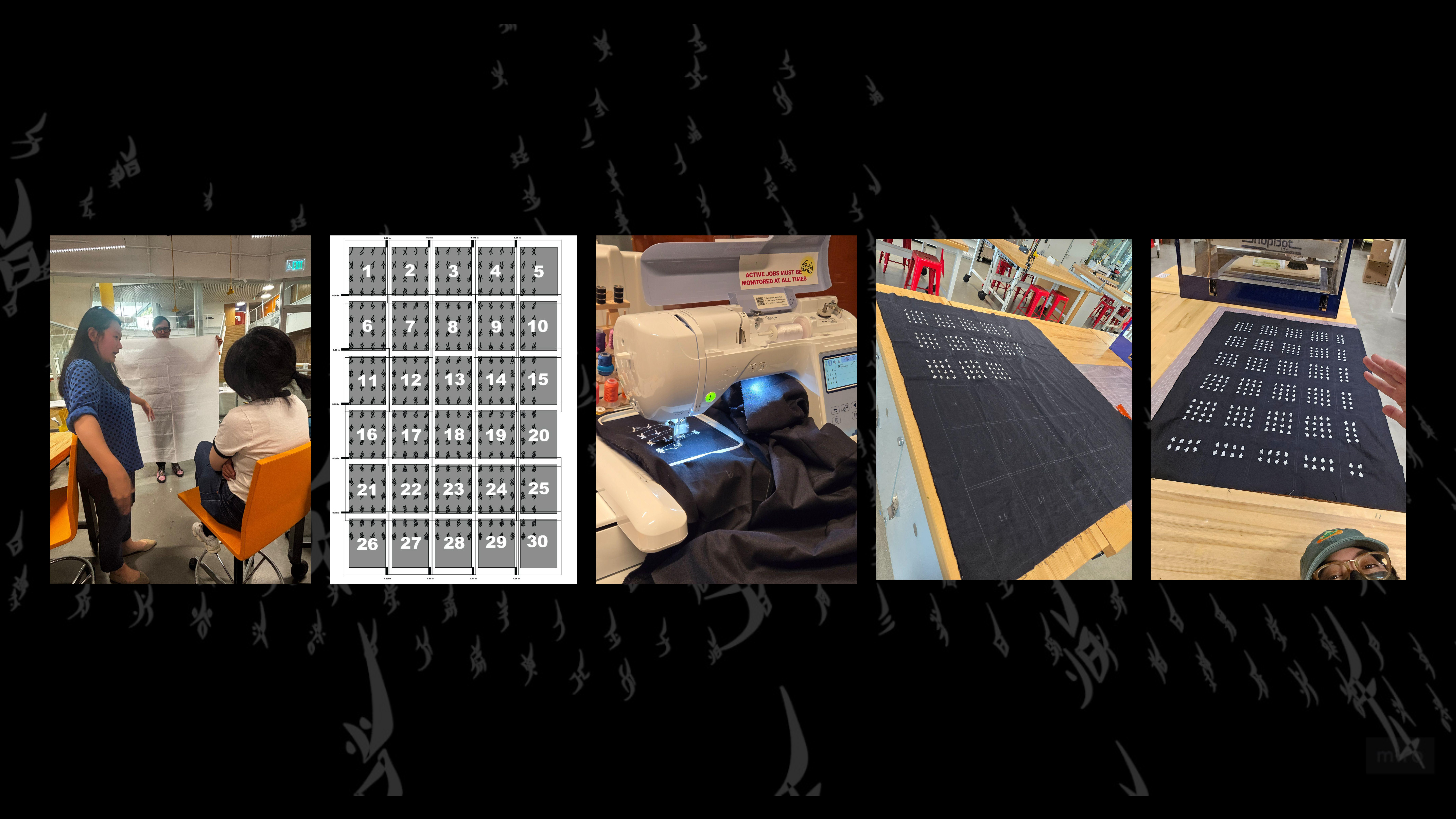
Sewing Machine, Embroidery Machine
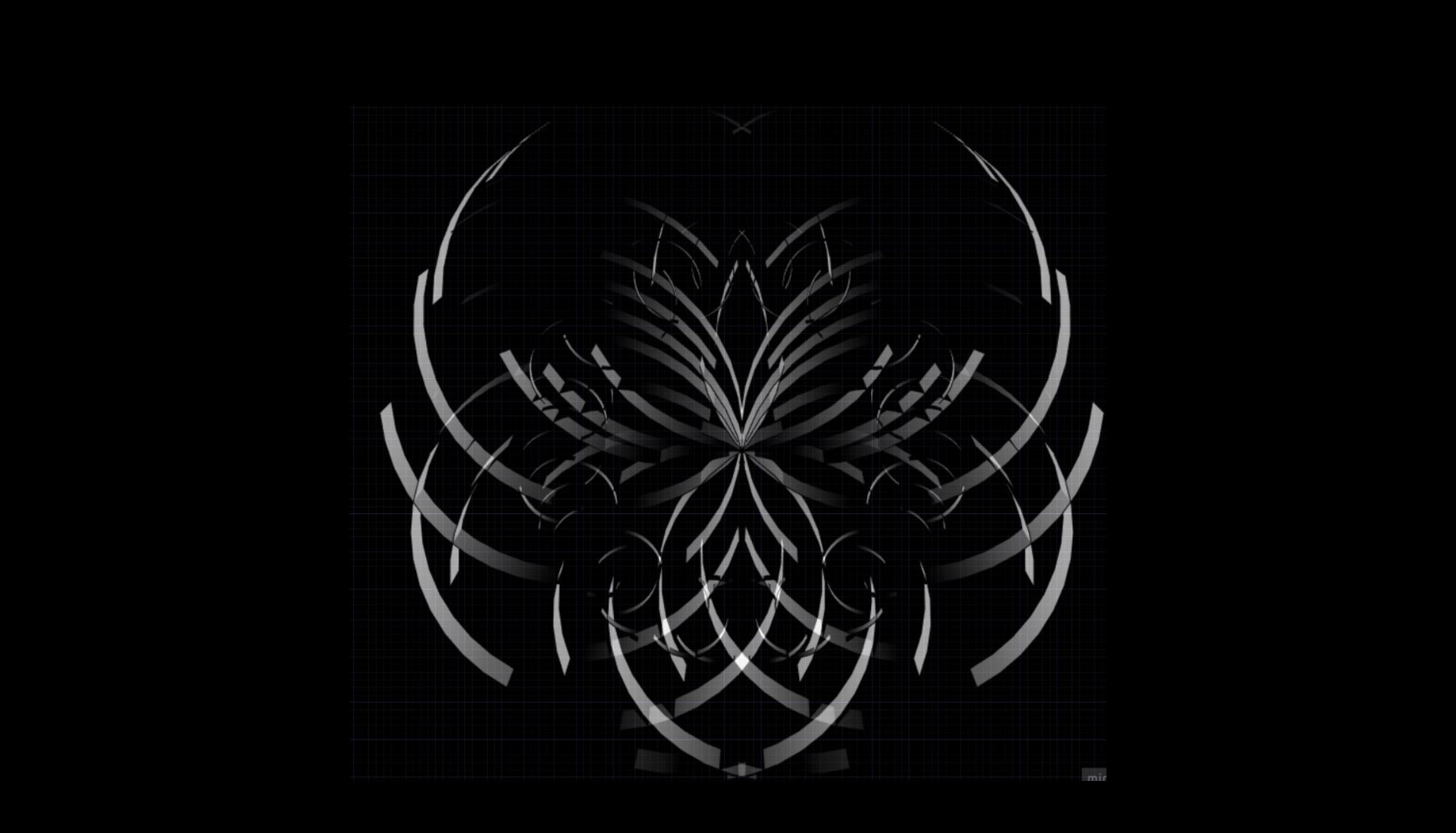
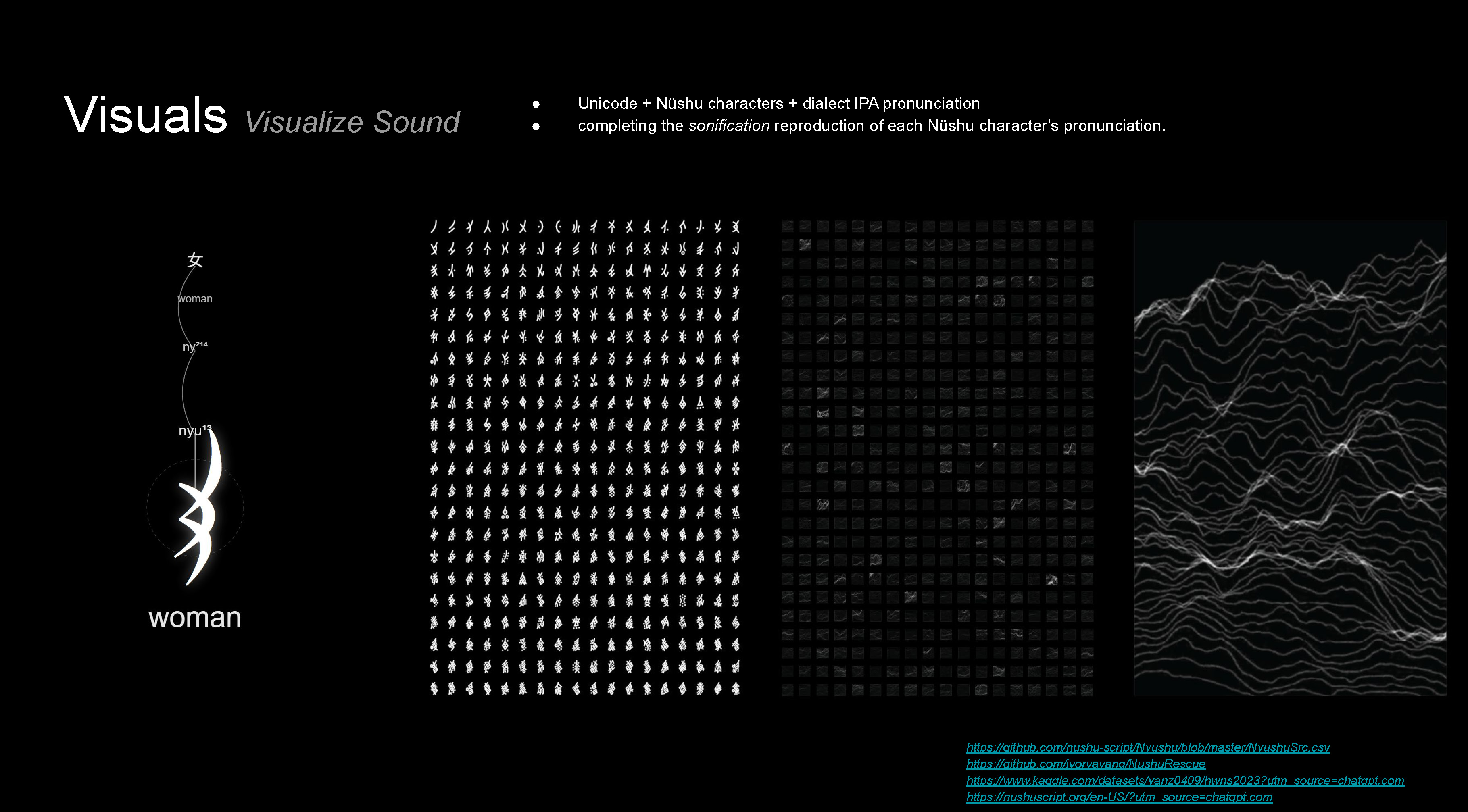
AI · Sound · Visualization



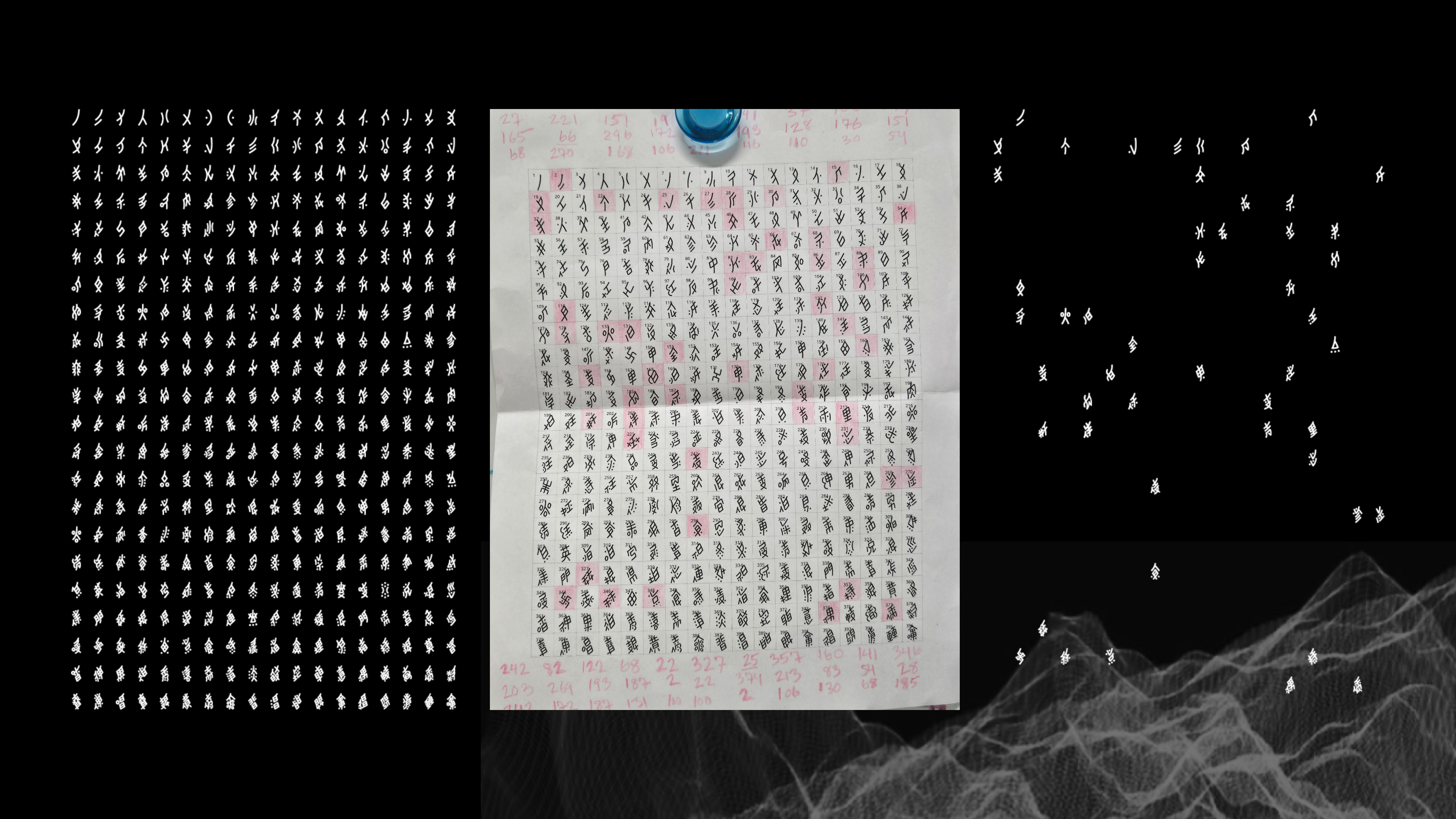
All 400 nüshu sound visualization
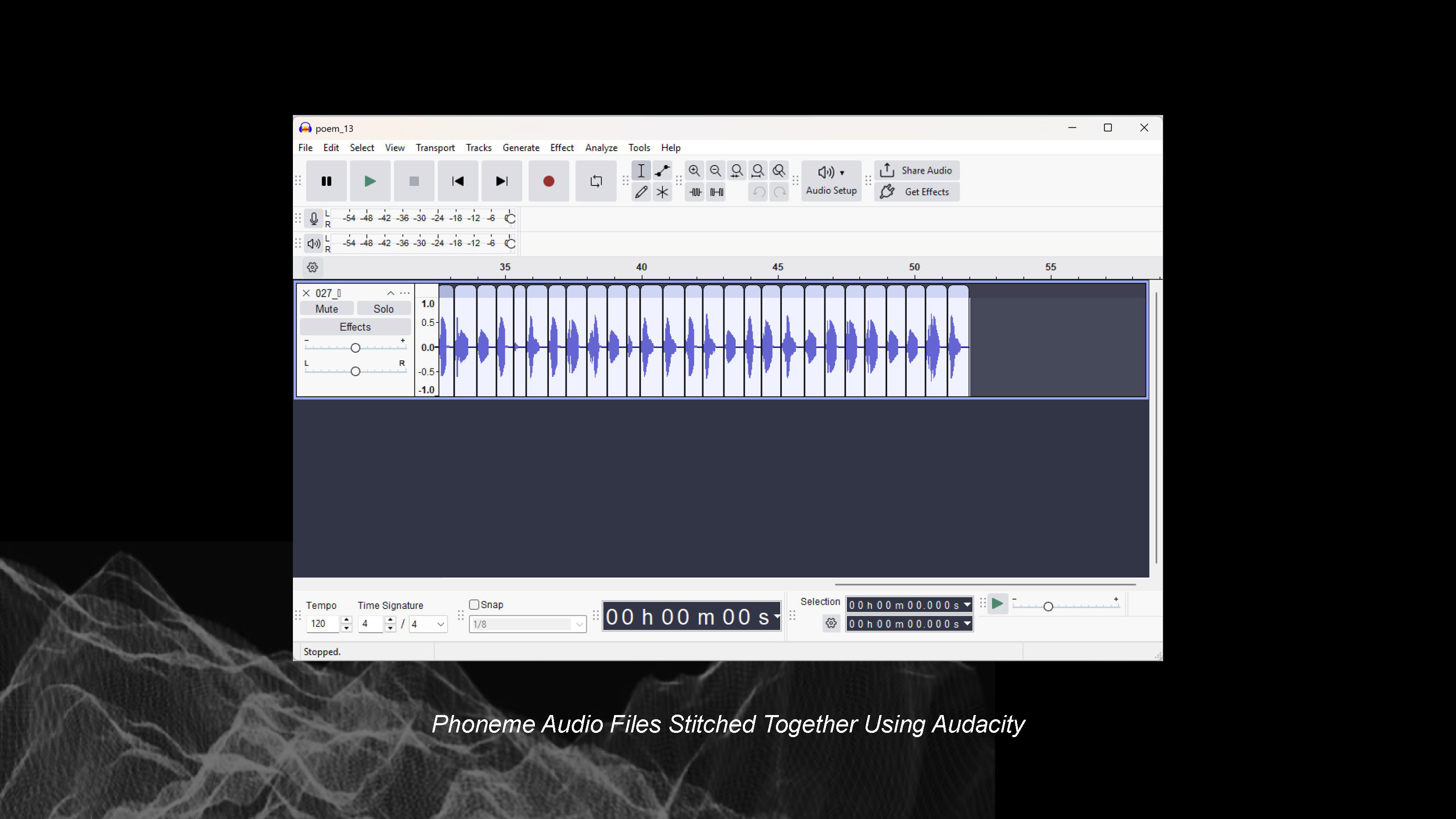
Sound visual of a nüshu poem
Data · Archive · Language
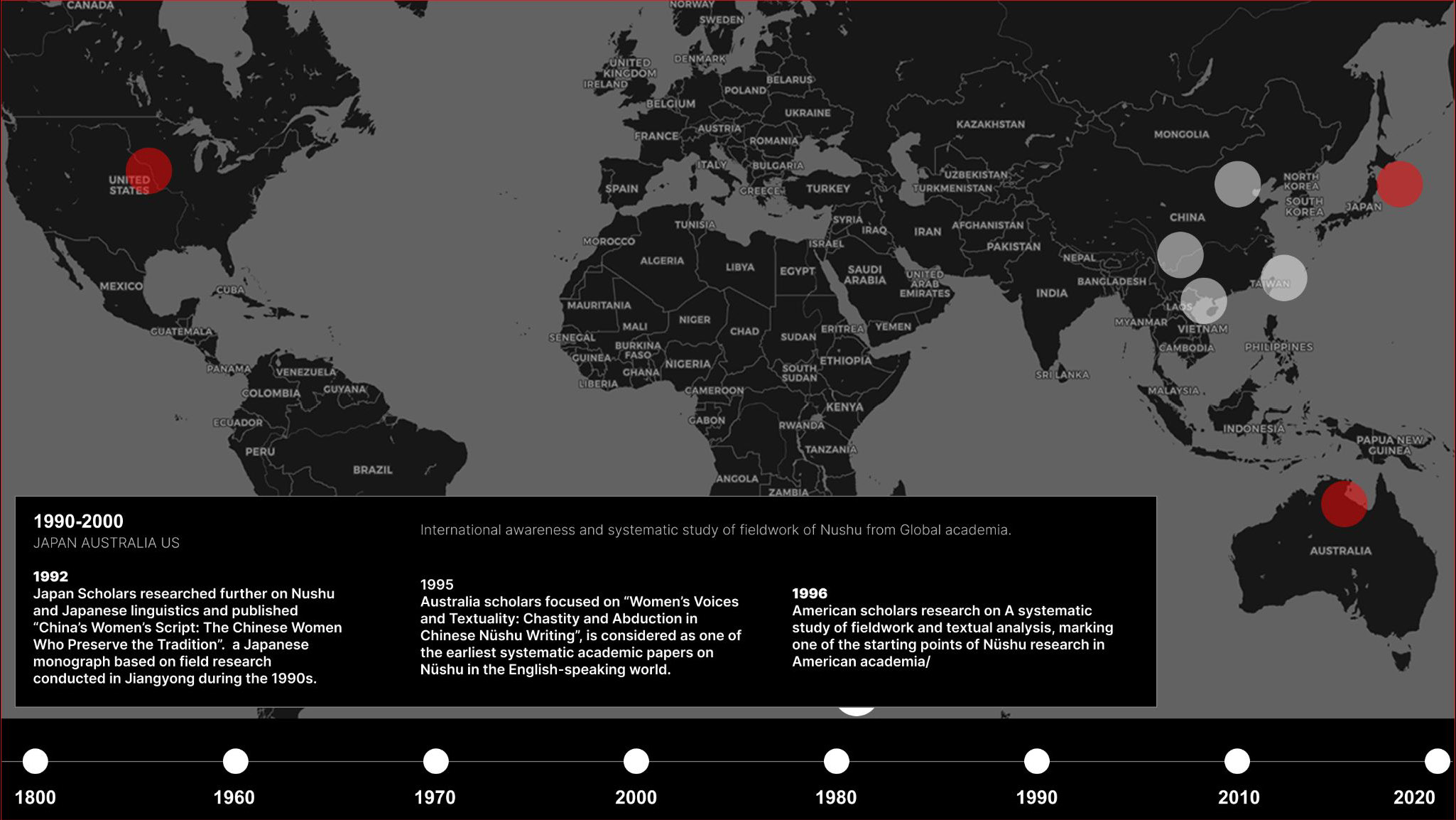
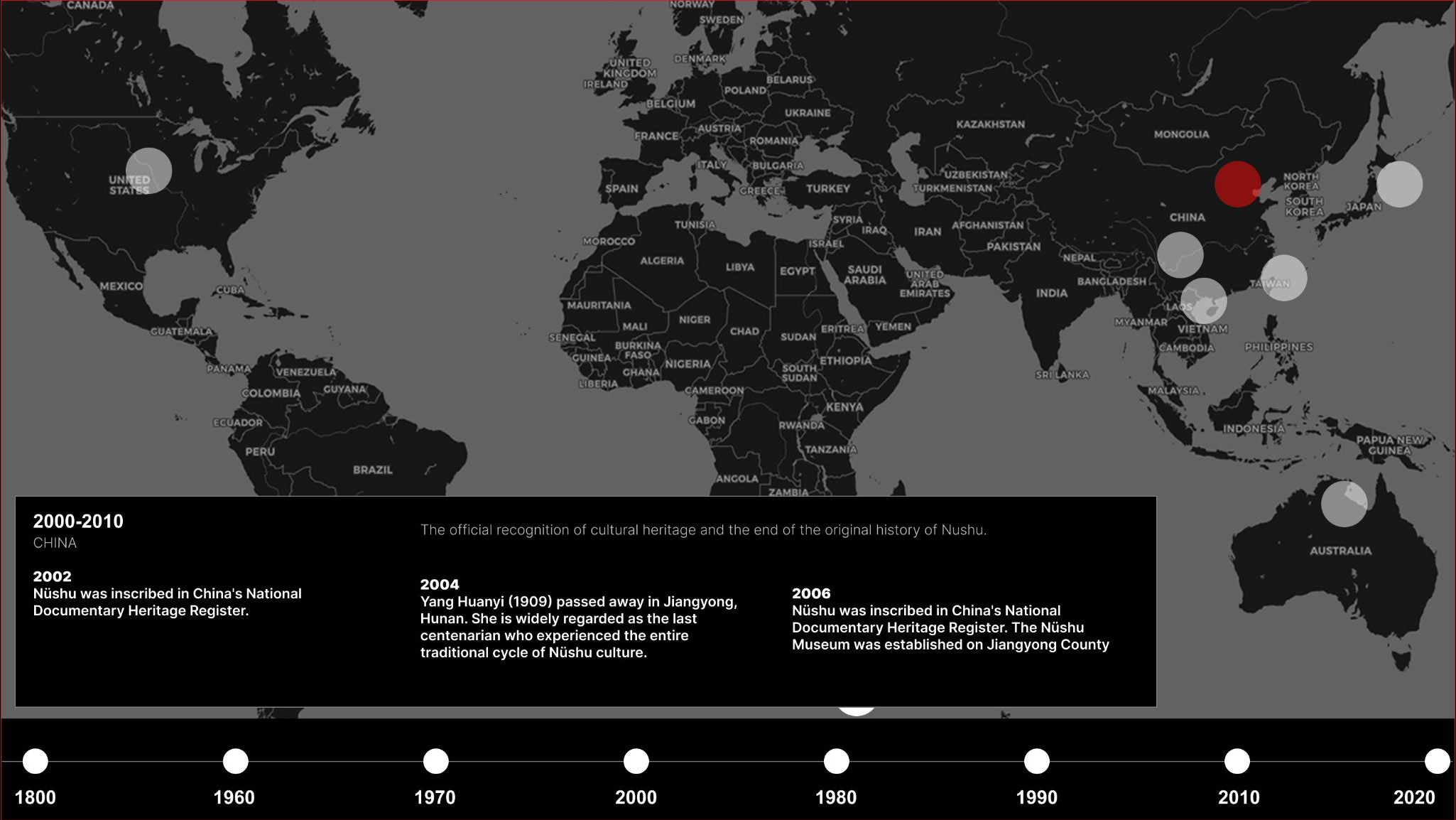
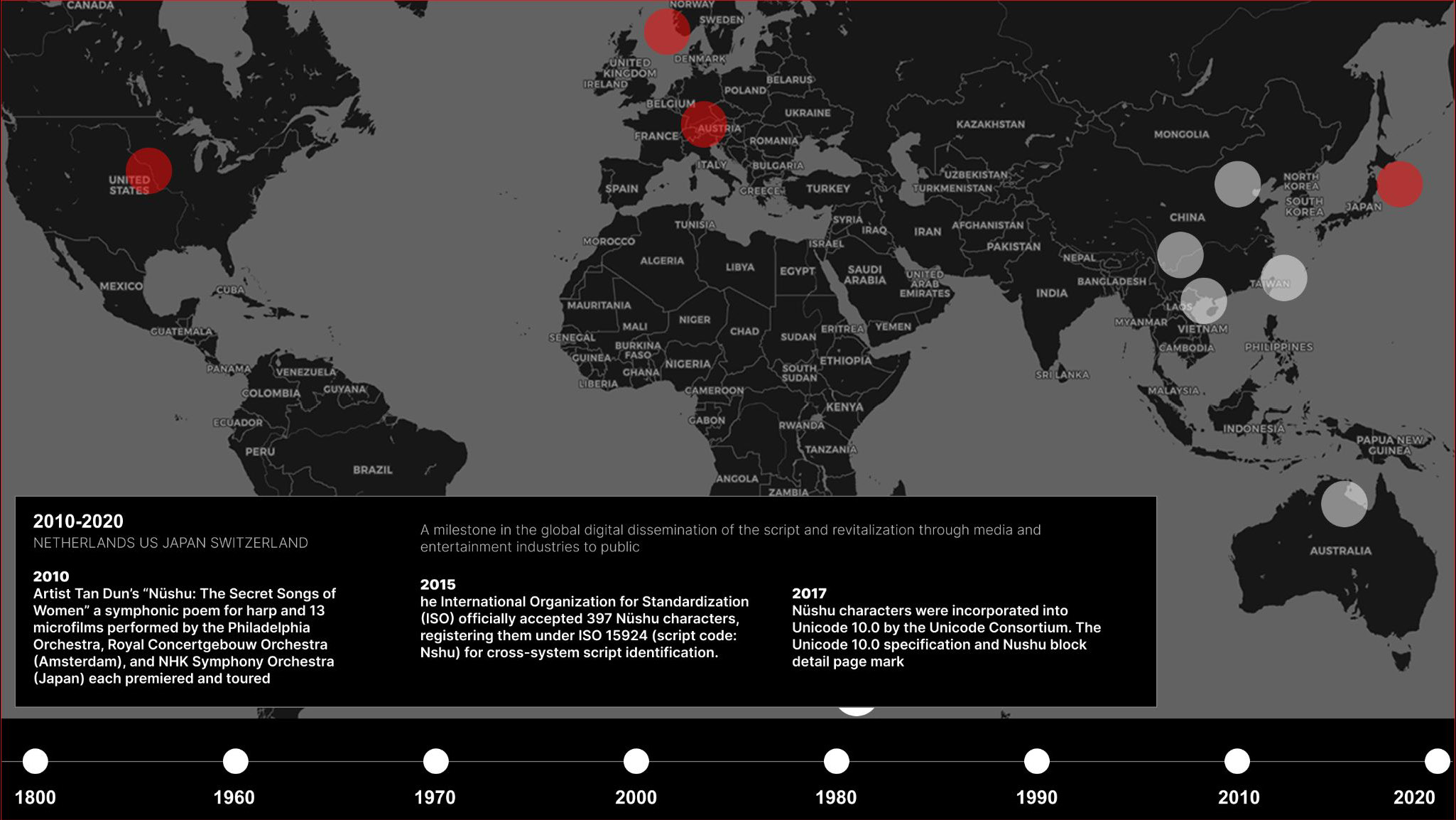
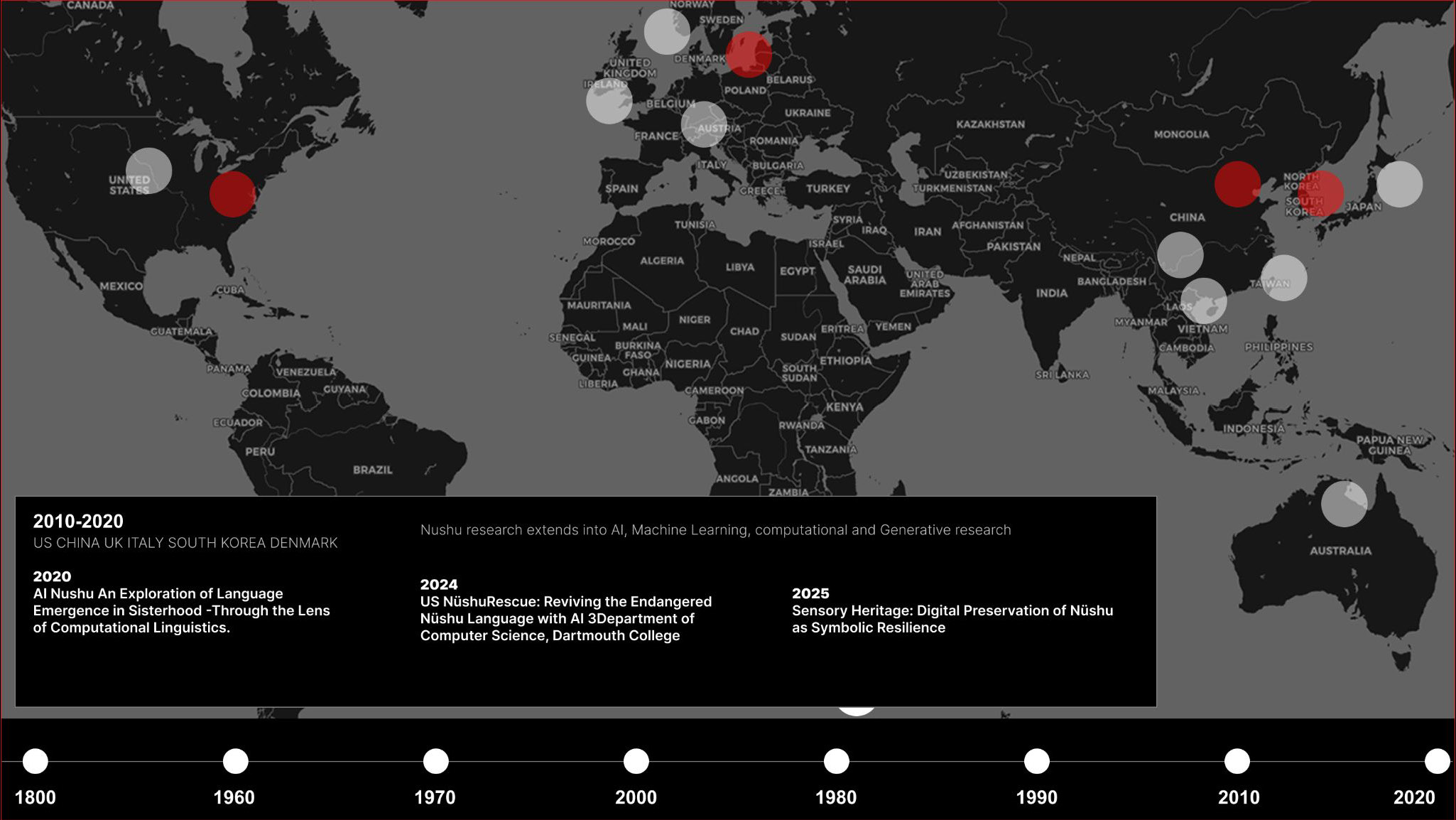
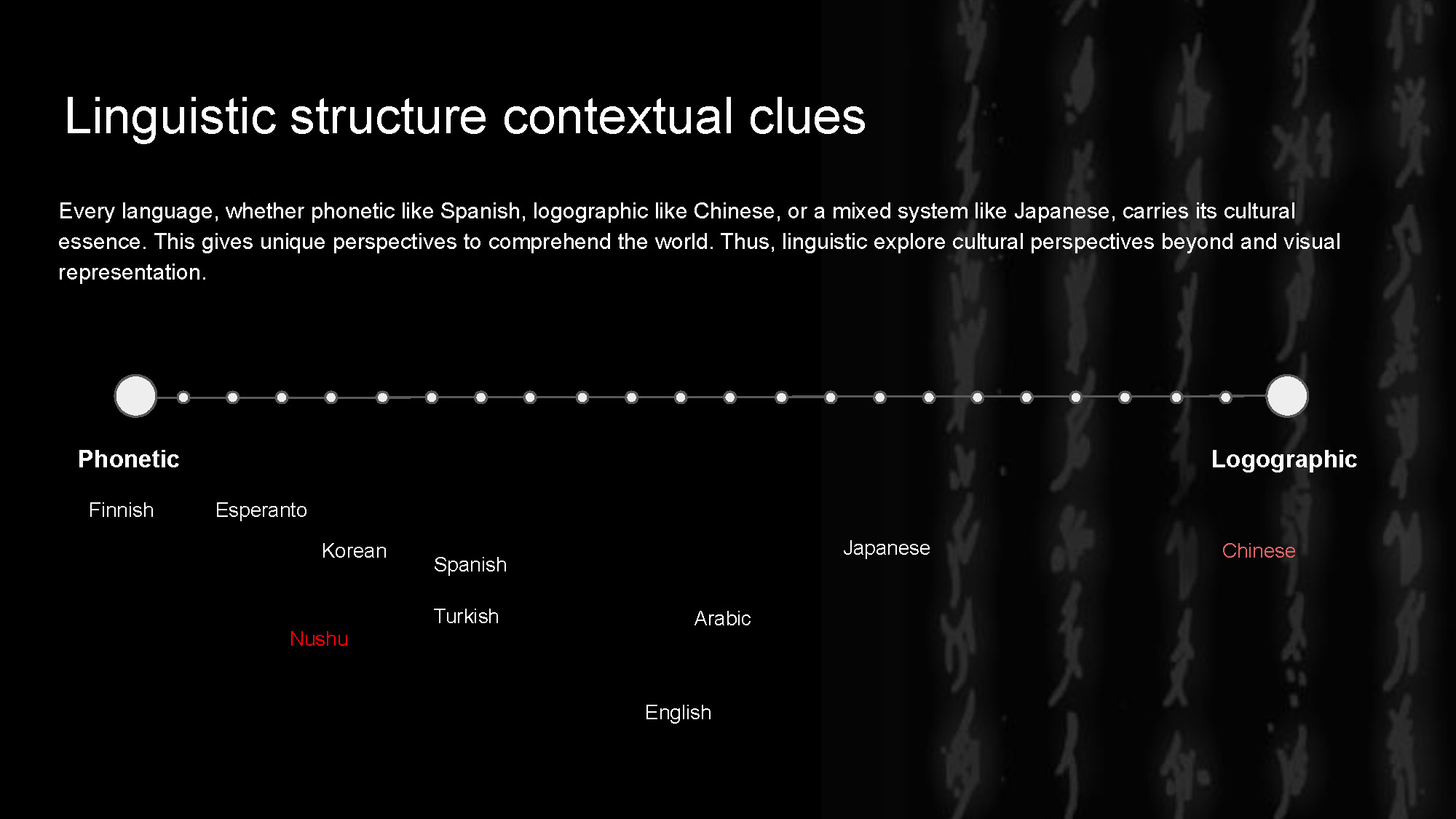
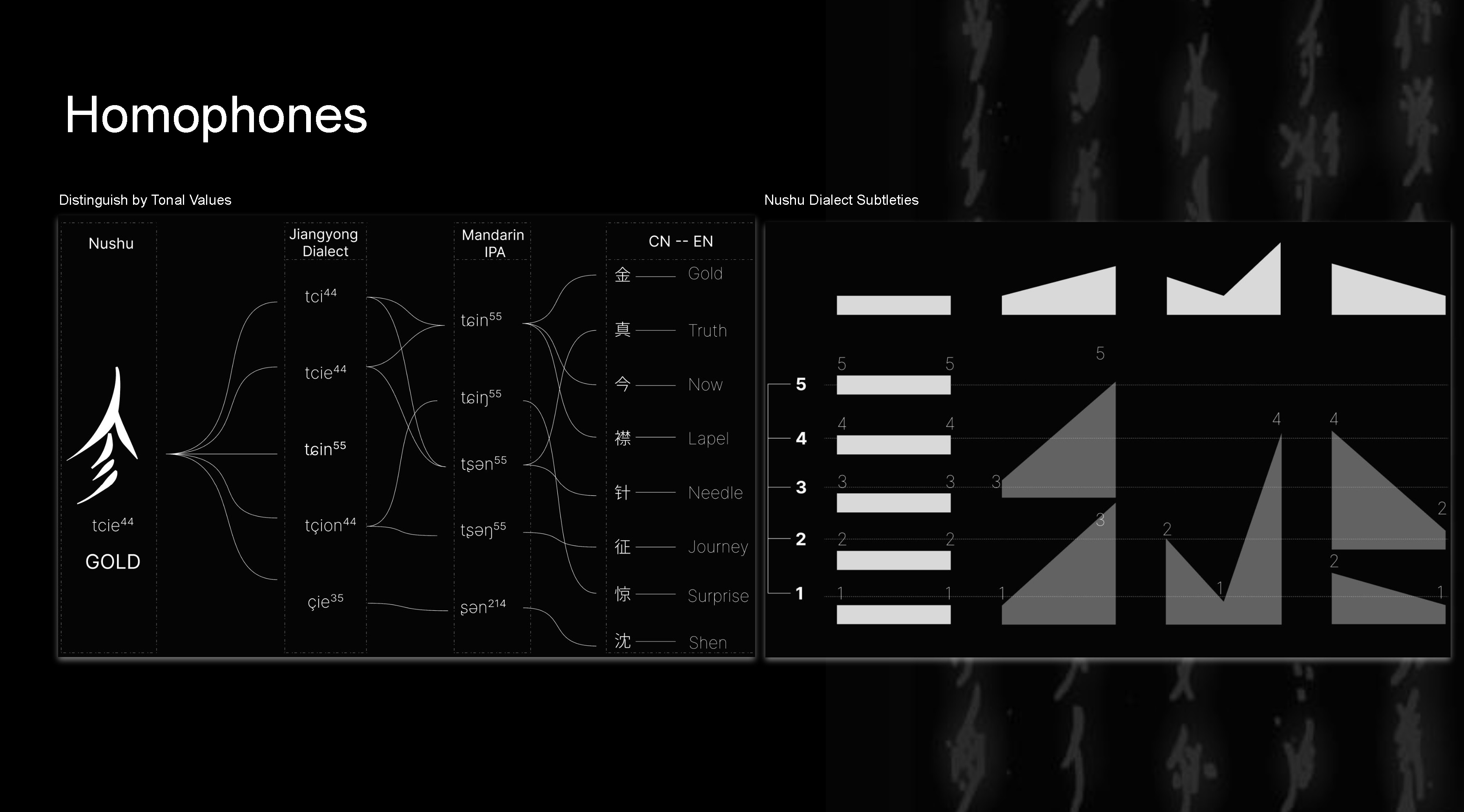
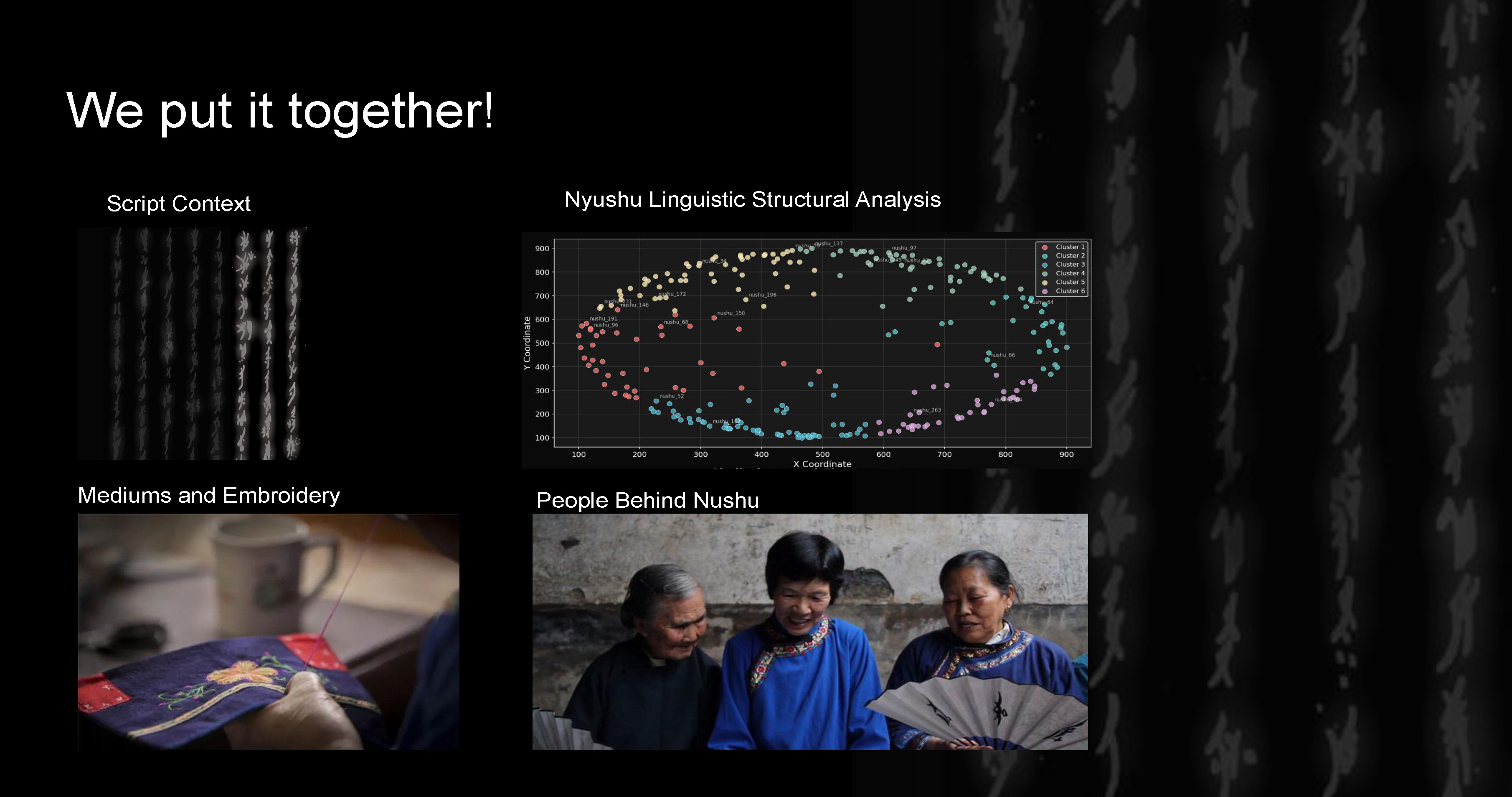
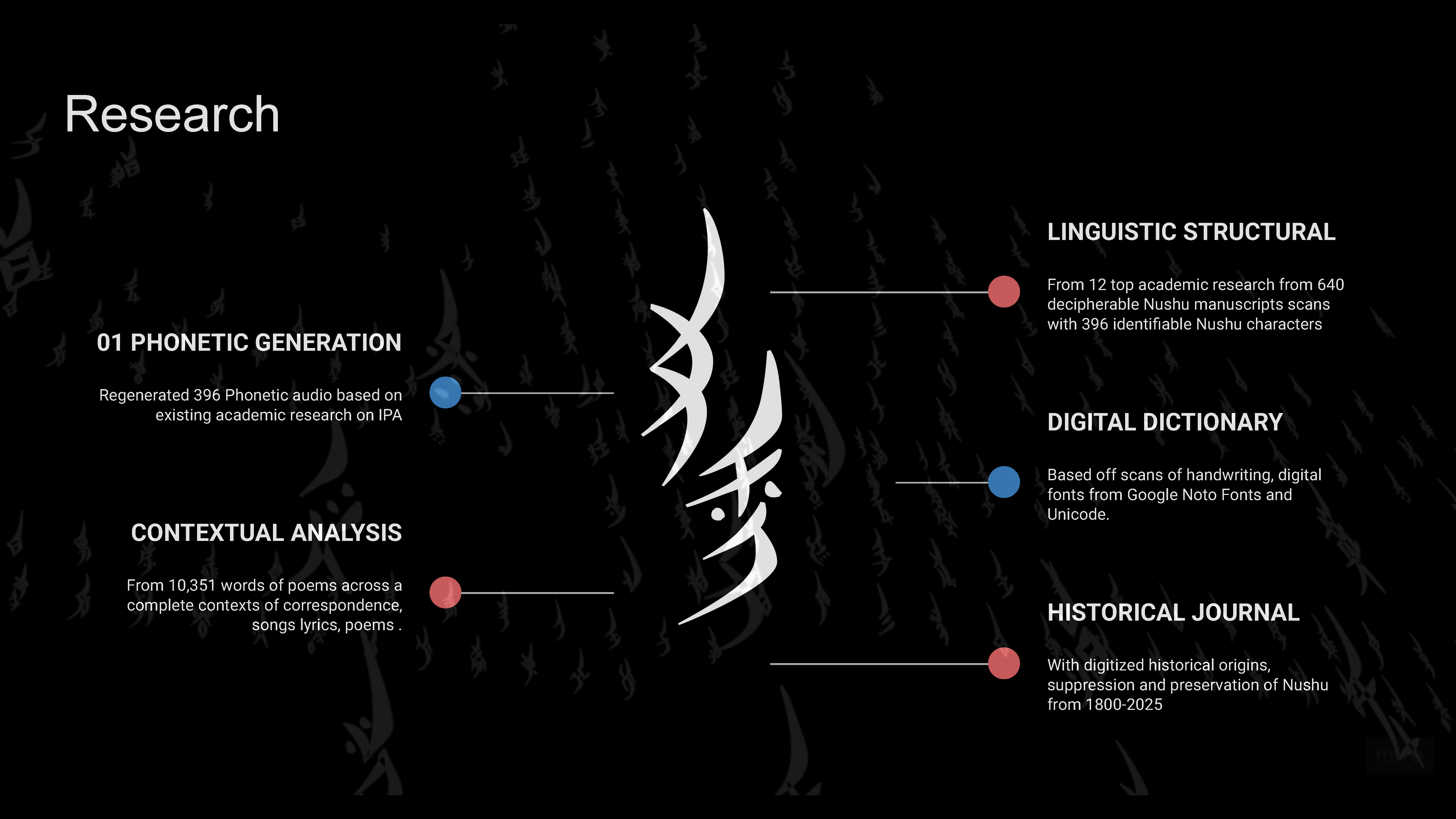
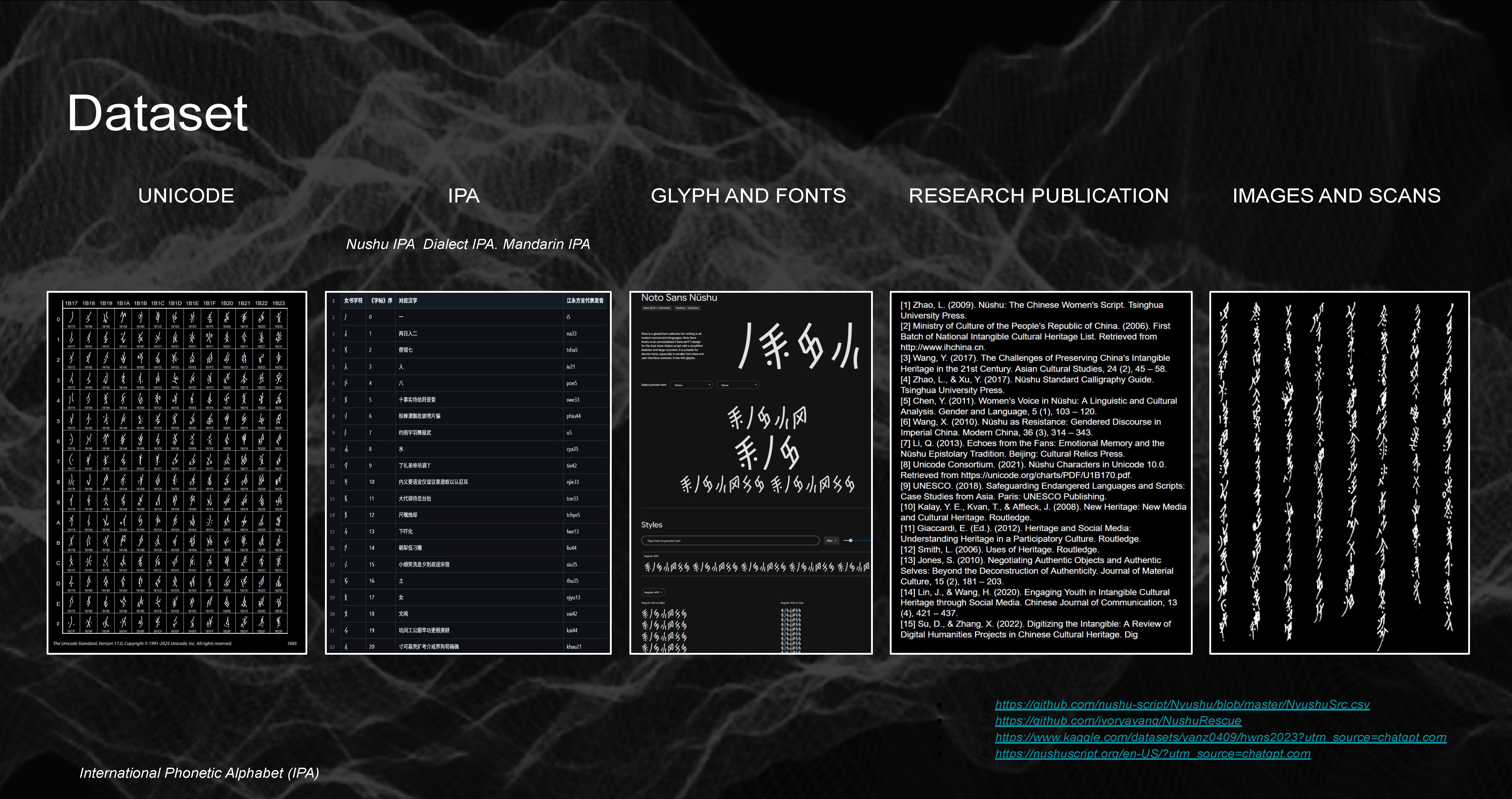
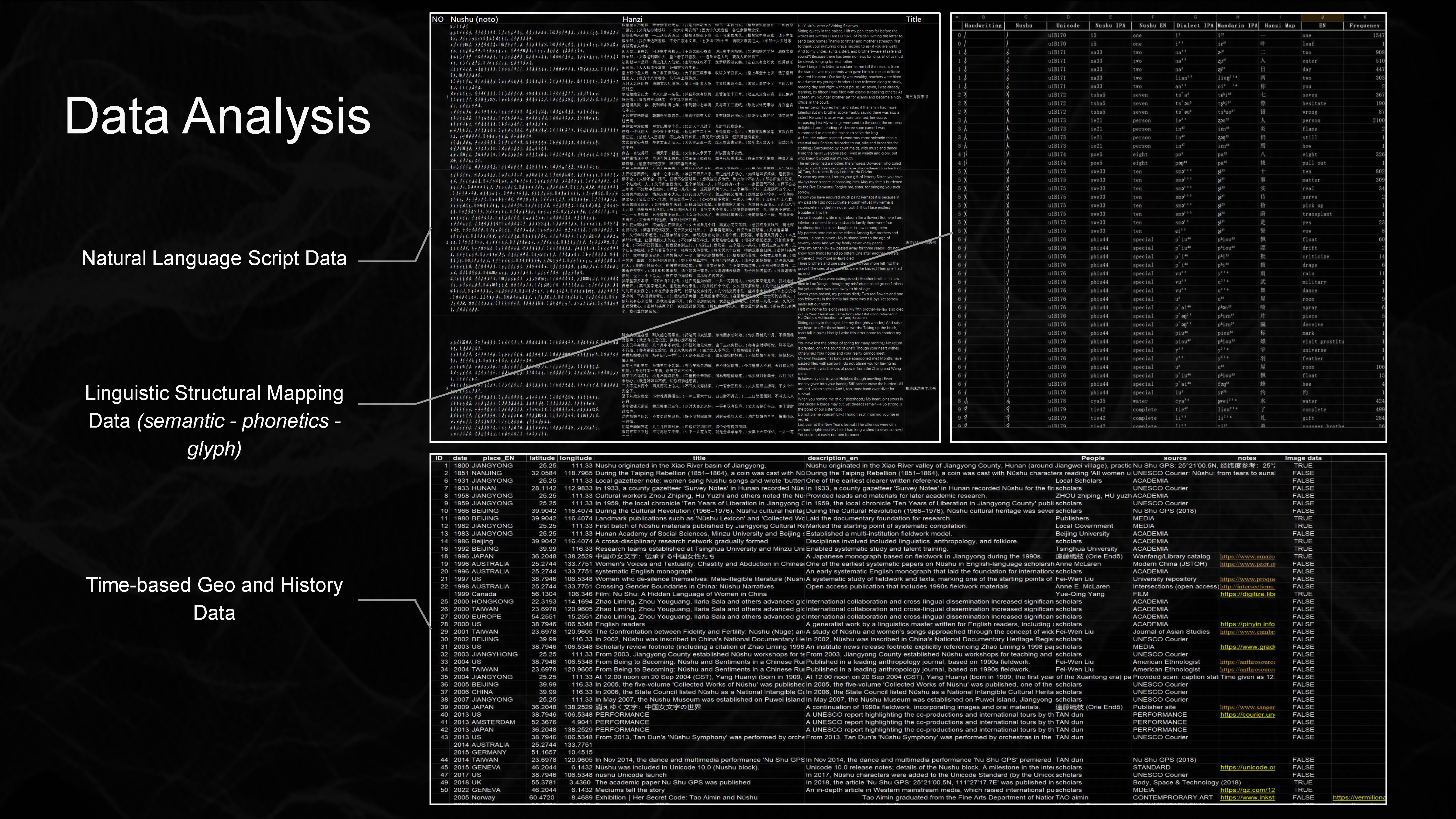
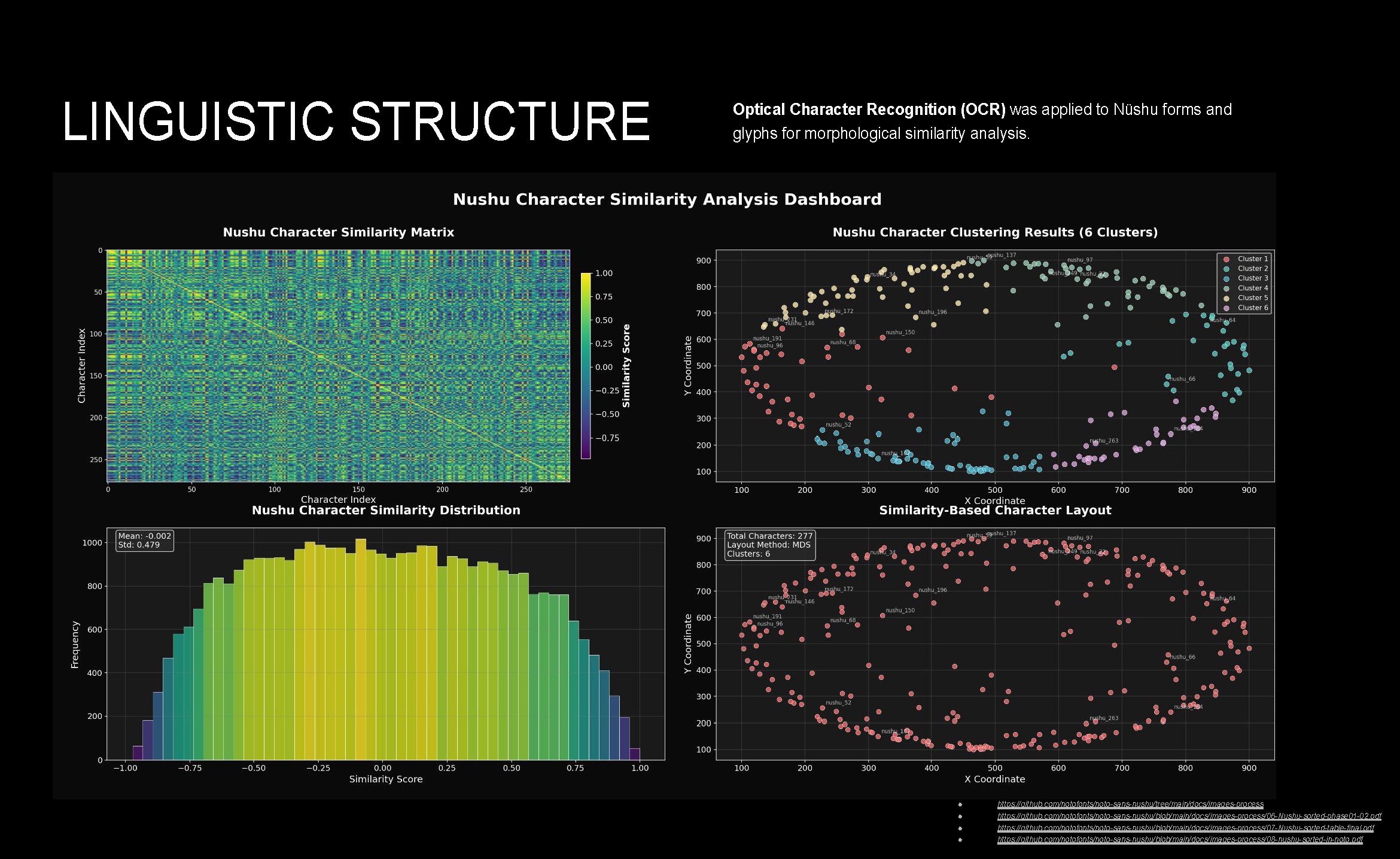
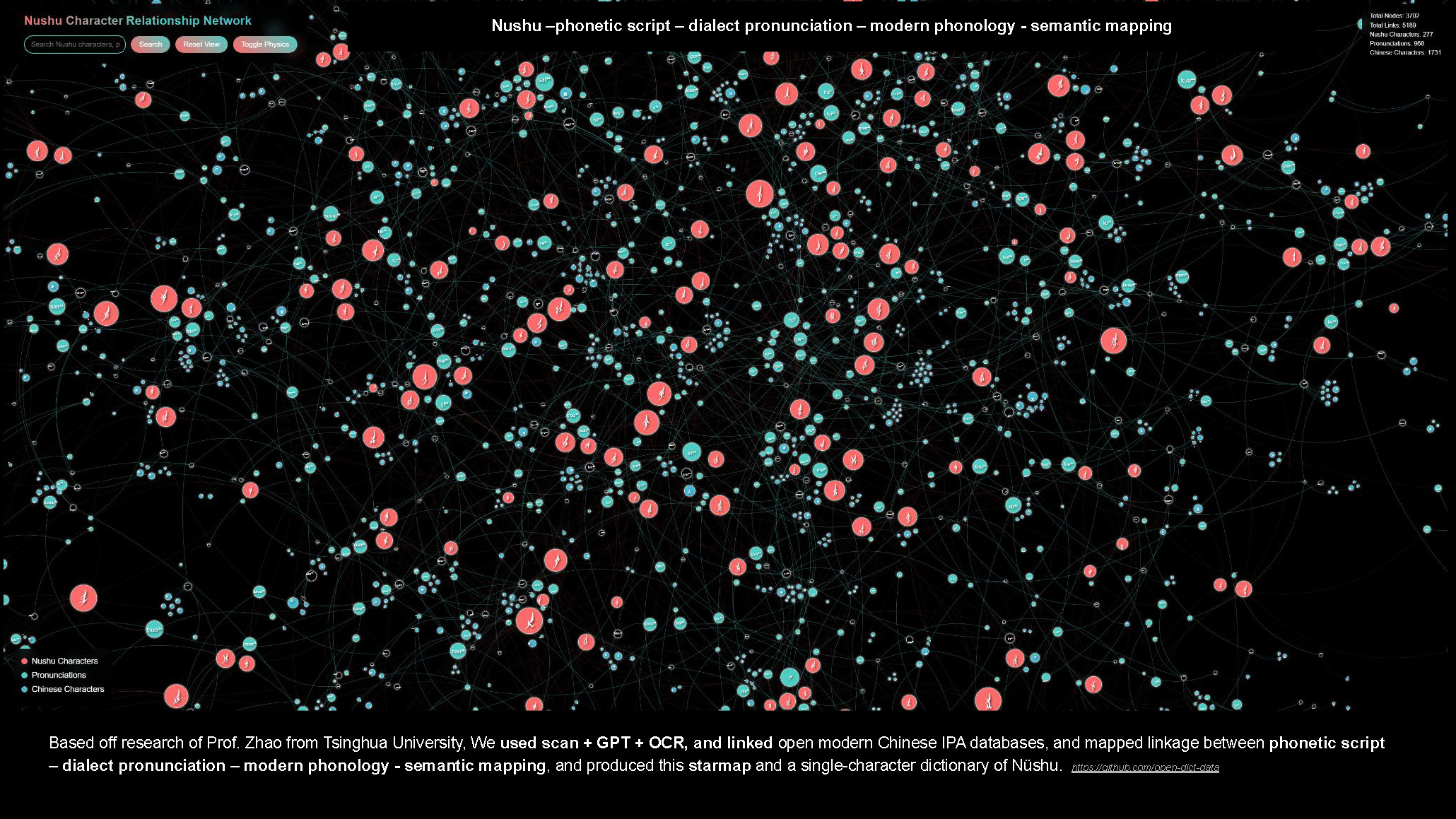
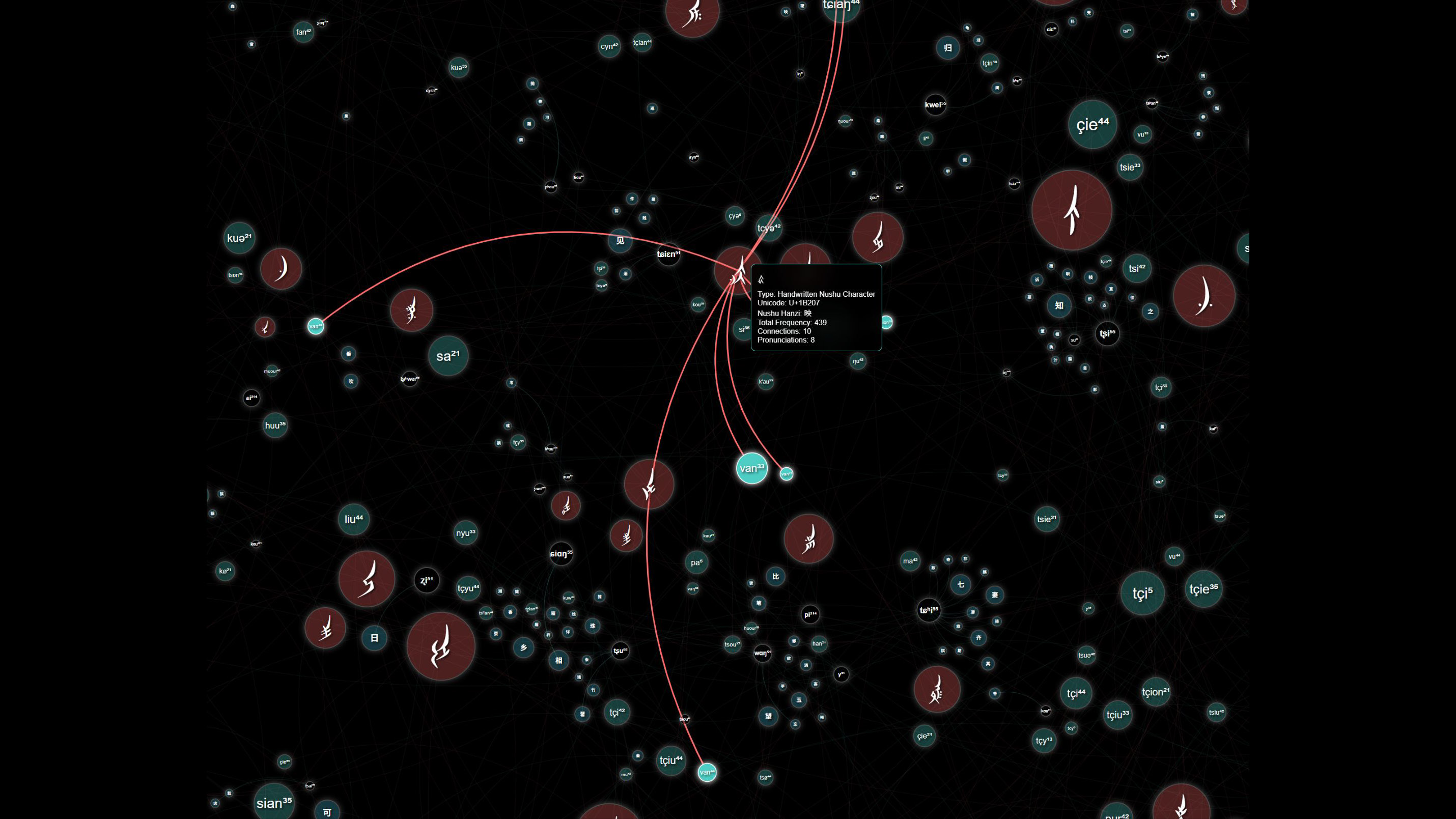
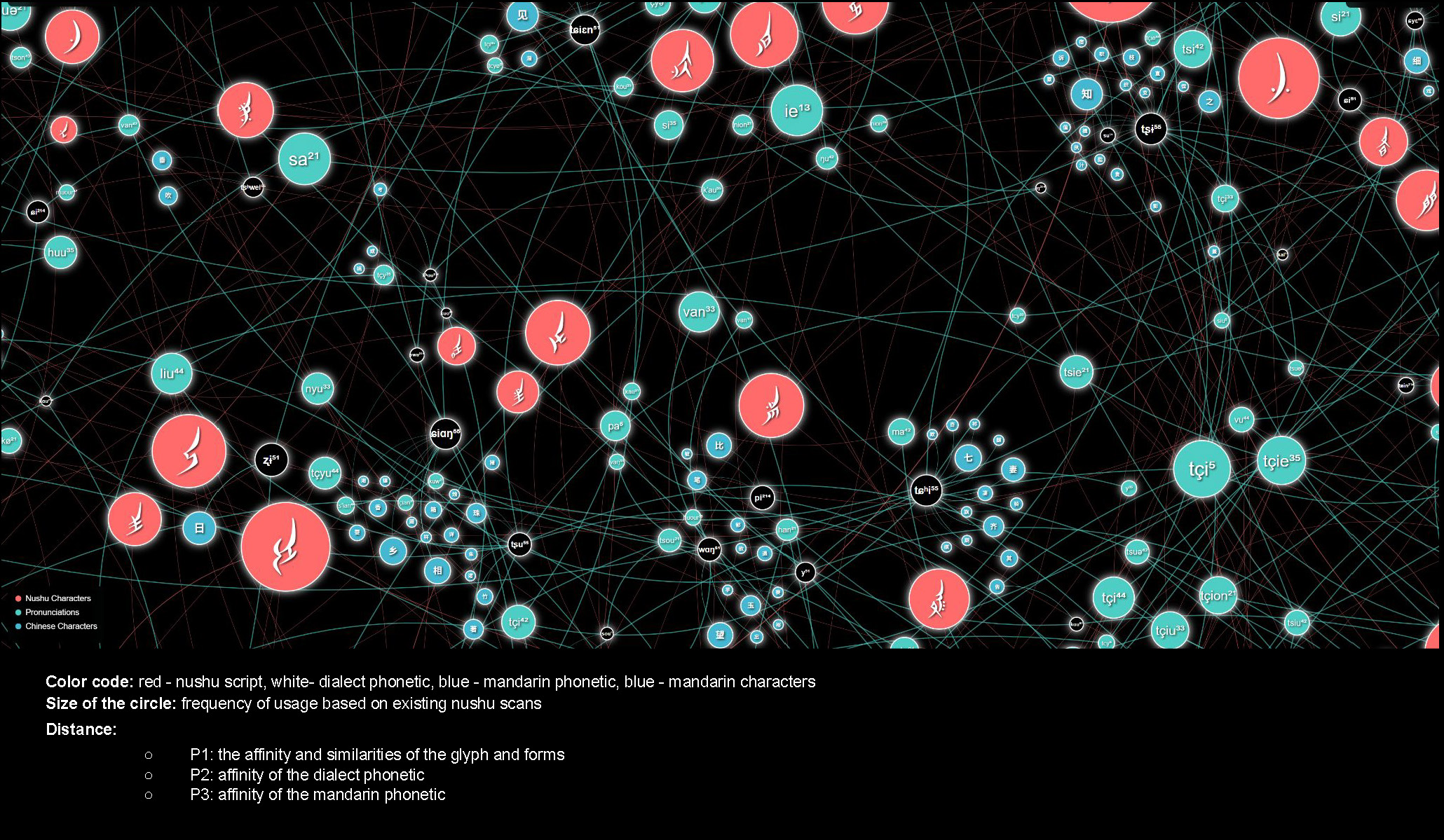
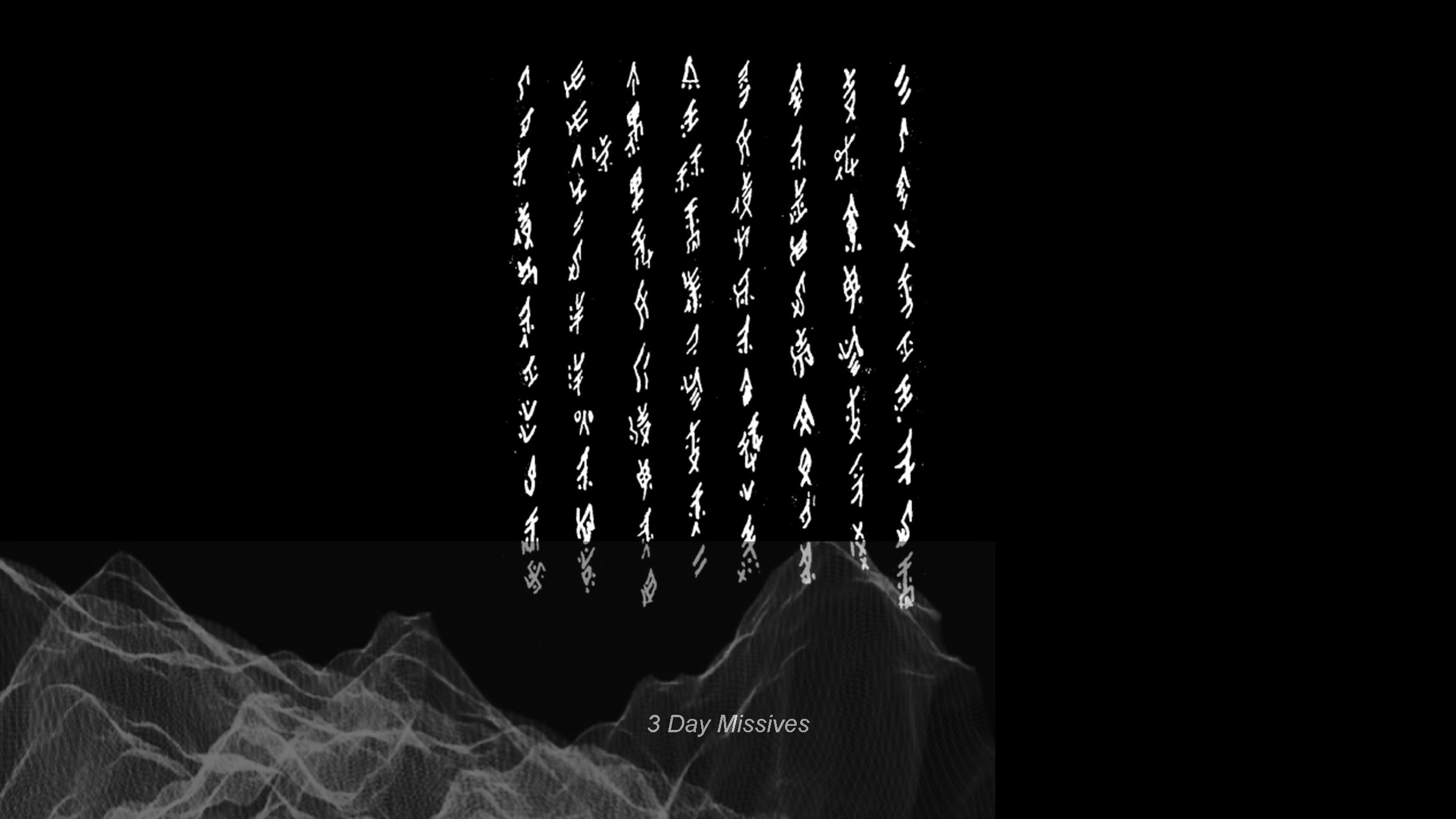
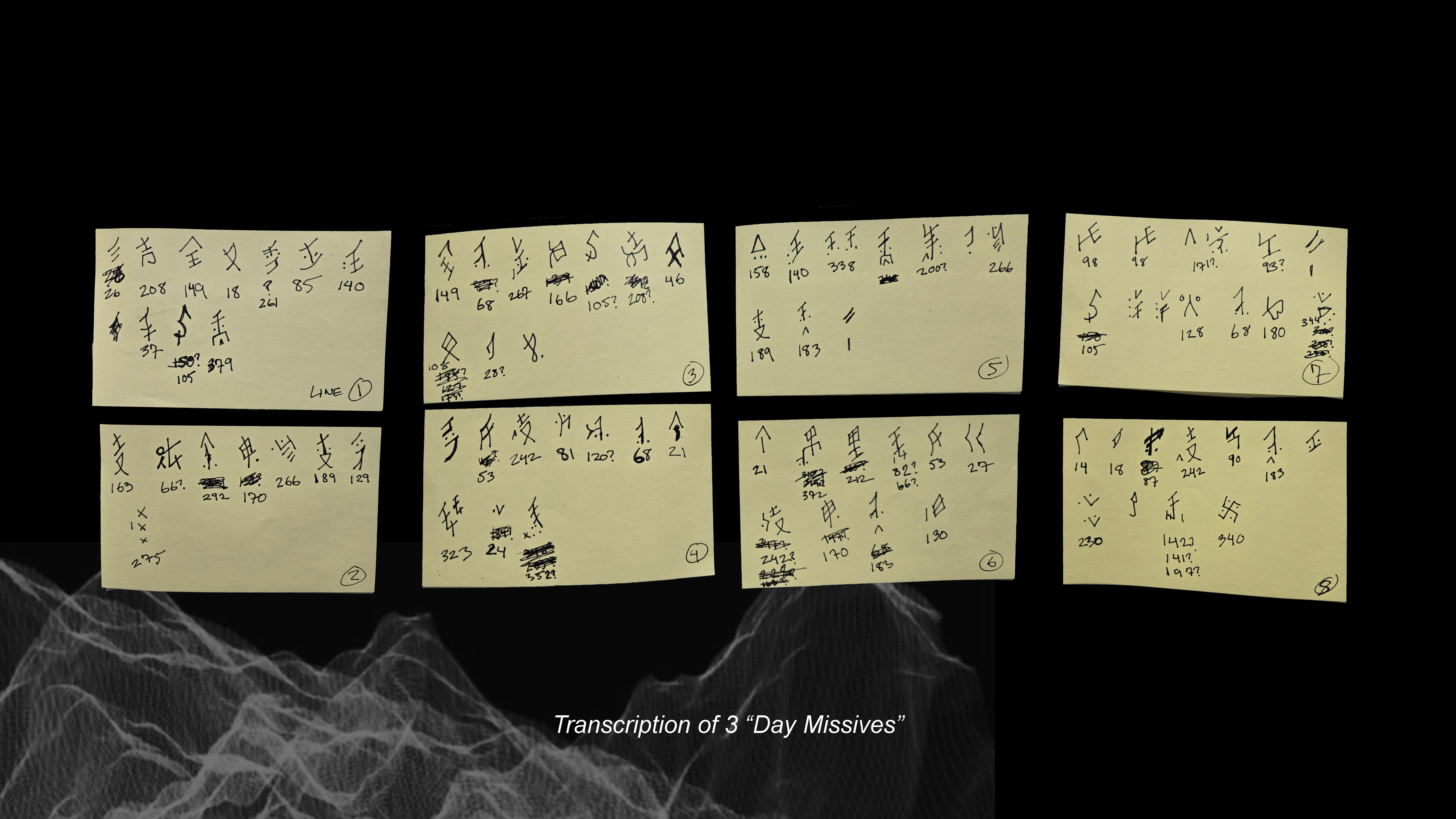
This interactive Nüshu digital dictionary archive maps Nüshu characters and their relations to Jiangyong Dialect, modern Mandarin in forms and sound, followed by Nüshu appearance in manual scripts and poems.
Community · Script · Identity
Research · Presentation

Bibliography
Chen, Y. (2011). Women's voice in Nüshu: A linguistic and cultural analysis. Gender and Language, 5(1), 103–120.
Giaccardi, E. (Ed.). (2012). Heritage and social media: Understanding heritage in a participatory culture. Routledge.
Jones, S. (2010). Negotiating authentic objects and authentic selves: Beyond the deconstruction of authenticity. Journal of Material Culture, 15(2), 181–203.
Kalay, Y. E., Kvan, T., & Affleck, J. (2008). New heritage: New media and cultural heritage. Routledge.
Li, Q. (2013). Echoes from the fans: Emotional memory and the Nüshu epistolary tradition. Cultural Relics Press.
Lin, J., & Wang, H. (2020). Engaging youth in intangible cultural heritage through social media. Chinese Journal of Communication, 13(4), 421–437.
Ministry of Culture of the People's Republic of China. (2006). First batch of national intangible cultural heritage list. http://www.ihchina.cn
Smith, L. (2006). Uses of heritage. Routledge.
Su, D., & Zhang, X. (2022). Digitizing the intangible: A review of digital humanities projects in Chinese cultural heritage. Digital Humanities.
Unicode Consortium. (2021). Nüshu characters in Unicode 10.0. https://unicode.org/charts/PDF/U1B170.pdf
UNESCO. (2018). Safeguarding endangered languages and scripts: Case studies from Asia. UNESCO Publishing.
Wang, X. (2010). Nüshu as resistance: Gendered discourse in imperial China. Modern China, 36(3), 314–343.
Wang, Y. (2017). The challenges of preserving China's intangible heritage in the 21st century. Asian Cultural Studies, 24(2), 45–58.
Zhao, L. (2009). Nüshu: The Chinese women's script. Tsinghua University Press.
Zhao, L., & Xu, Y. (2017). Nüshu standard calligraphy guide. Tsinghua University Press.