
2026 · Harvard · Advised by Patrick Slade
Biomechanics · Wearable Systems
Research Methods · Signal Processing
Role: Experimental Design, Signal Processing, Wearable Hardware, Data Analysis
Probing how electrical muscle stimulation reshapes lower limb coordination under dual cognitive and physical load.
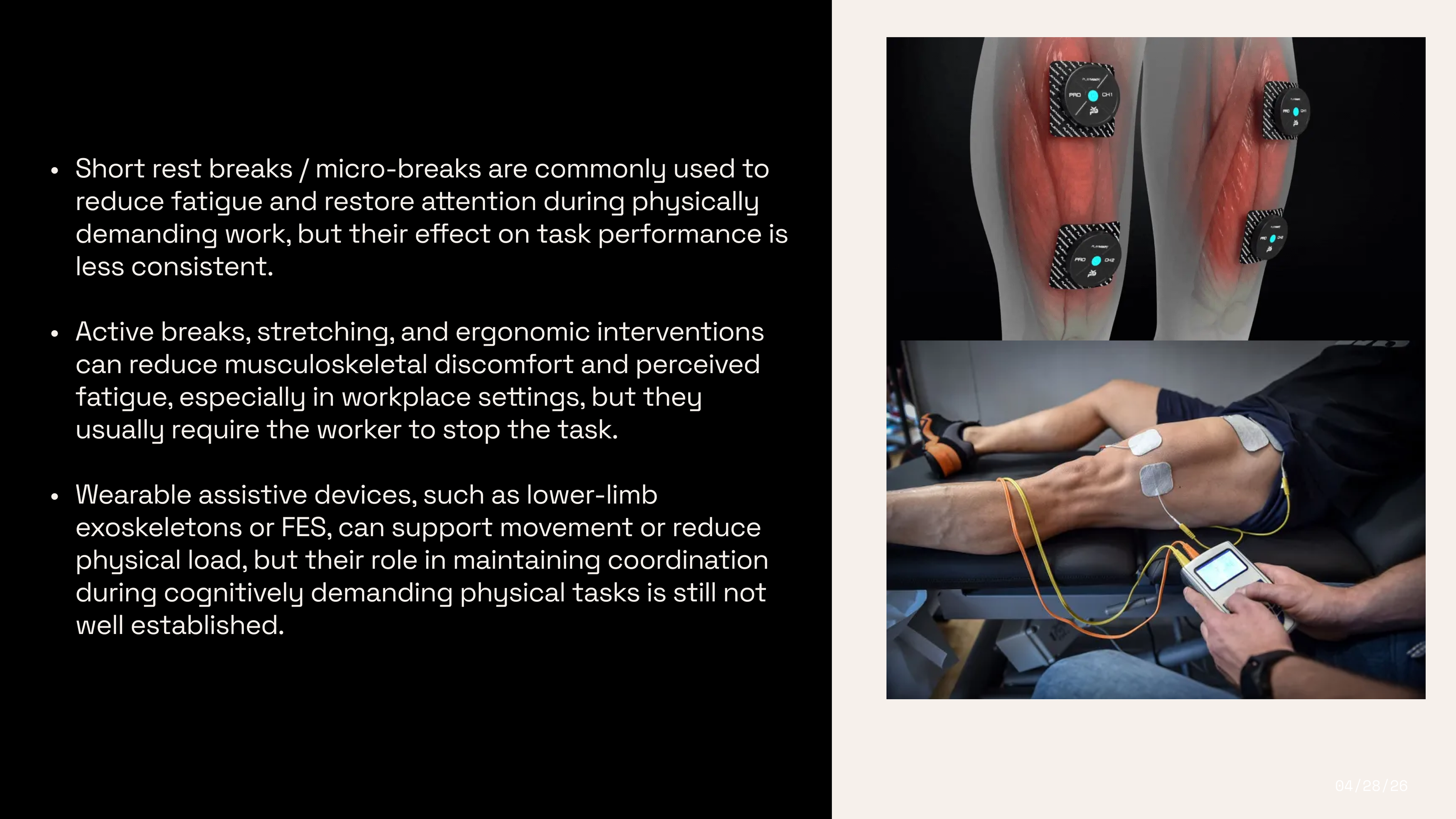
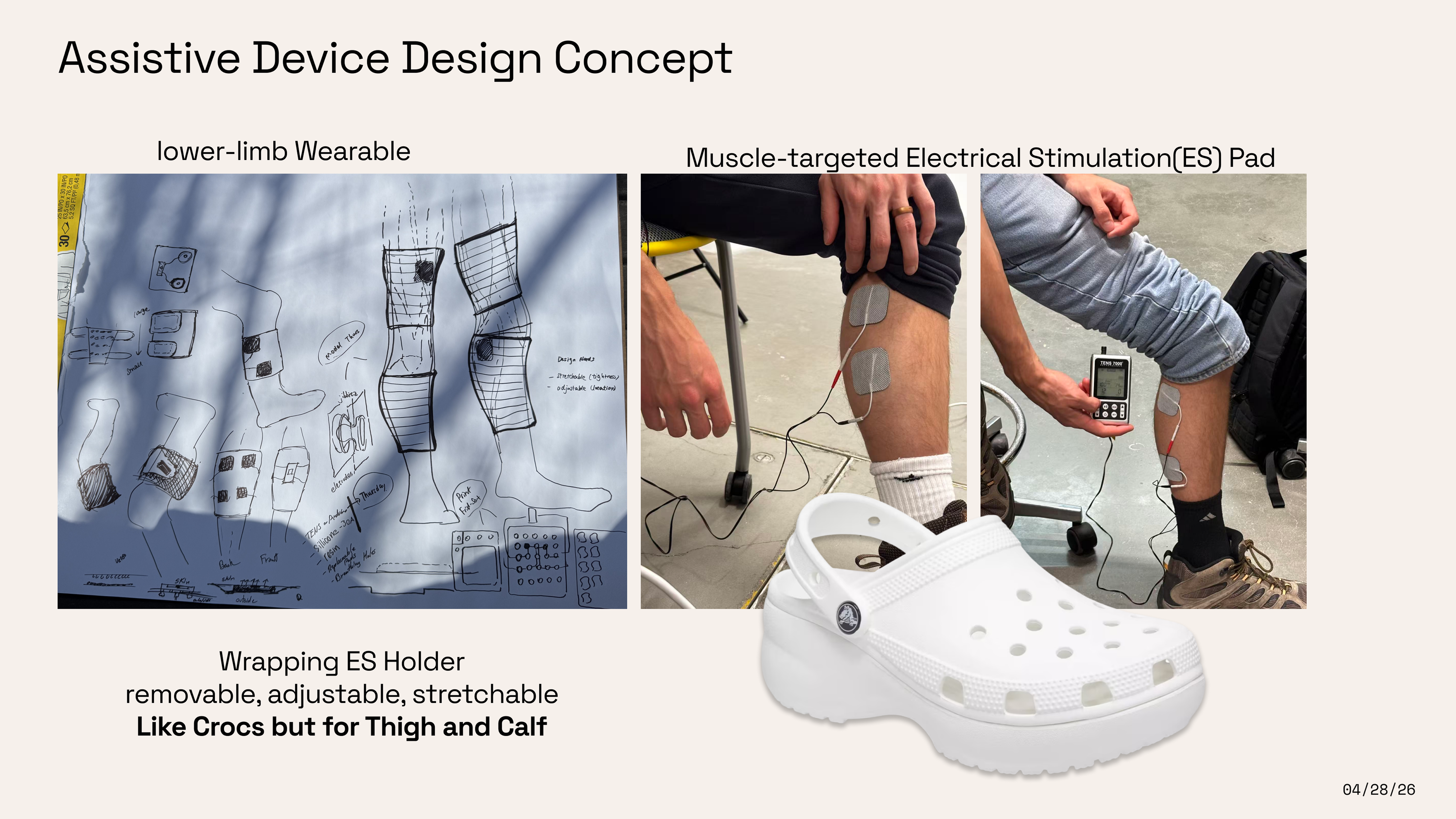
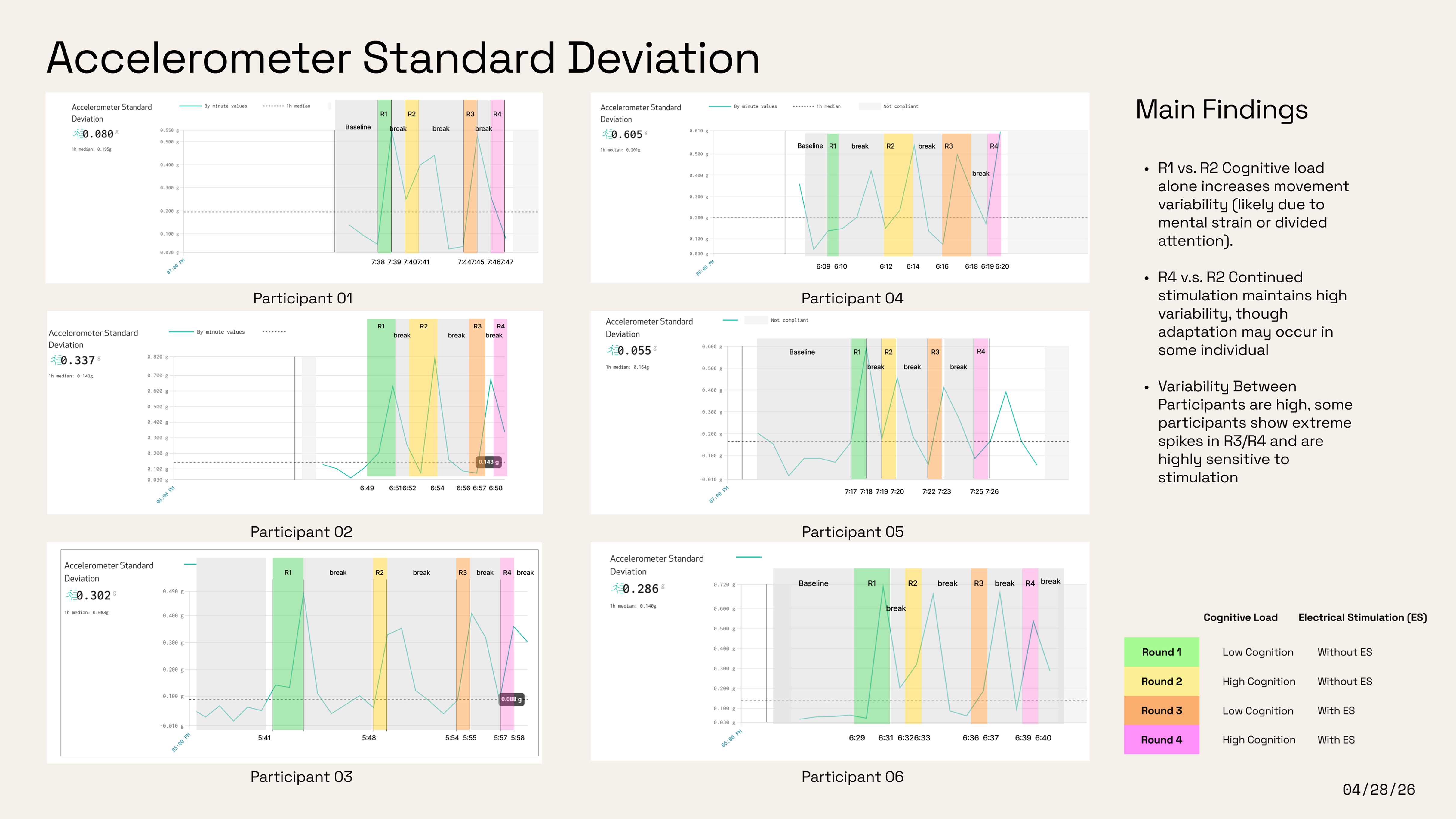
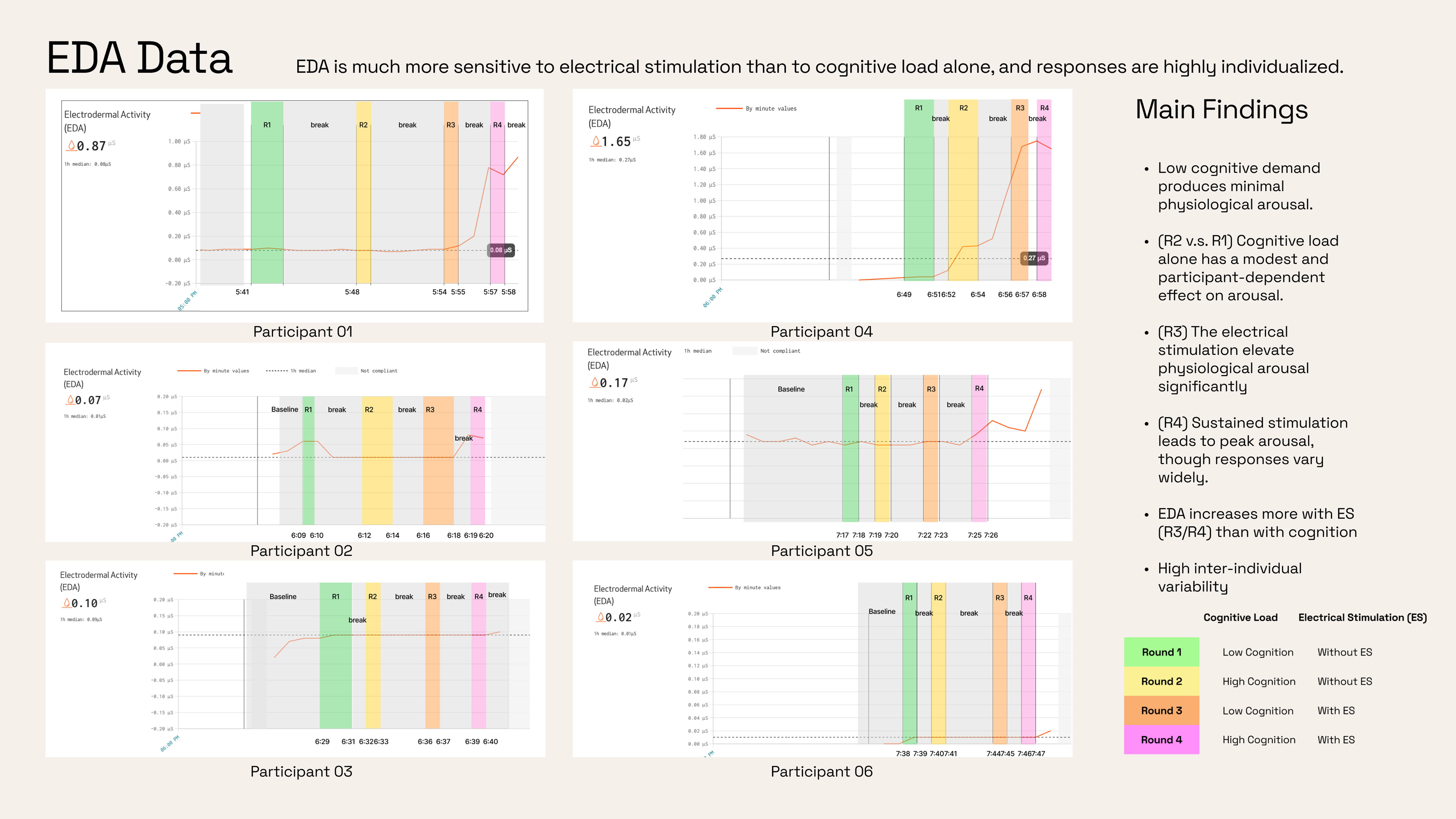
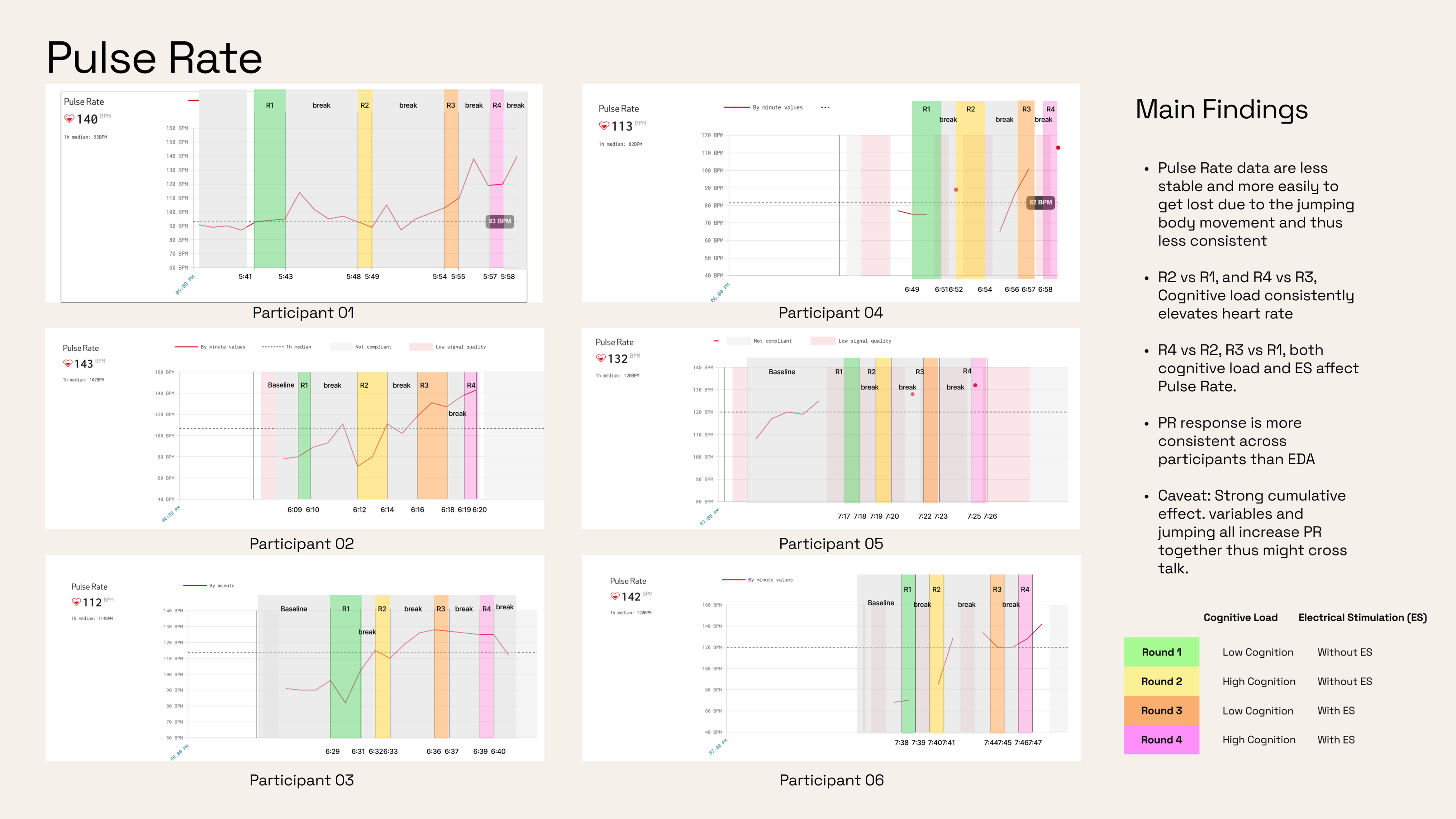
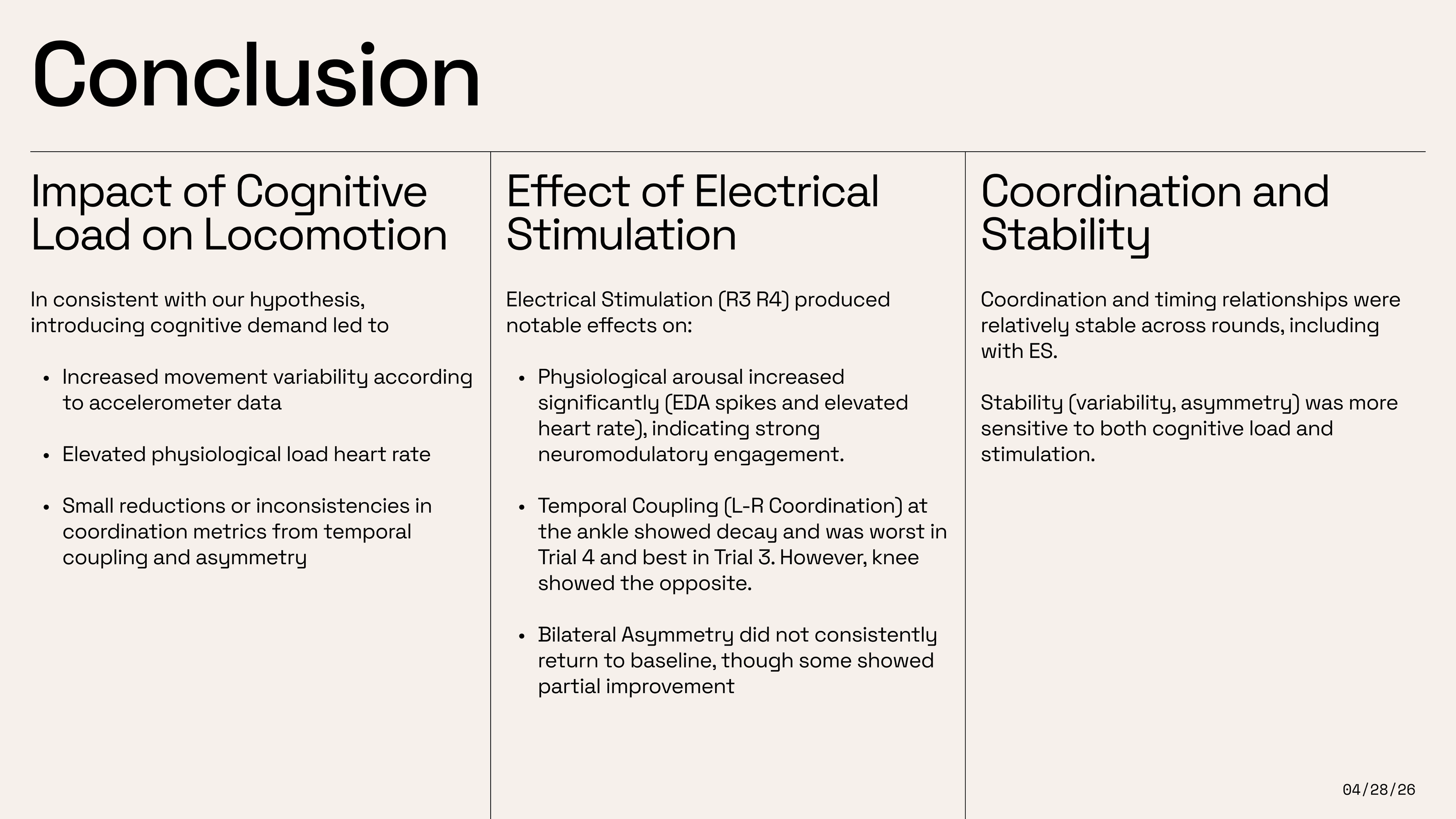
This research, conducted at Harvard's SEAS under the supervision of Prof. Slade, investigates whether transcutaneous electrical neuromuscular stimulation (TENS) applied to the calf can modify lower limb coordination during a concurrent cognitive task, and what that reveals about the neural and muscular pathways governing human movement.
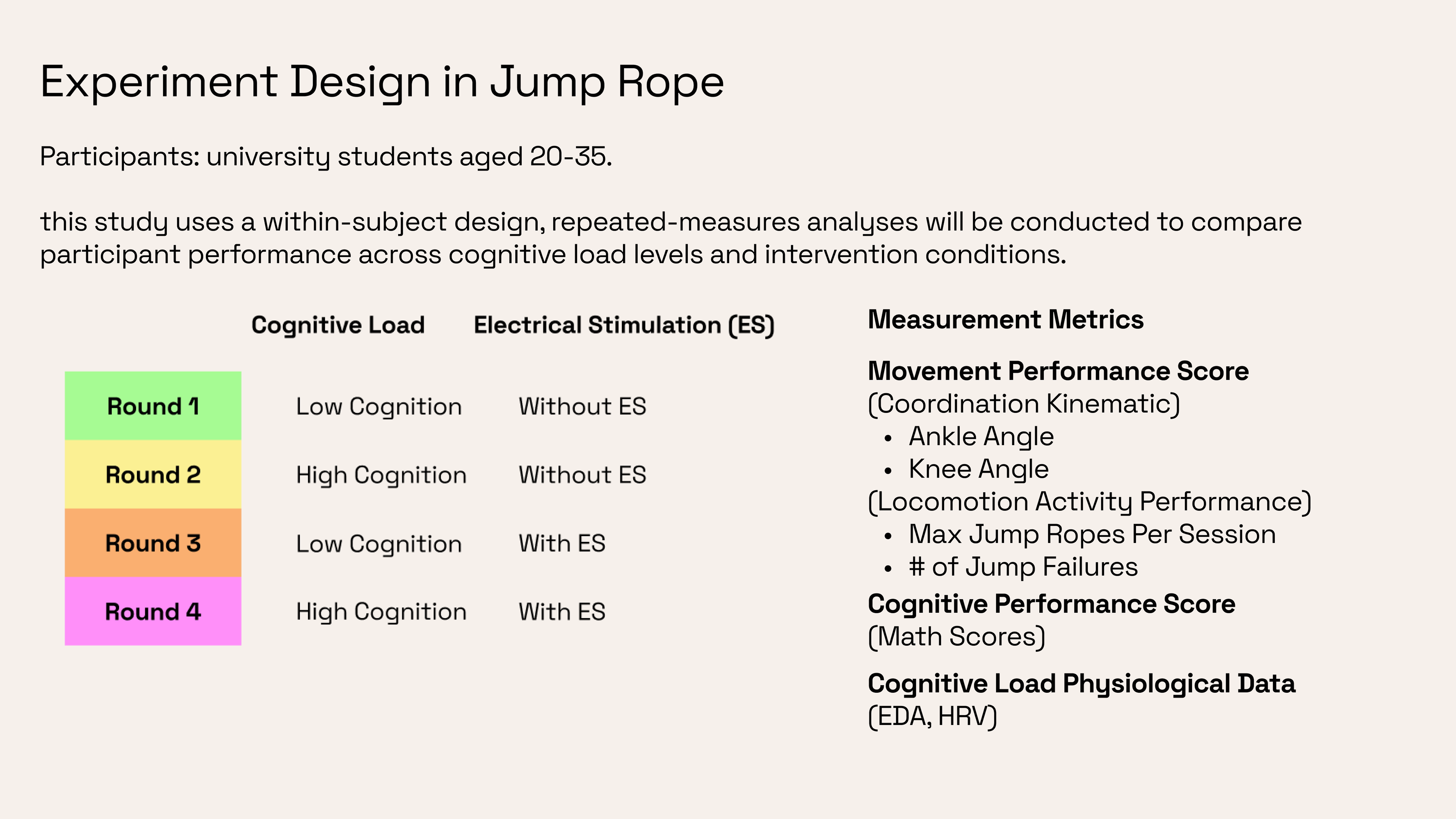
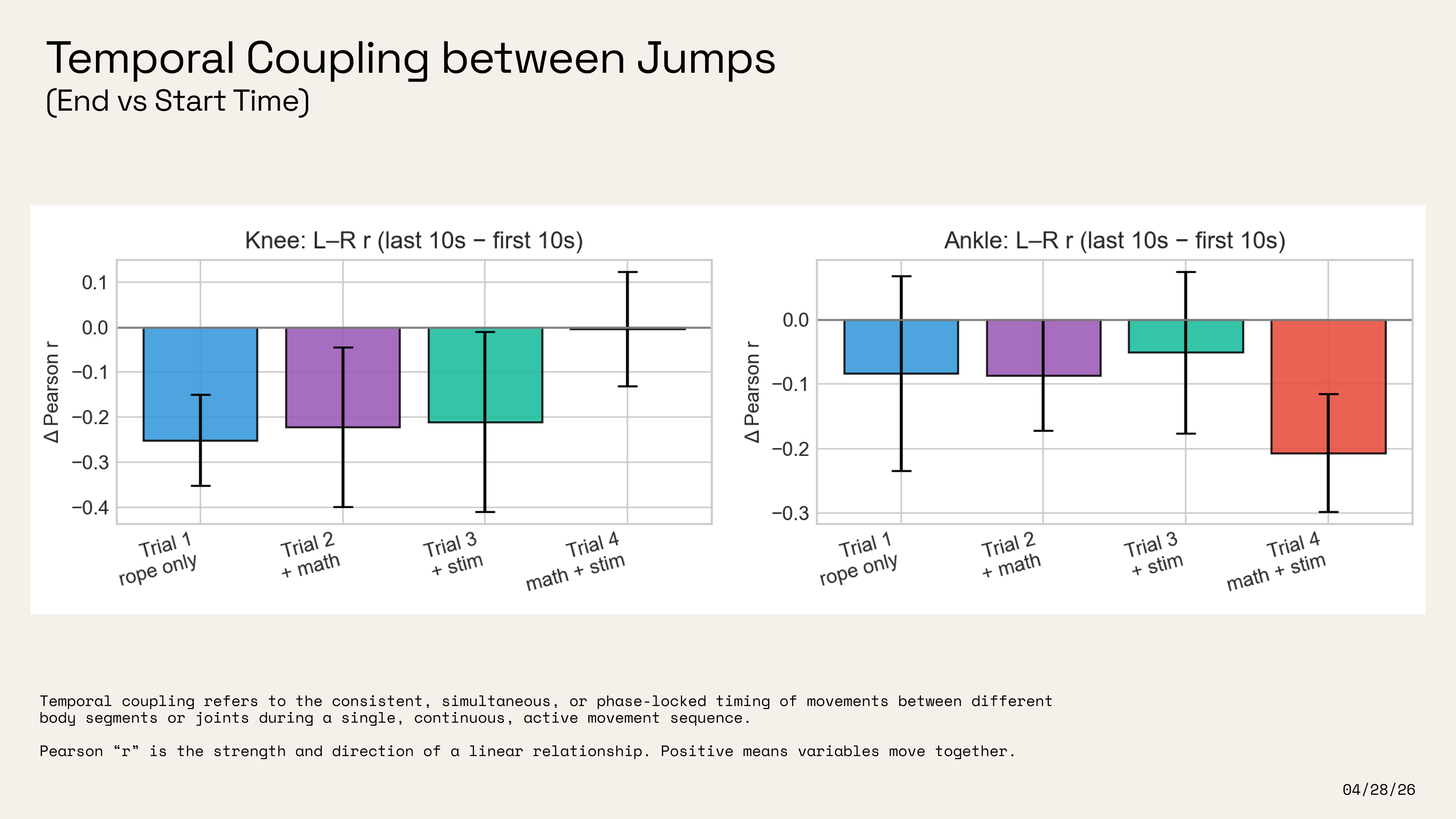
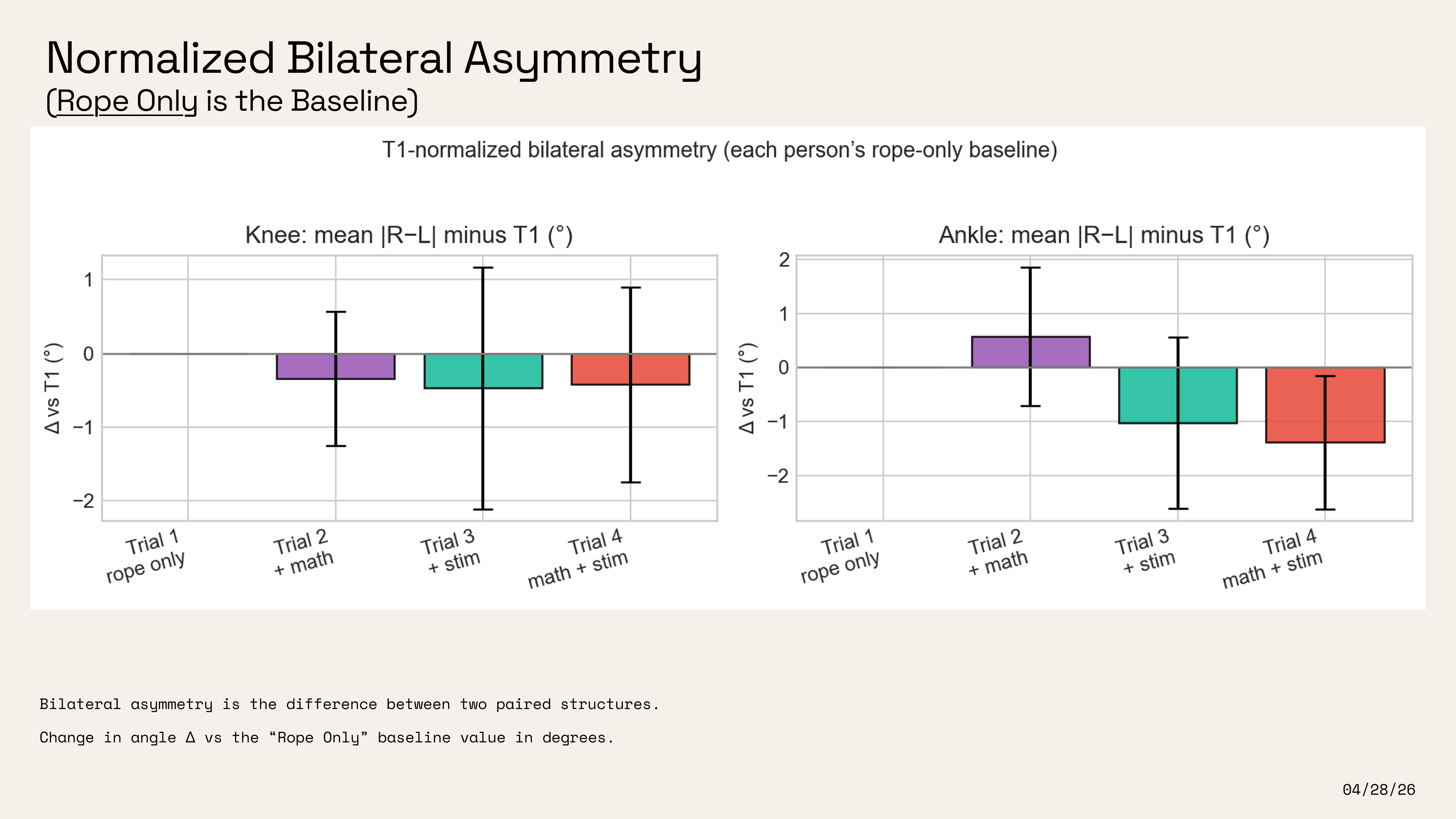
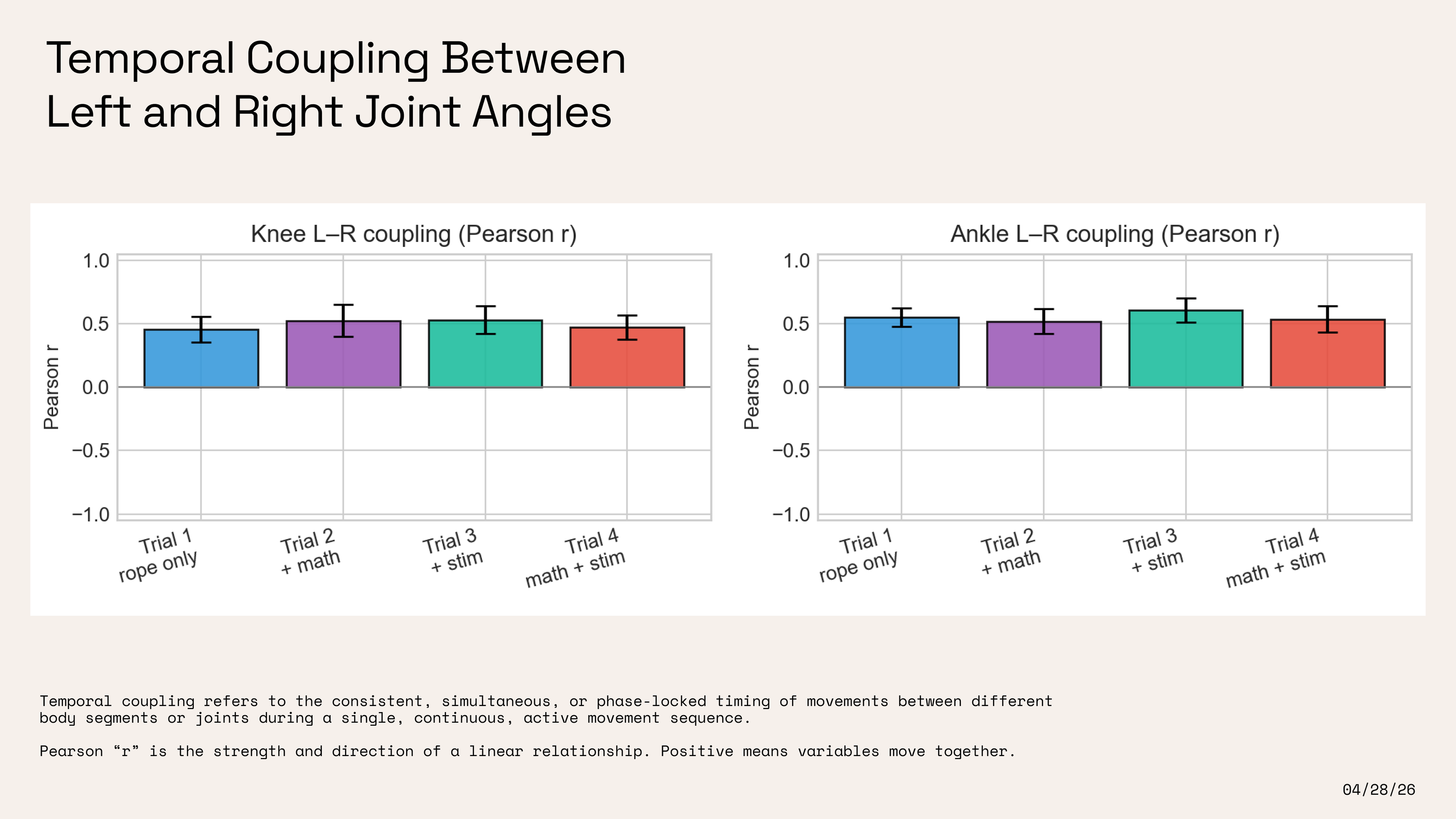
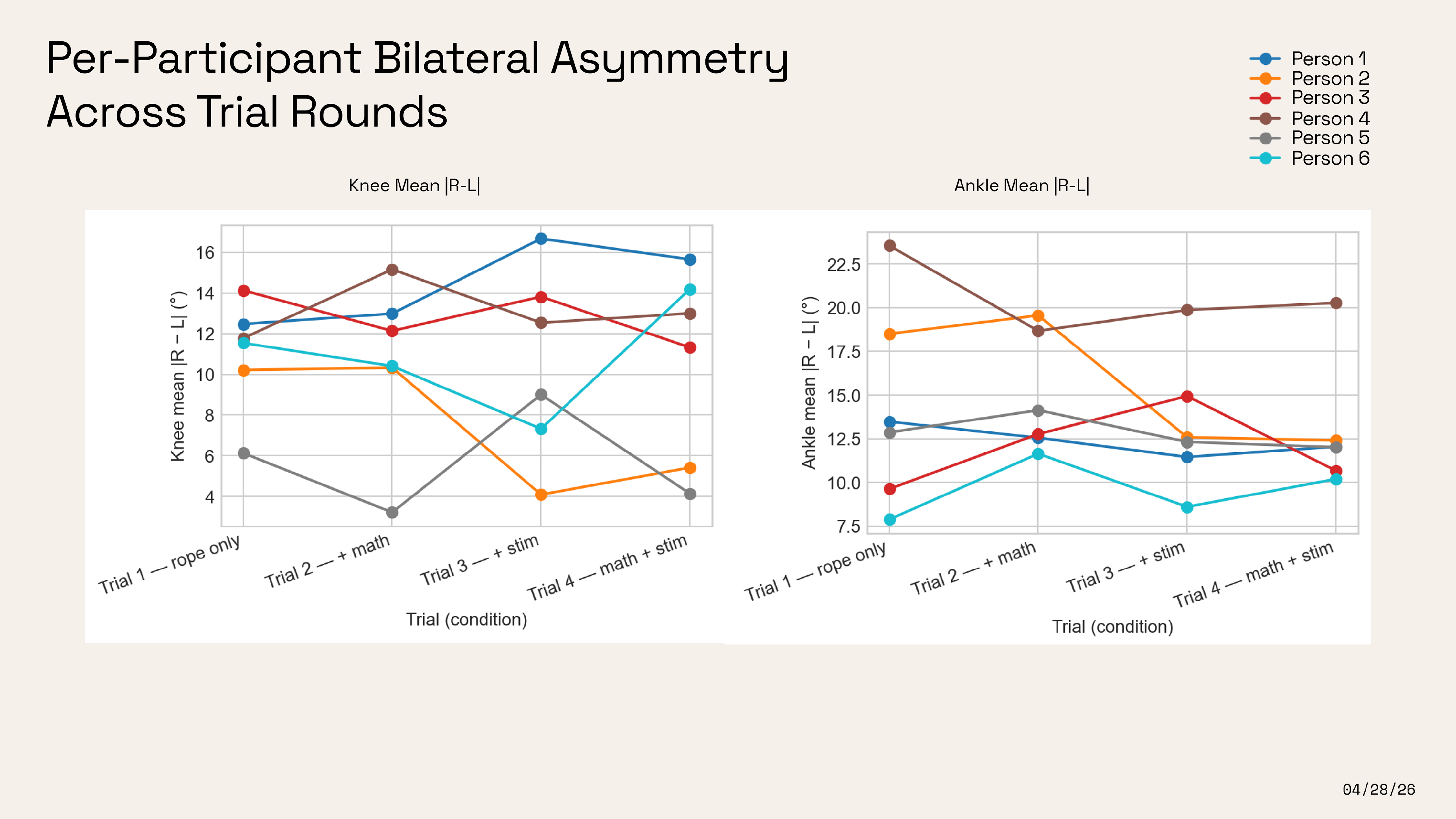
The study employed a within-subject dual-task paradigm with four counterbalanced conditions, crossing cognitive load with calf TENS stimulation. Bilateral knee and ankle joint angle time-series were captured via OpenCap and processed to extract three coordination metrics, each normalized to individual participant baselines to account for natural variation.
Methods
Within-subject Design4 Counterbalanced ConditionsDual-task Paradigm
Hardware
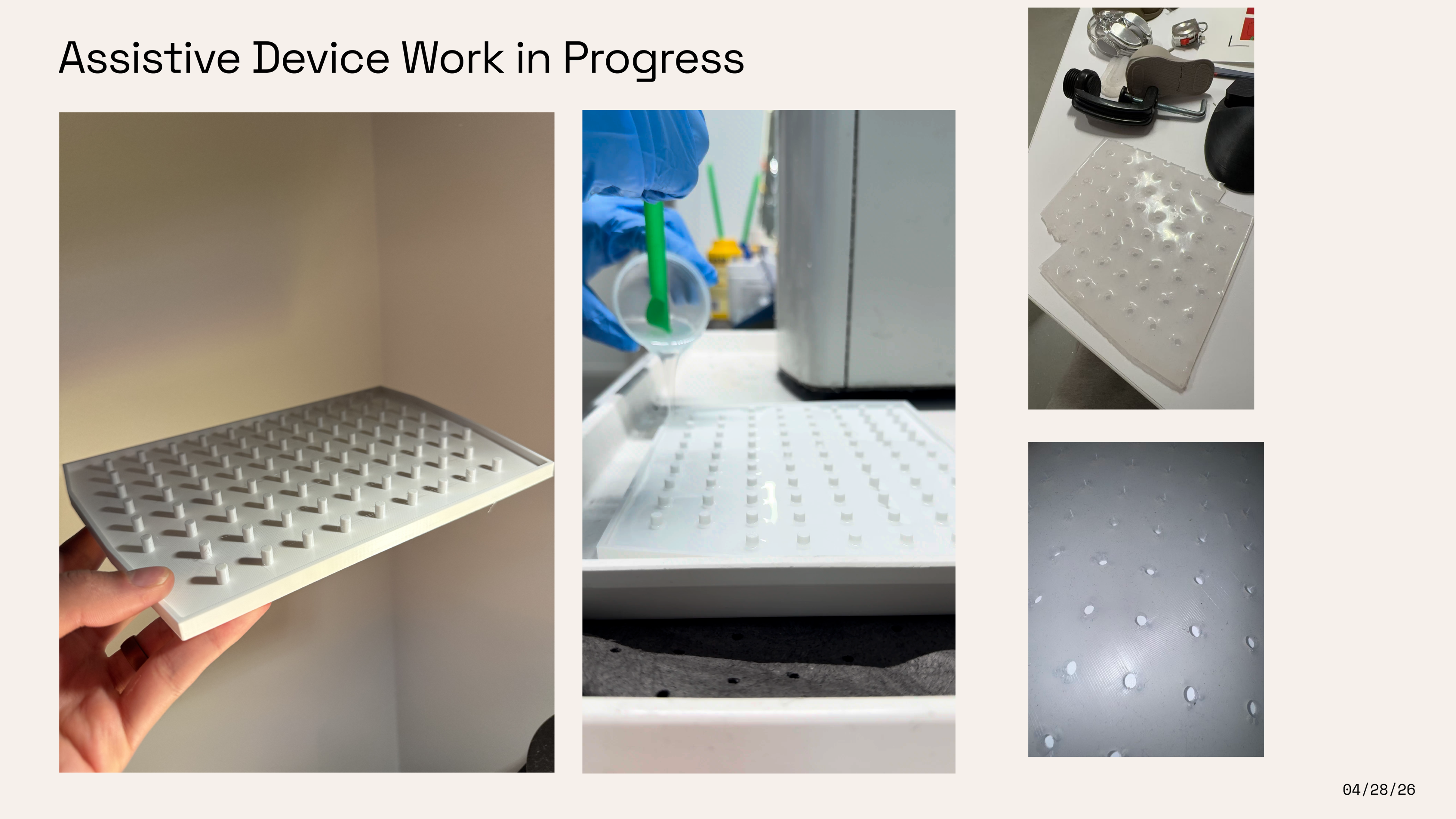
TENS / EMS DeviceModular Wearable AttachmentMotion Capture
Software
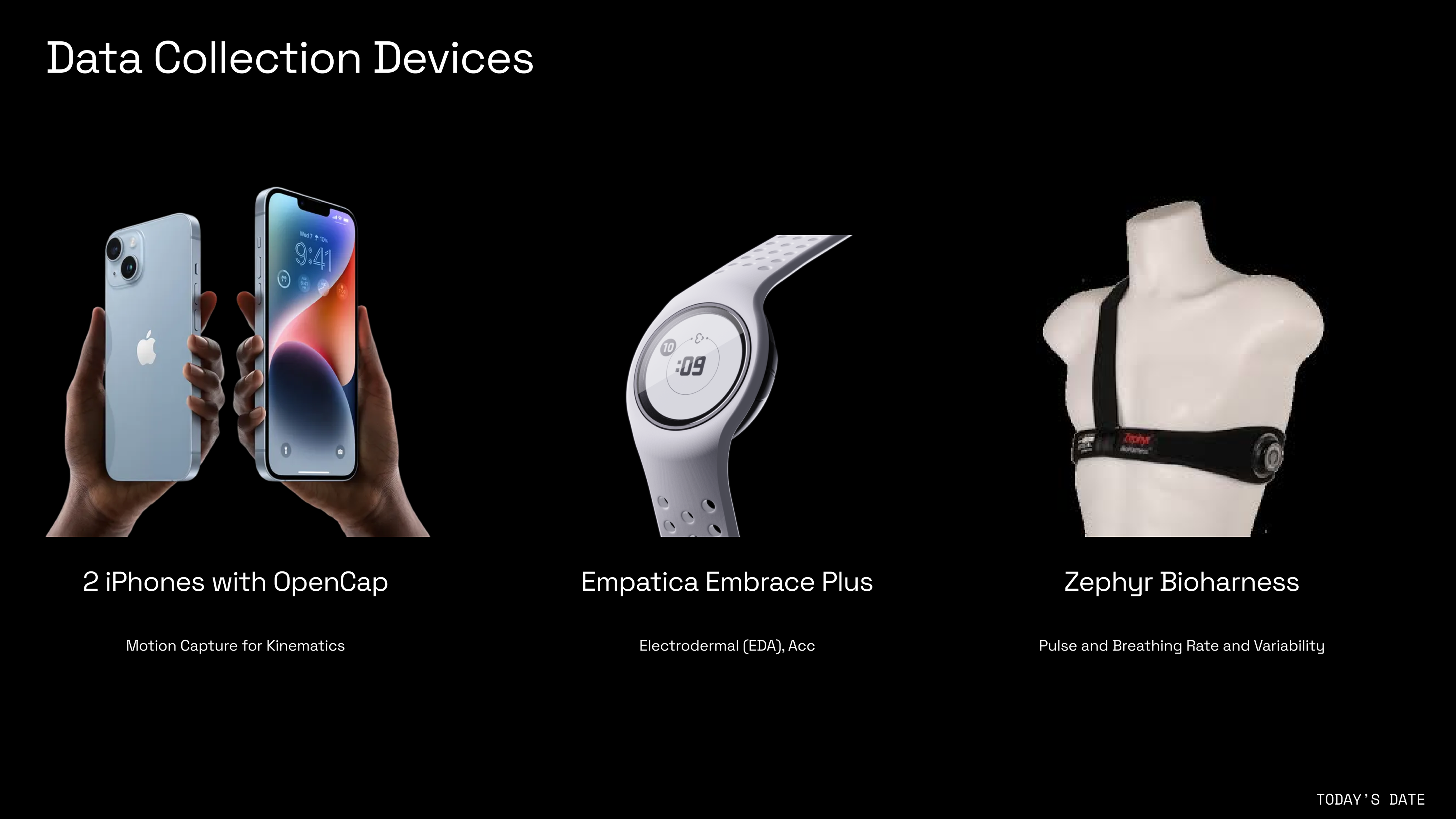
OpenCapOpenSimPython / MATLAB
Measures
Bilateral Knee AngleAnkle Joint Angle3 Coordination Metrics
Overview
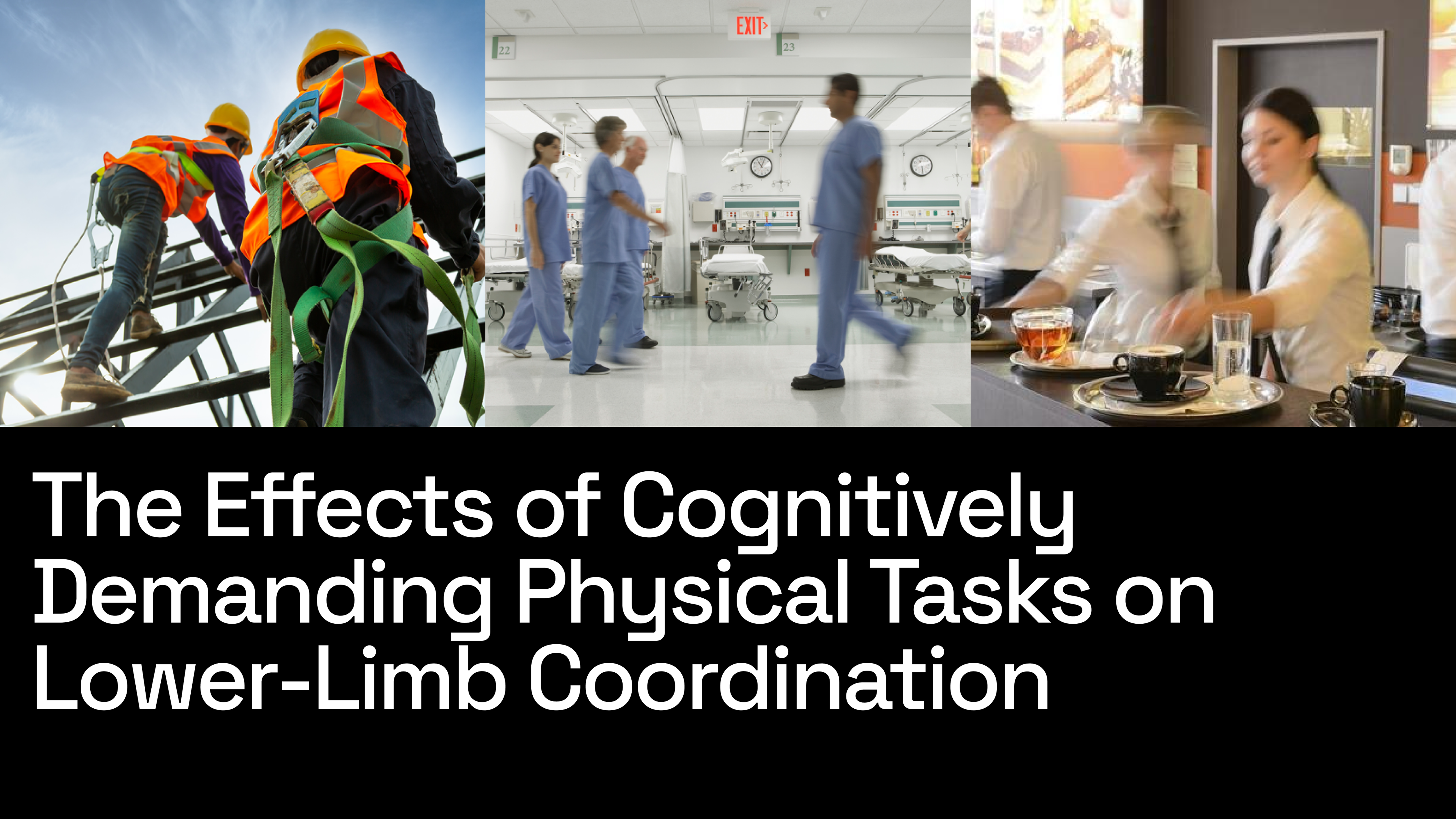
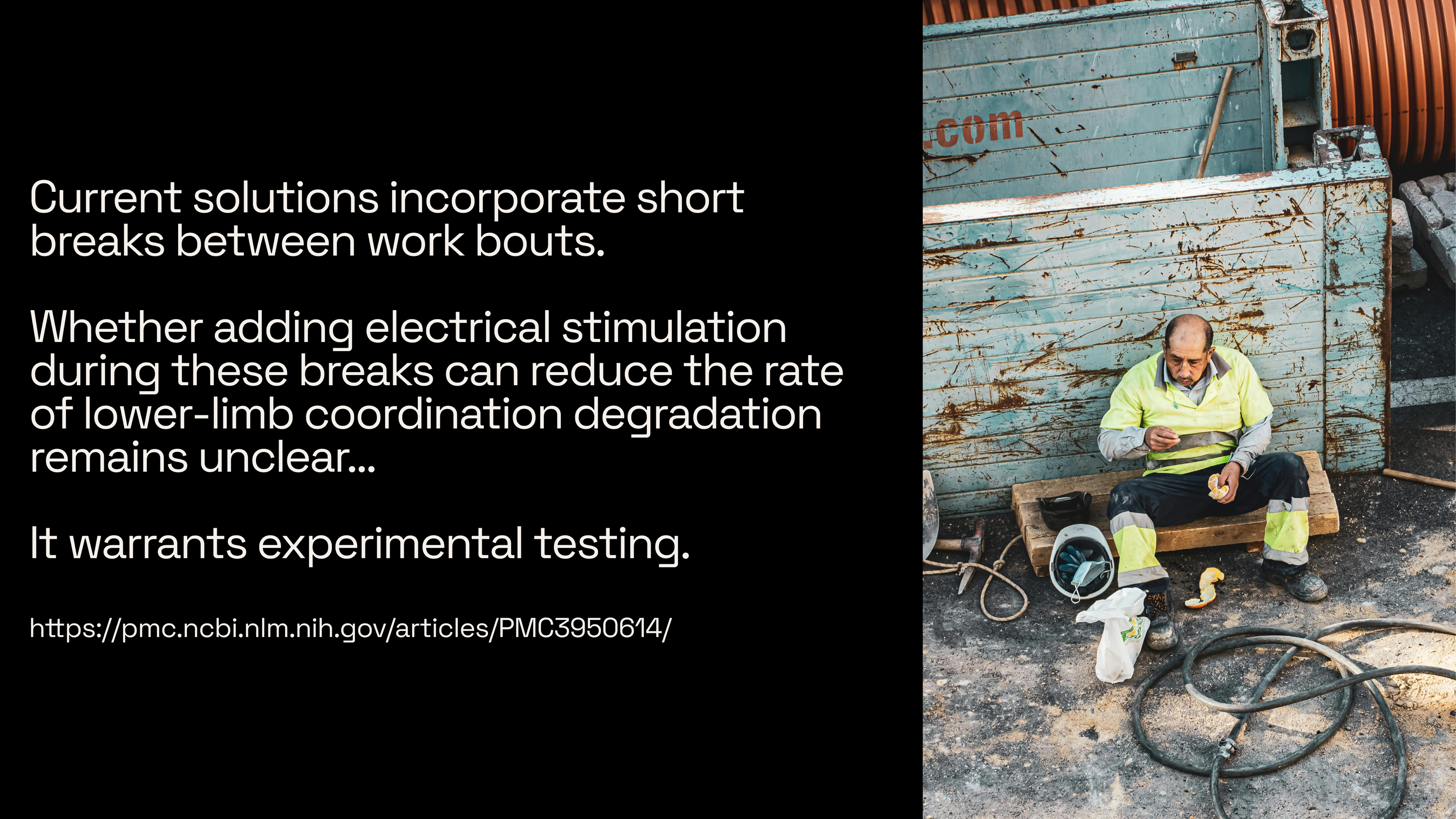
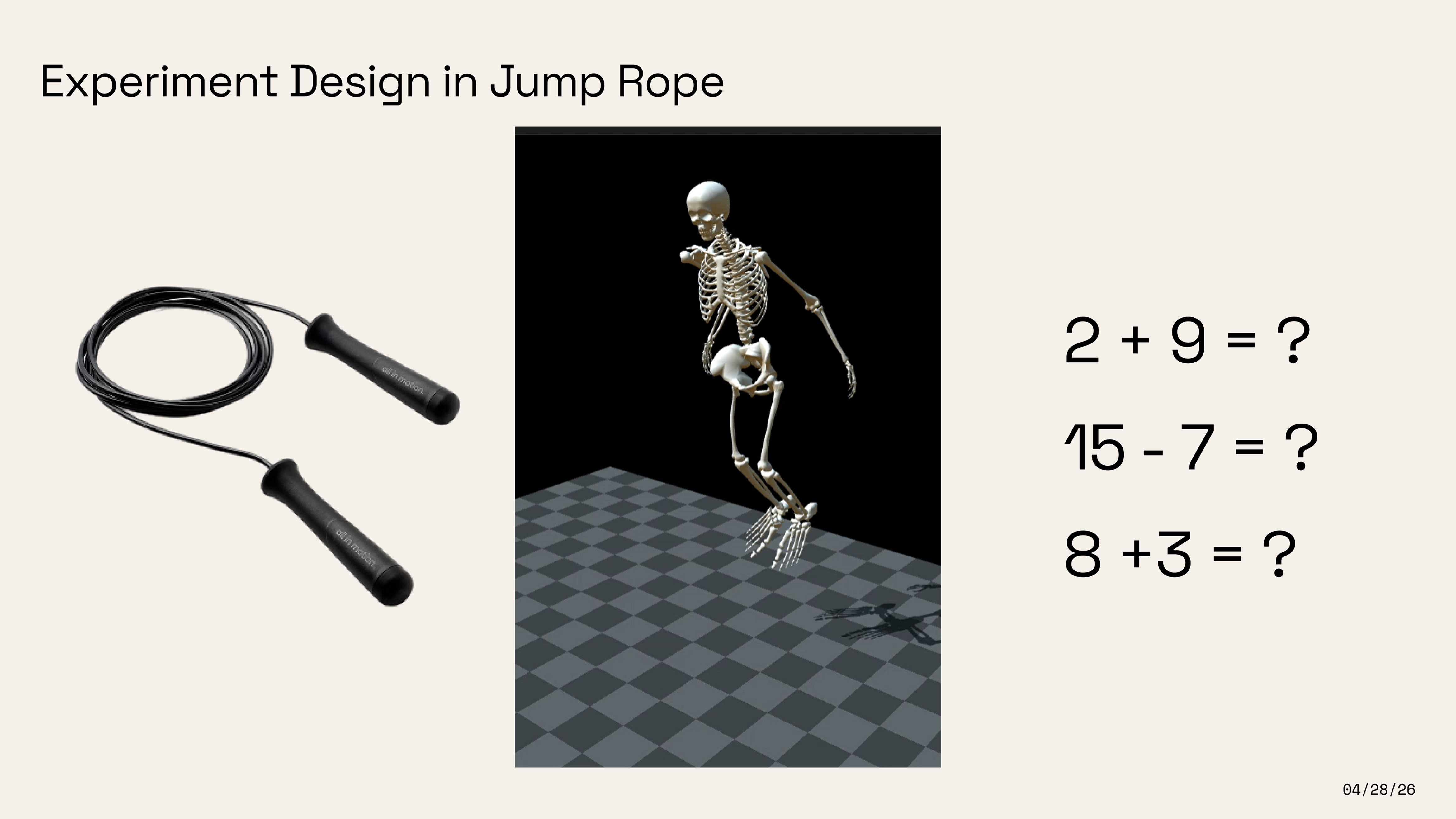
Walking is not automatic. Navigating a crowded street, holding a conversation, or performing mental arithmetic while moving imposes measurable cognitive load that degrades gait stability, alters joint kinematics, and elevates autonomic demand, even when walking speed appears unchanged. Yet nearly every lower-limb assistive system in existence operates as if cognition and locomotion are independent. This project proposes otherwise. The study investigates whether real-time, cognitive-load-driven electrical stimulation can restore gait biomechanics during dual-task locomotion without impairing the cognitive performance that triggered the intervention.
Research Design
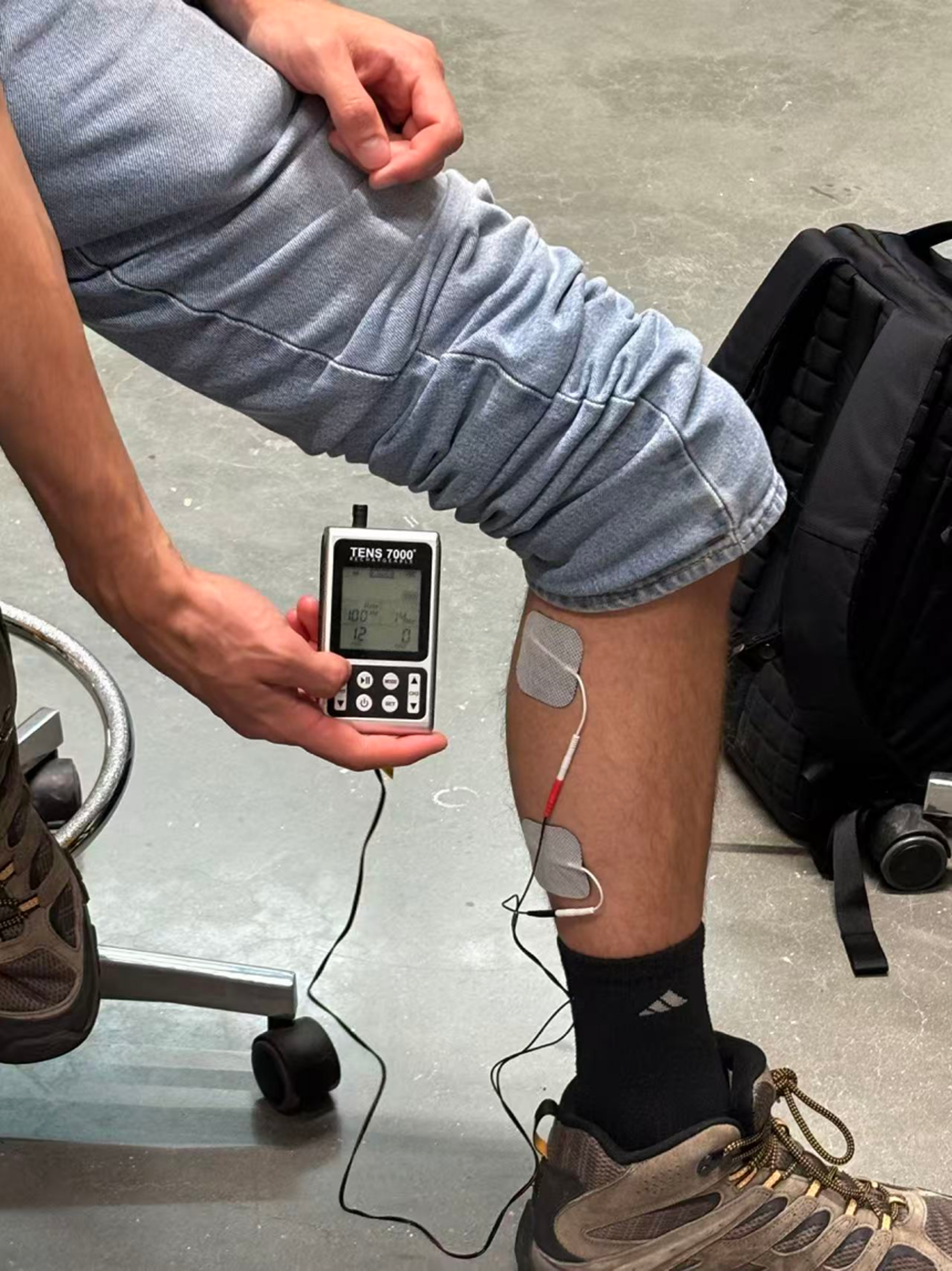
4-condition counterbalanced protocol — cognitive load x TENS stimulation
OpenCap - markerless motion capture
Trial 01 - Walking with VR Game as Cognitive Tasks
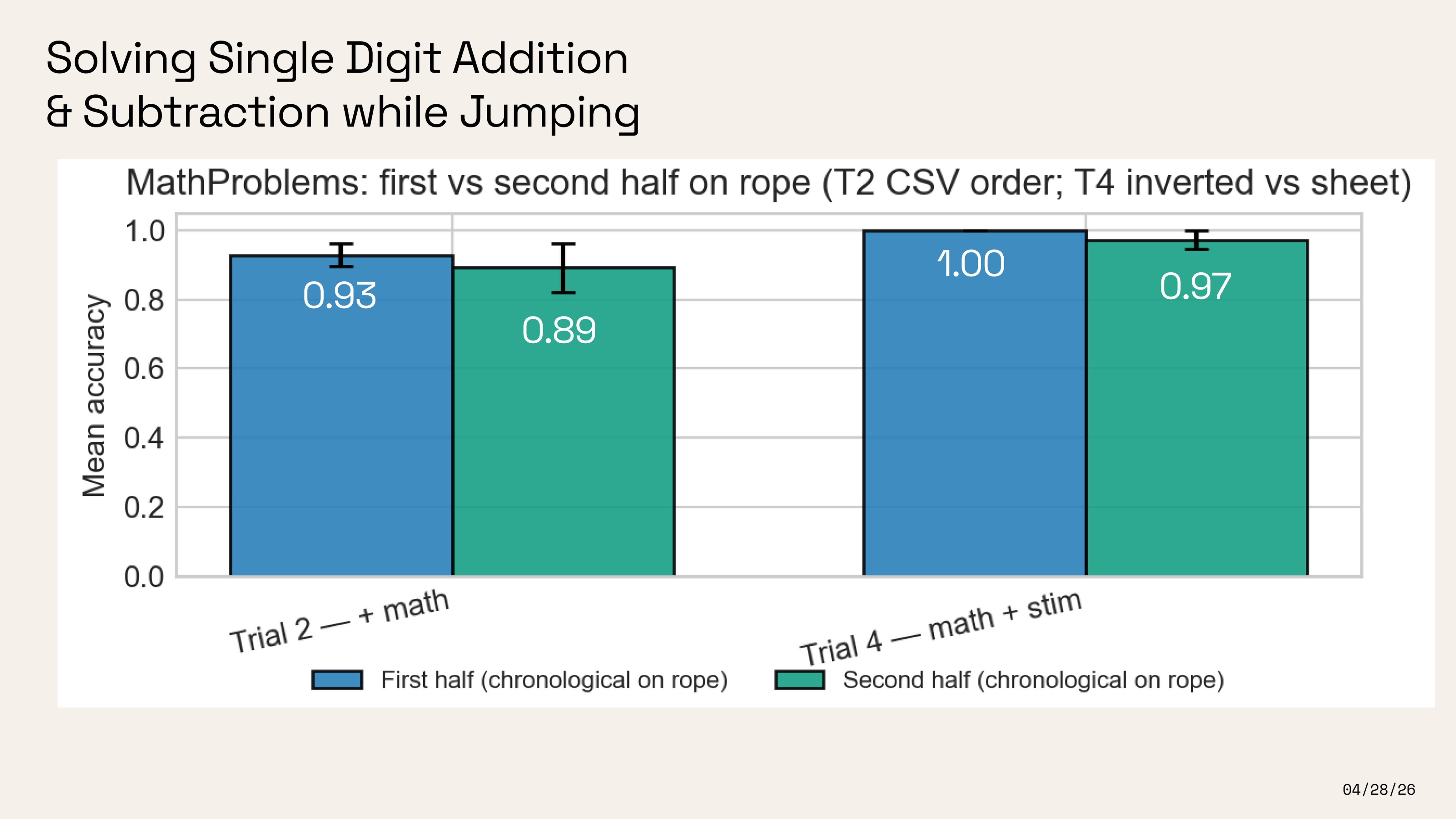
Trial 02 - Walking with VR Obstacle Jumping TENS stimulation condition
Presentation





InstructorDr. Patrick Slade
Special Thanks toTara Kimiavi, Raymond Liu