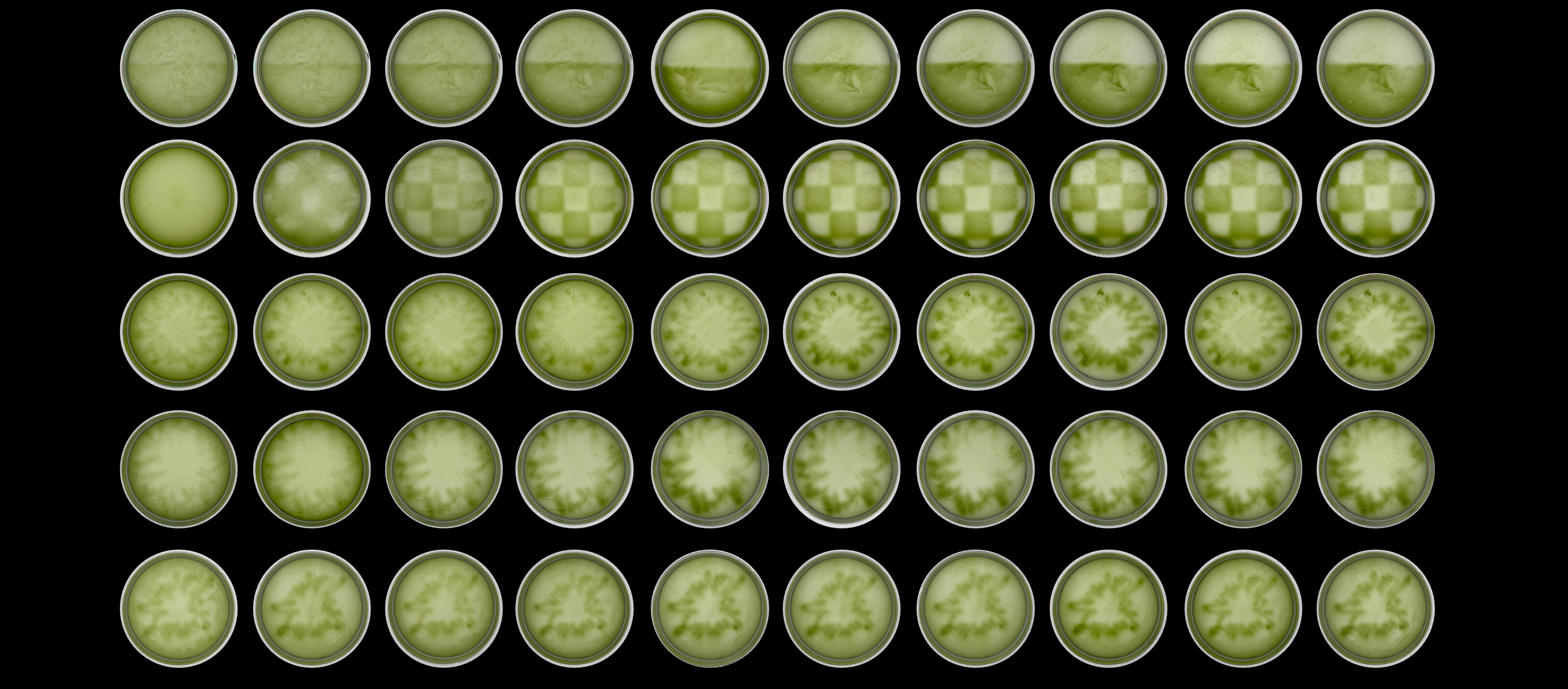
Inscribing neurological data (EEG) into microorganisms for human–bio symbiosis.
Algorithmic Morphogenesis explores how human memories, cognition, and emotions might be translated into the growth language of living systems. By bridging neuroscience, biological computation, and Human–Computer Interaction Design, this project proposes a hybrid interface where memory is no longer stored as digital data but grown as living structure. The project reimagines memory storage as an ecological process, inviting audiences to reflect on the relationships between perception, technology, and the living world.
Physical Materials
Algae Acrylic Aluminium Water
Fabrication
CNC Laser Cut 3D Print Band Saw CAD
Software
Python MatLab Processing TouchDesigner MindMonitor
Hardware
Arduino Uno Muse 2 EEG Conductive Gel
Design & Production Process
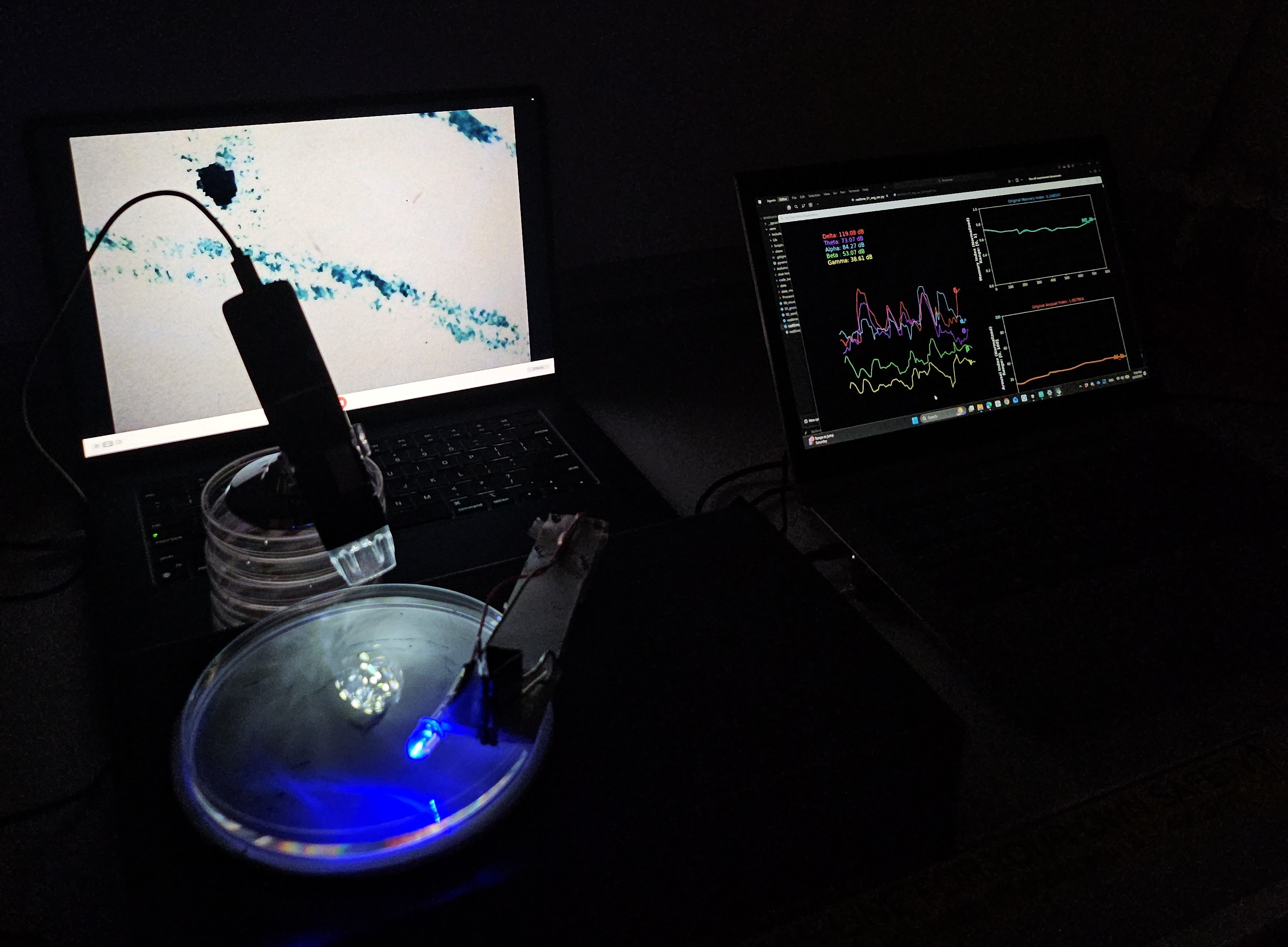
System flow diagram, sensing to actuation
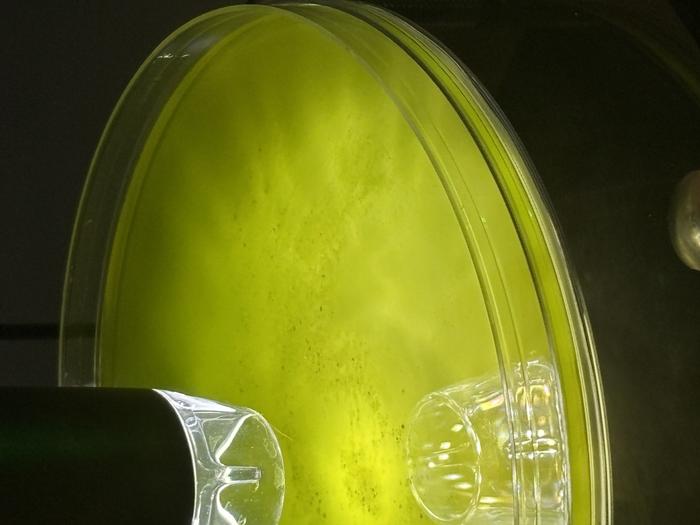
The 2-axis robot plots participants' cognition data into a petri dish in the form of light. Based on biological phototropism, this guides algae growth and morphing over time.
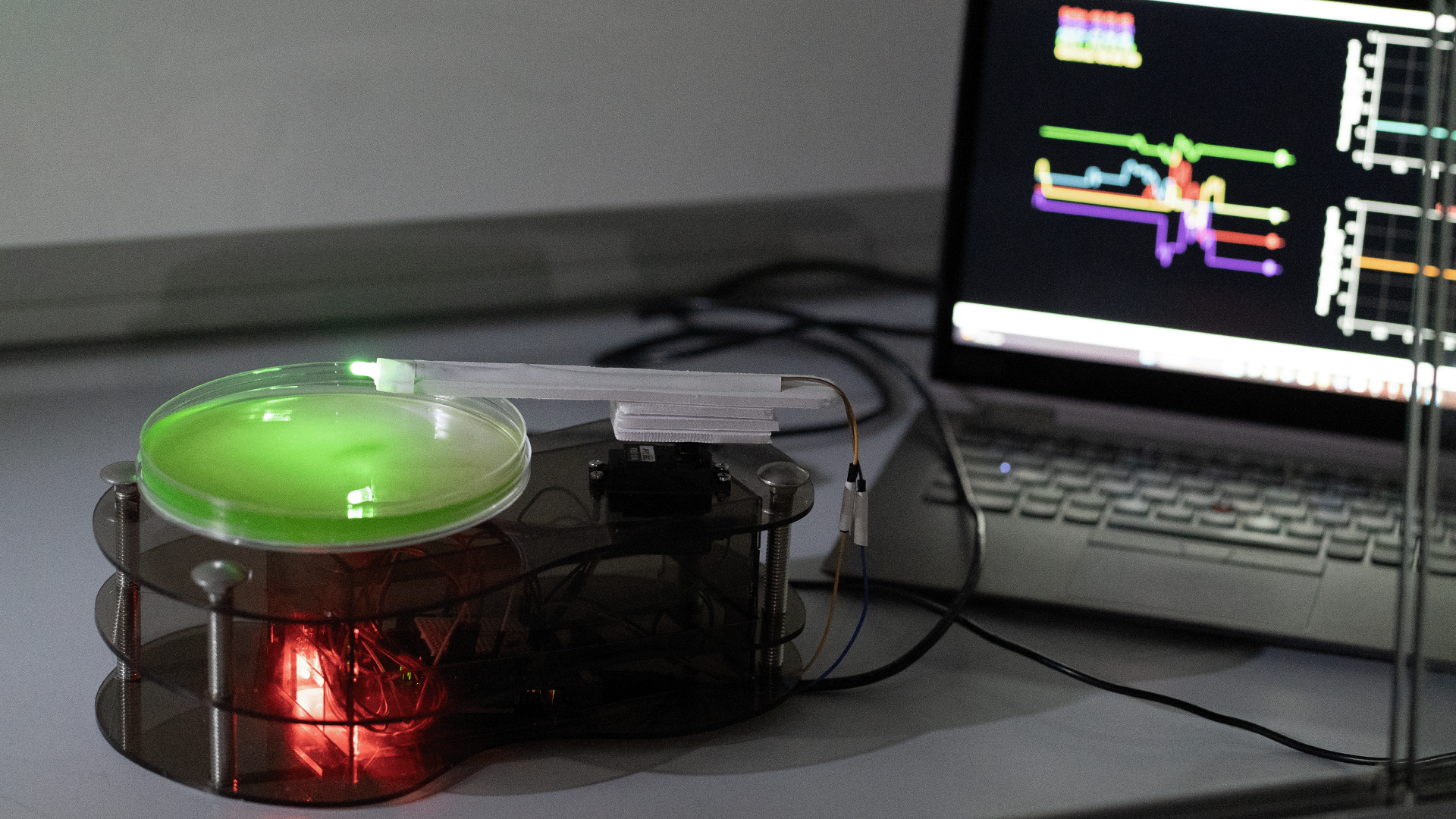
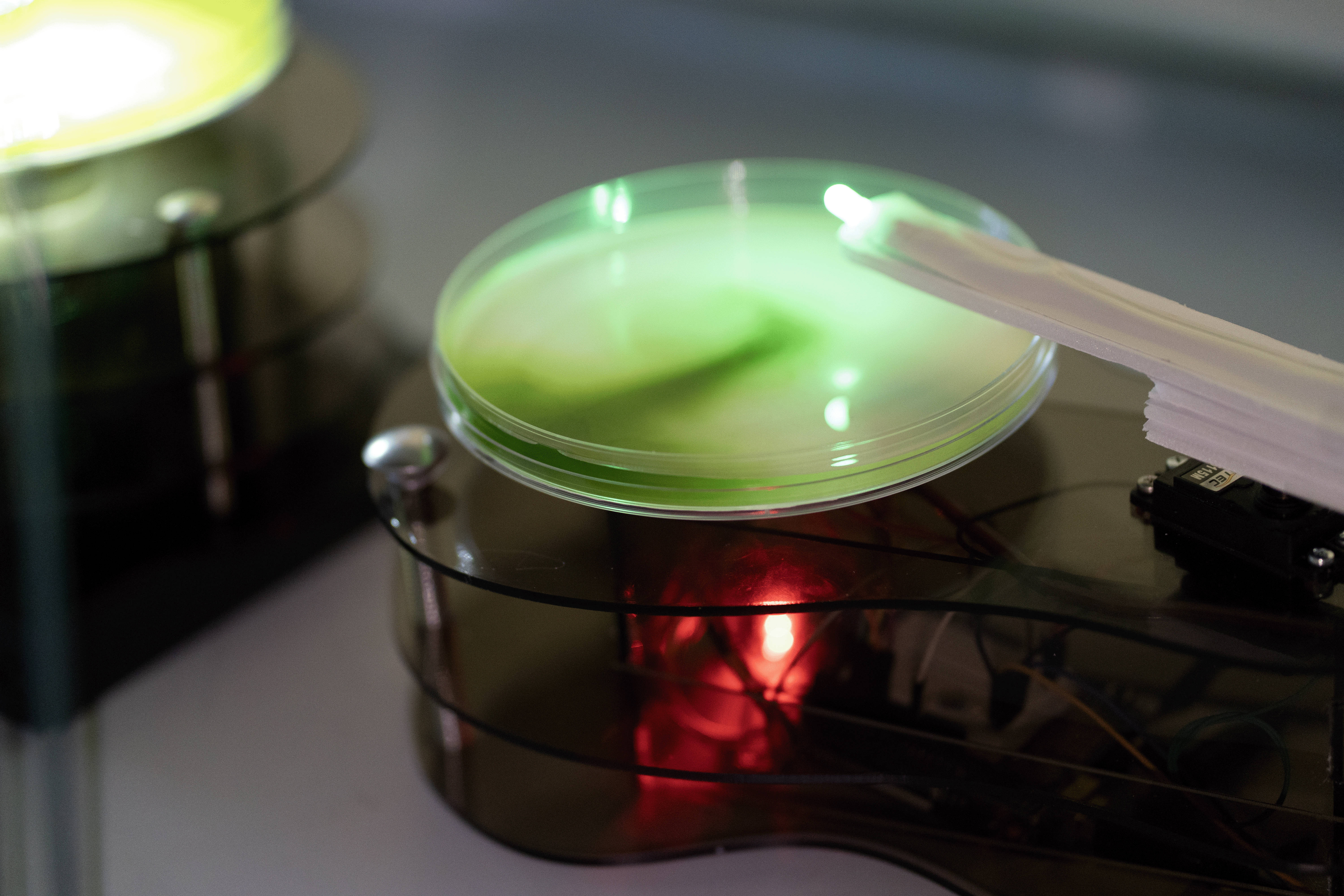

Technical
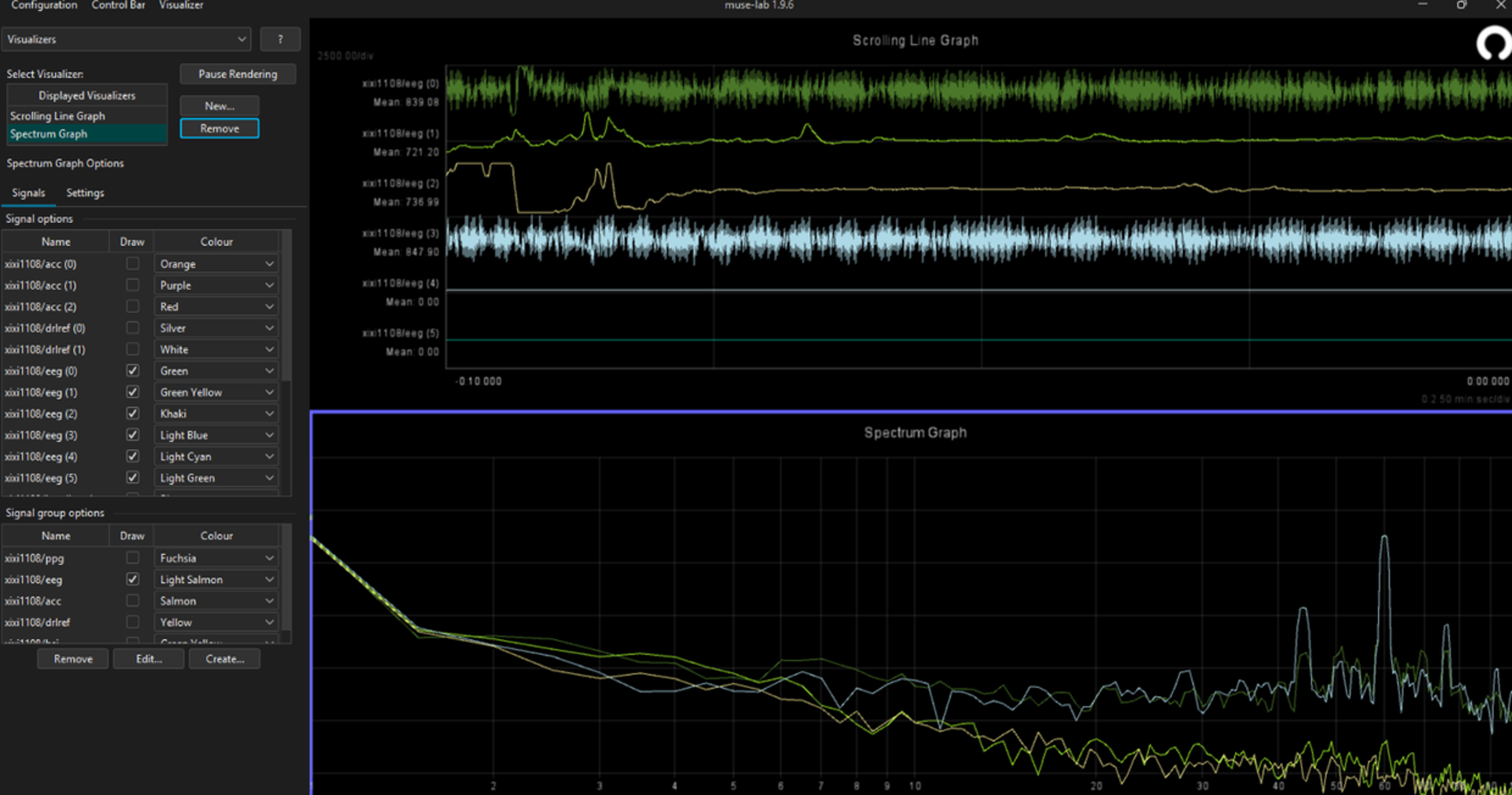
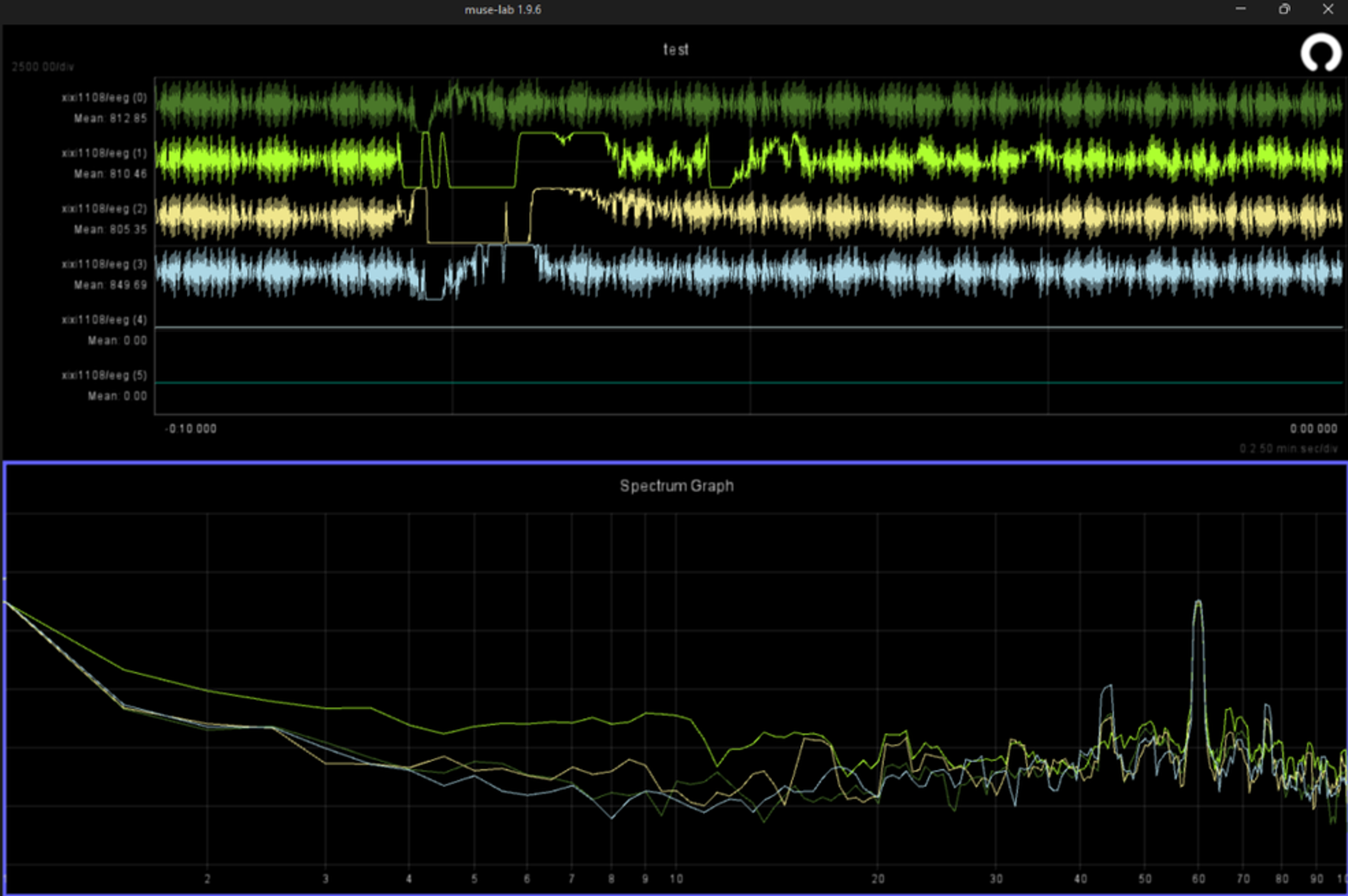
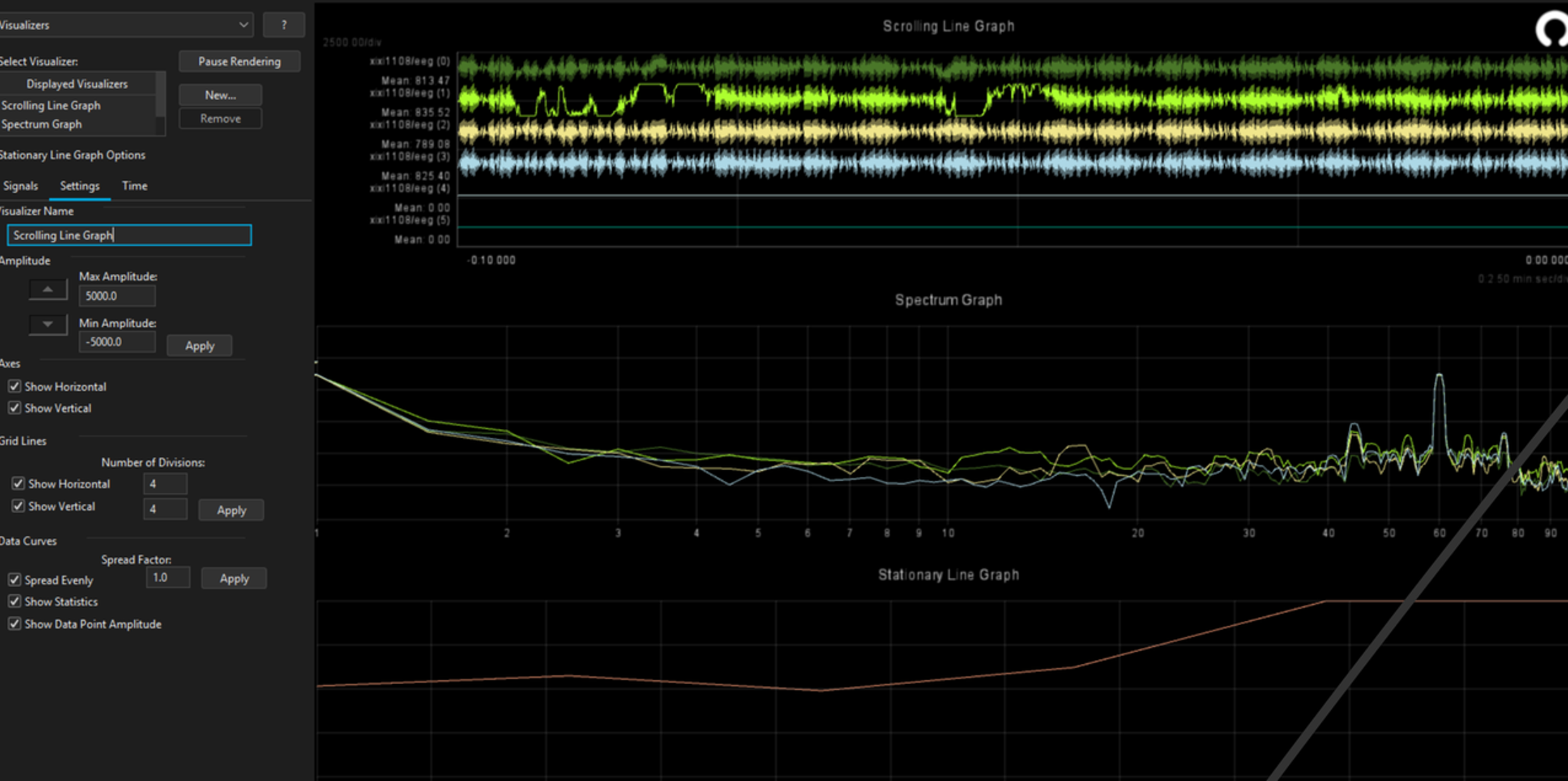
Output
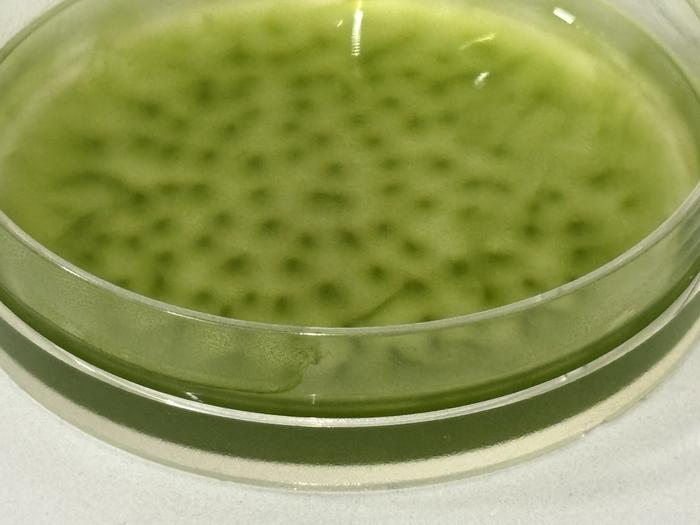
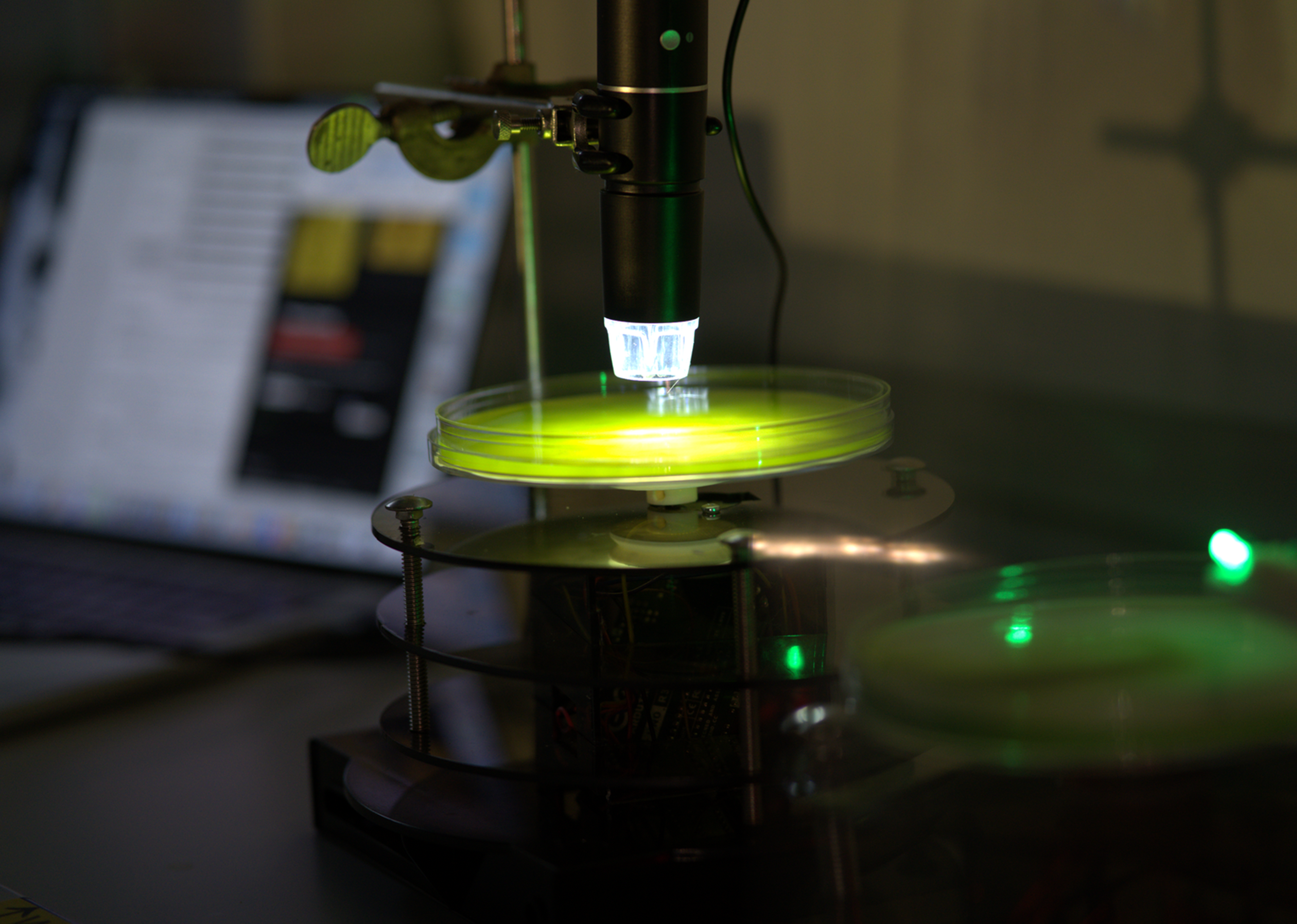
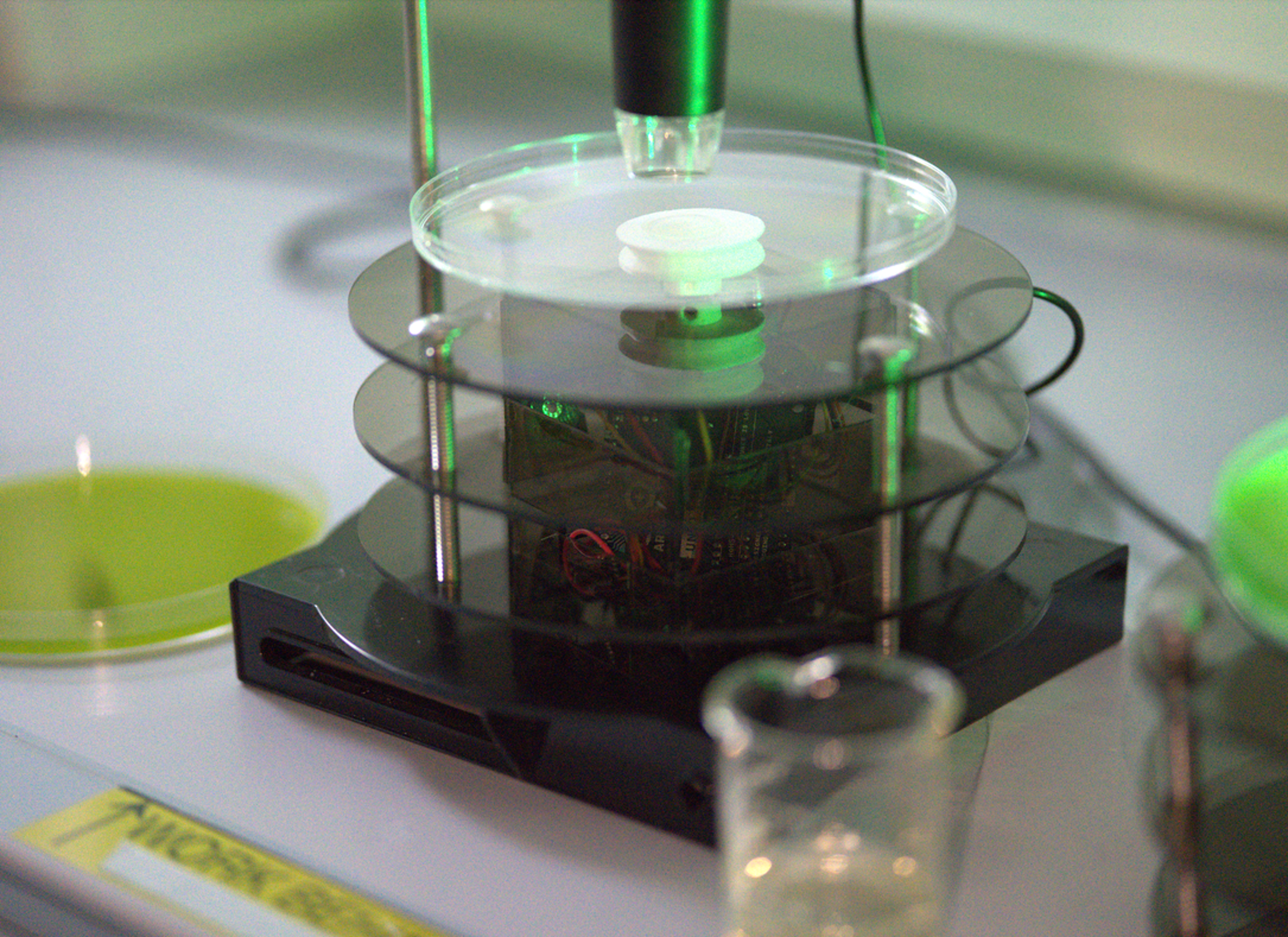
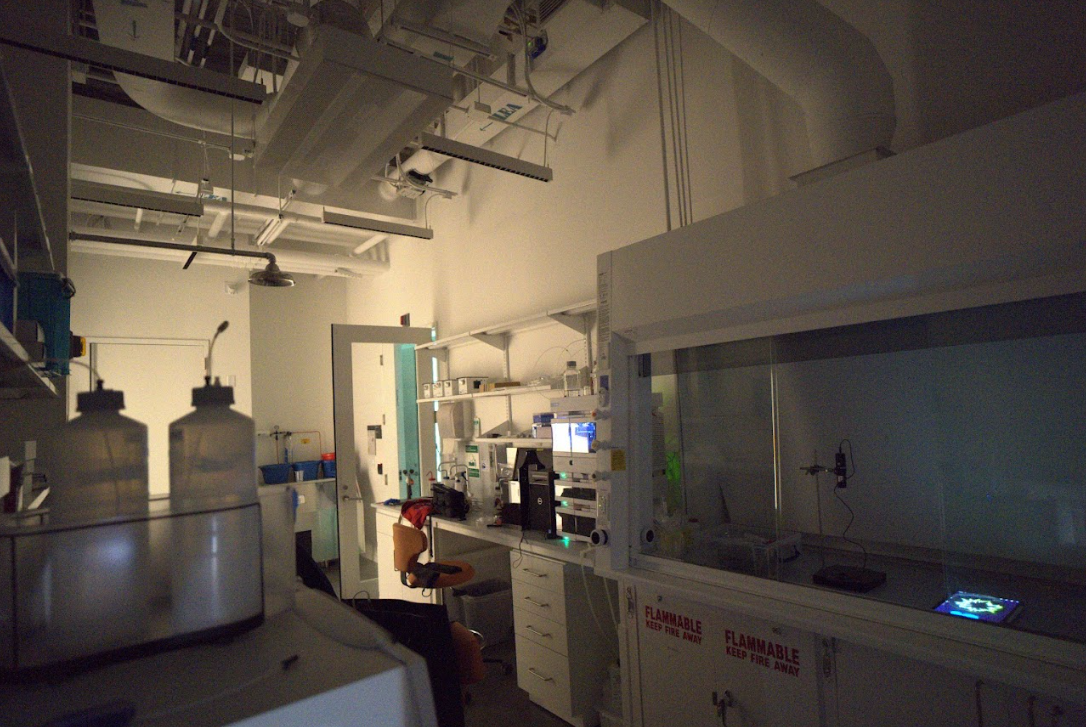
Making
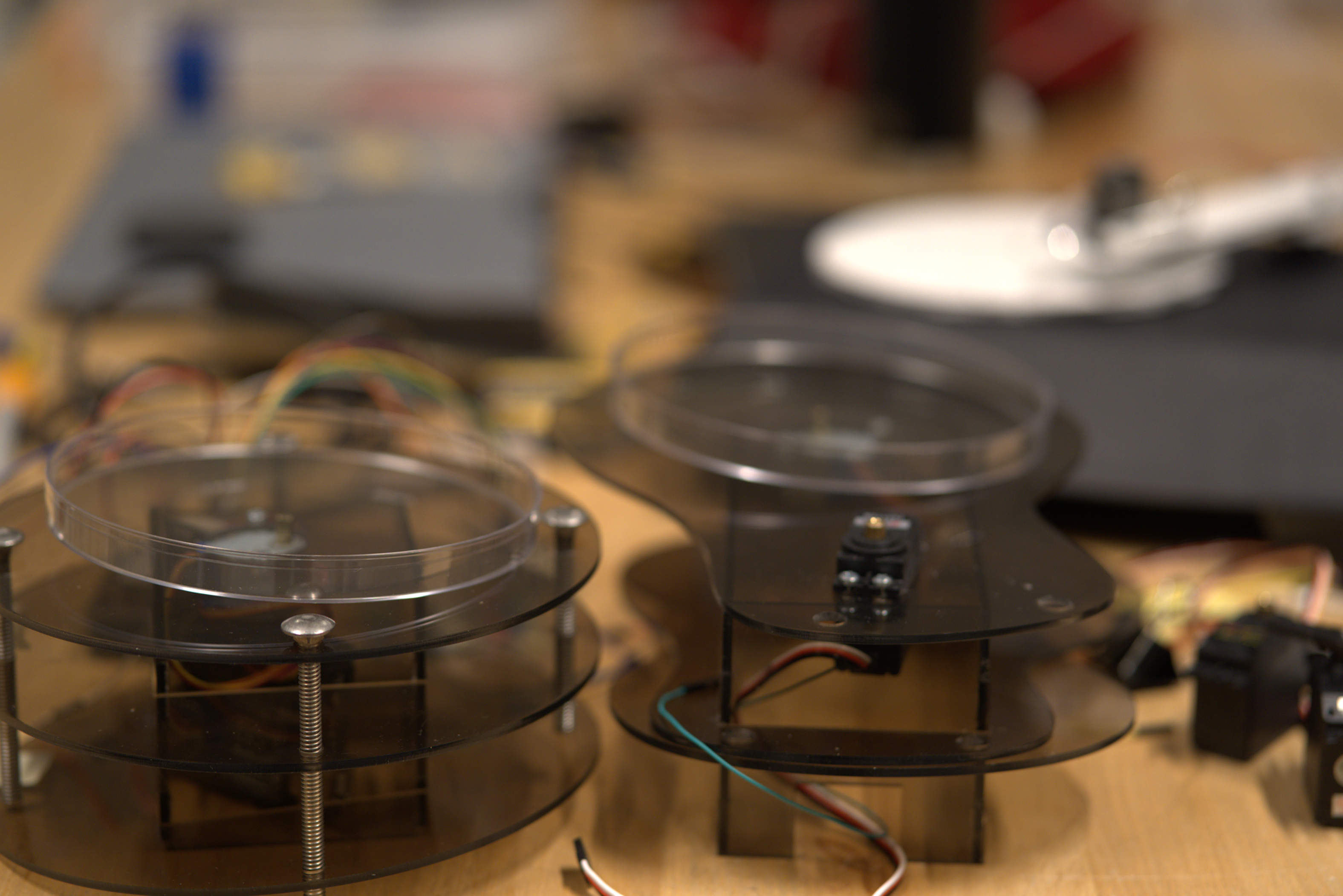
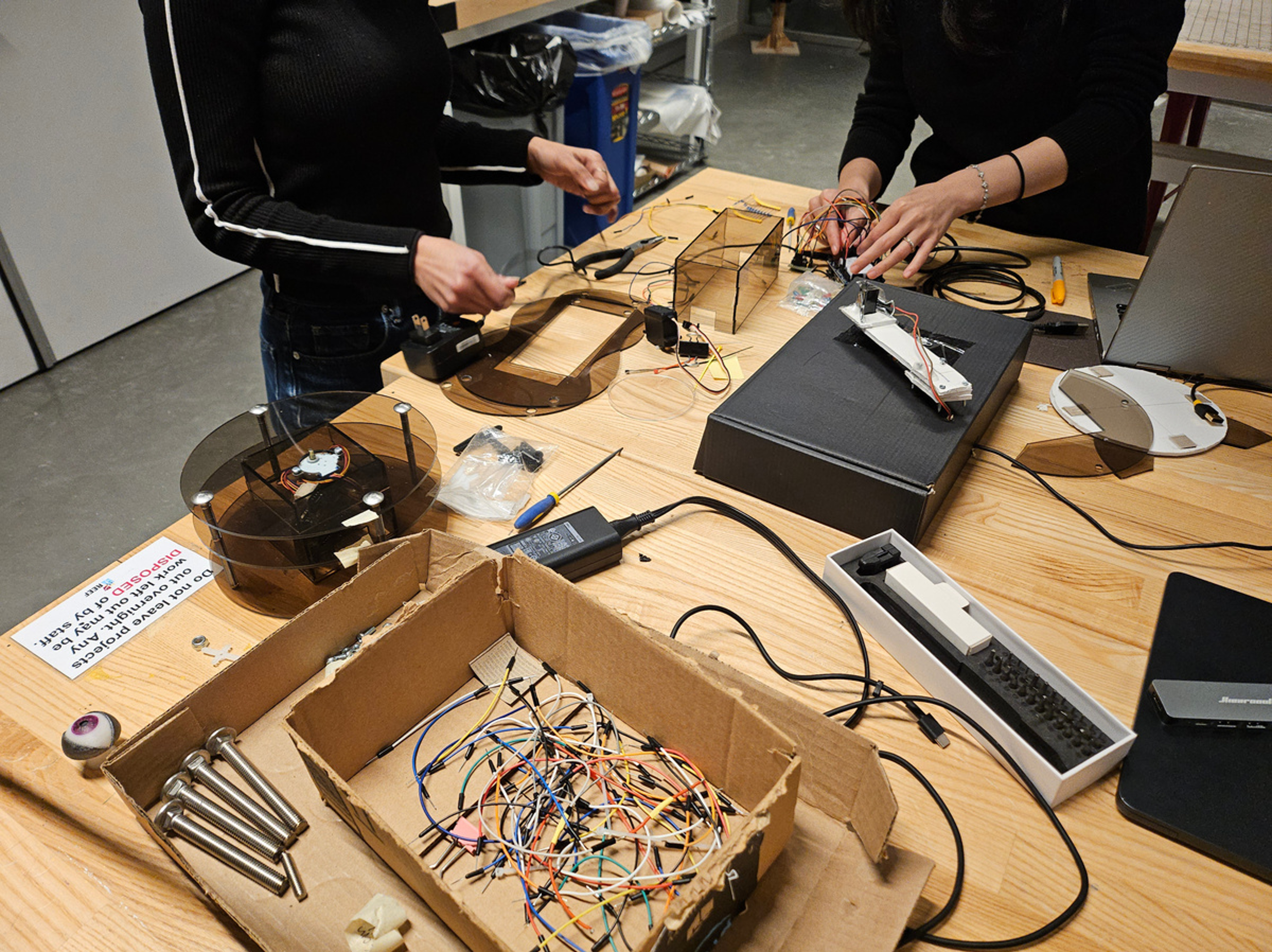
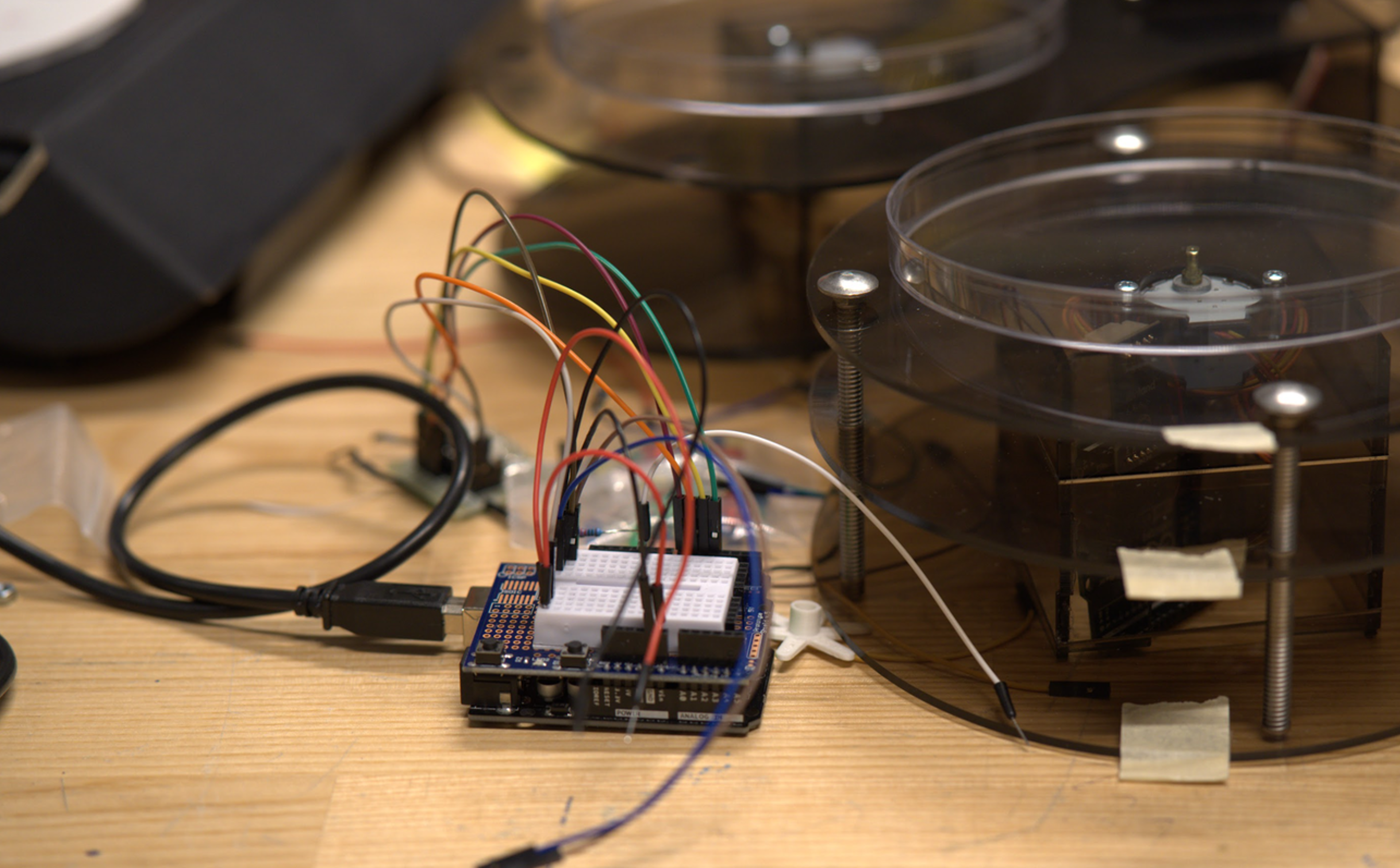
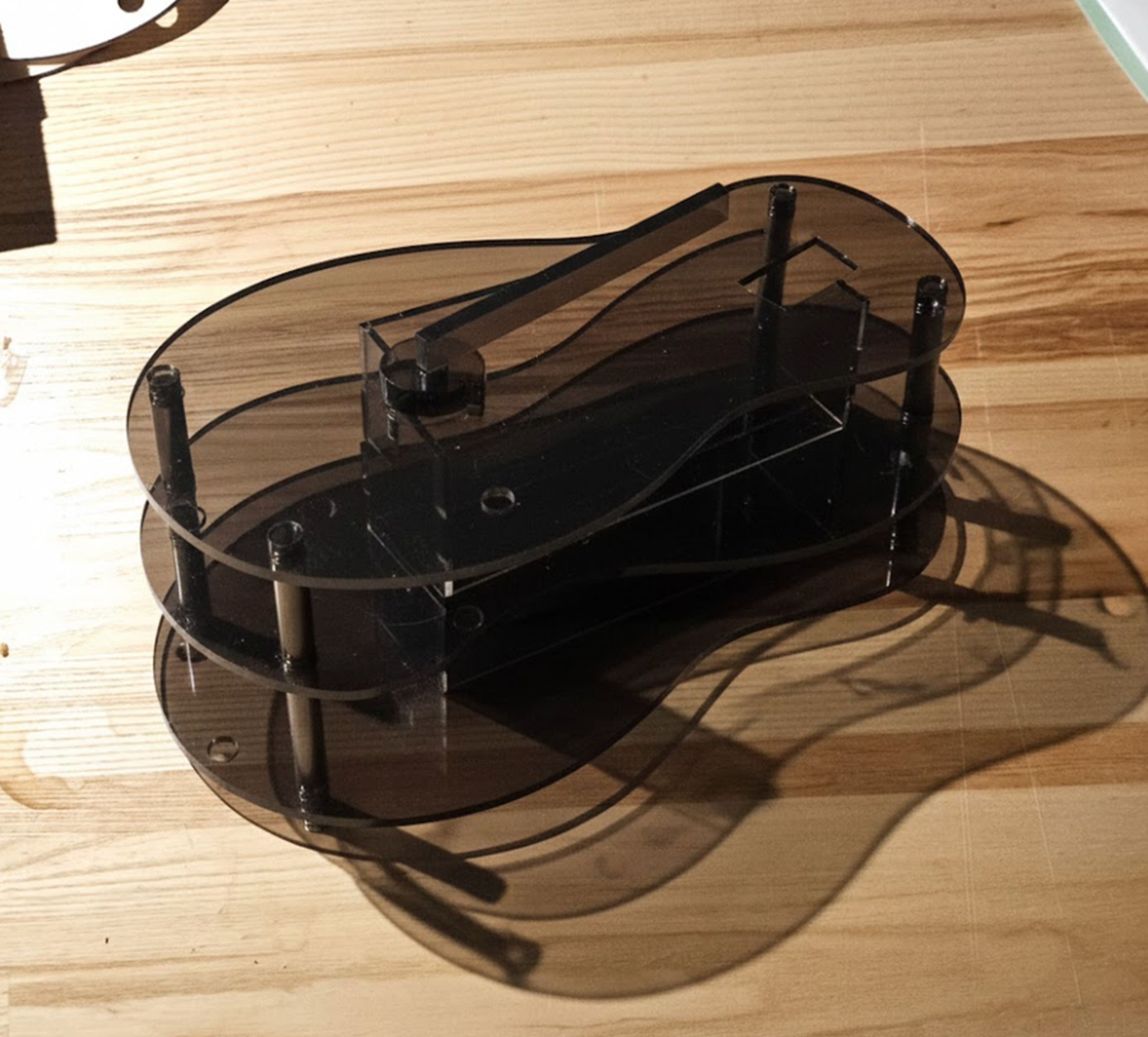
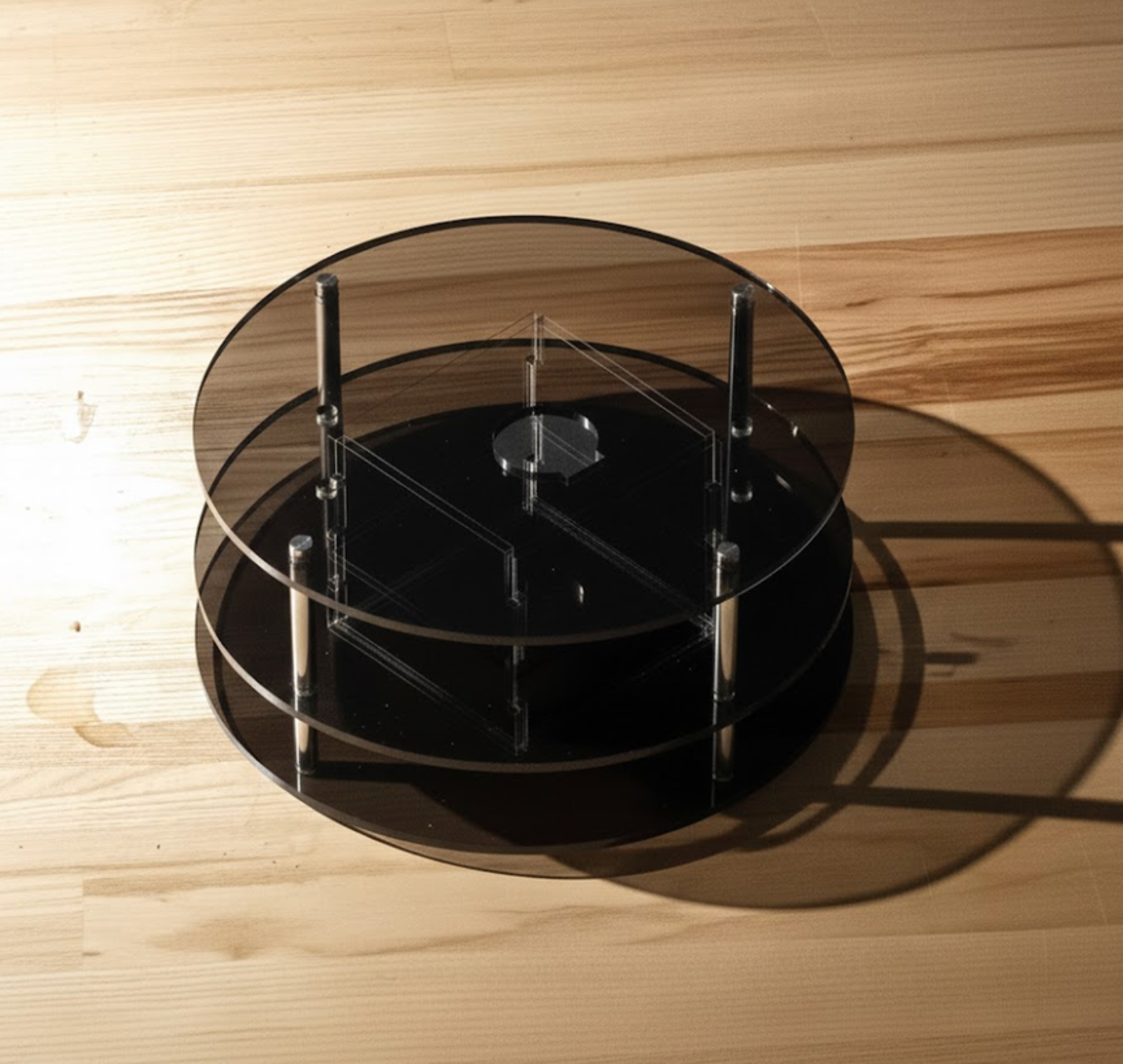
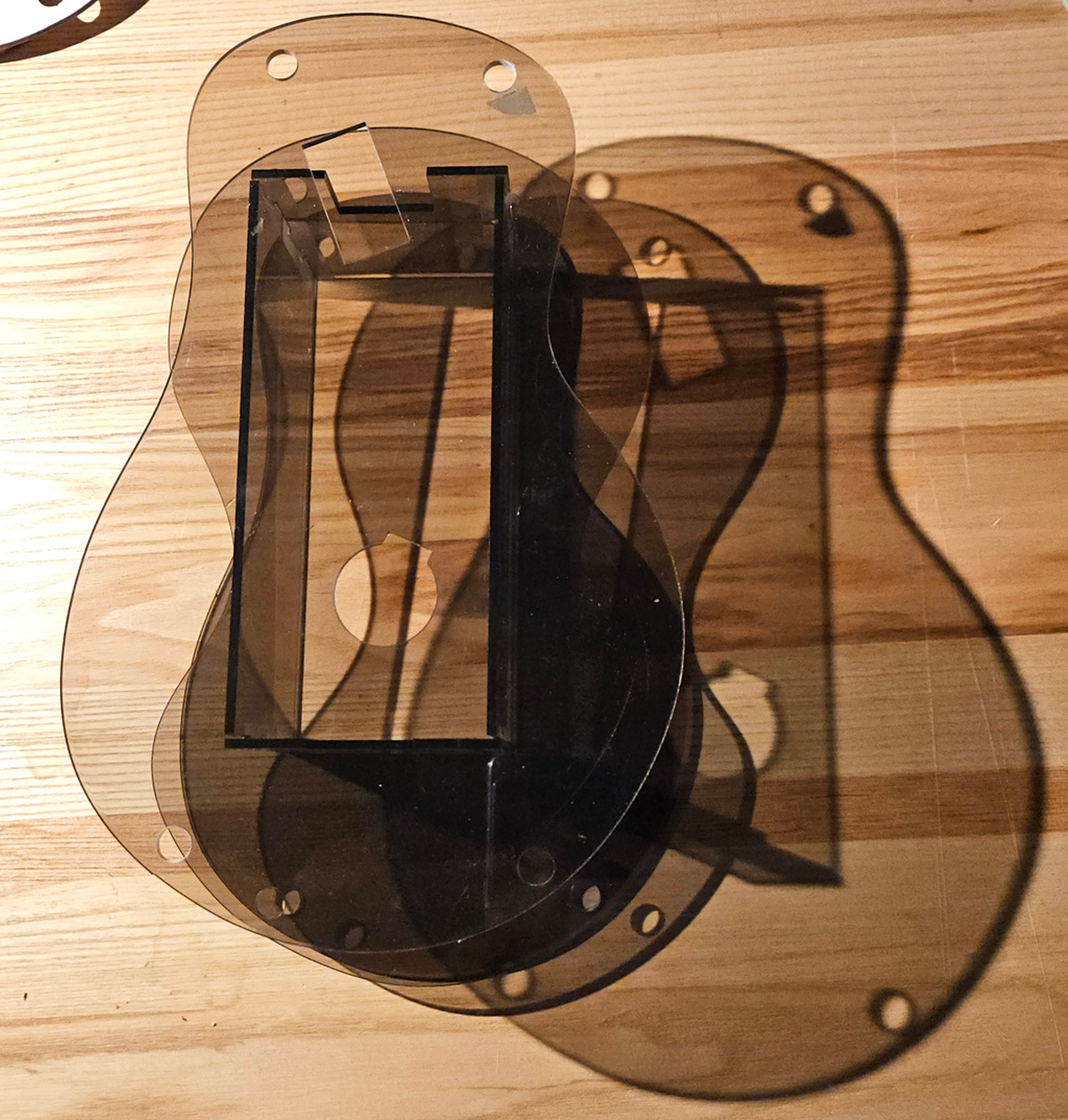
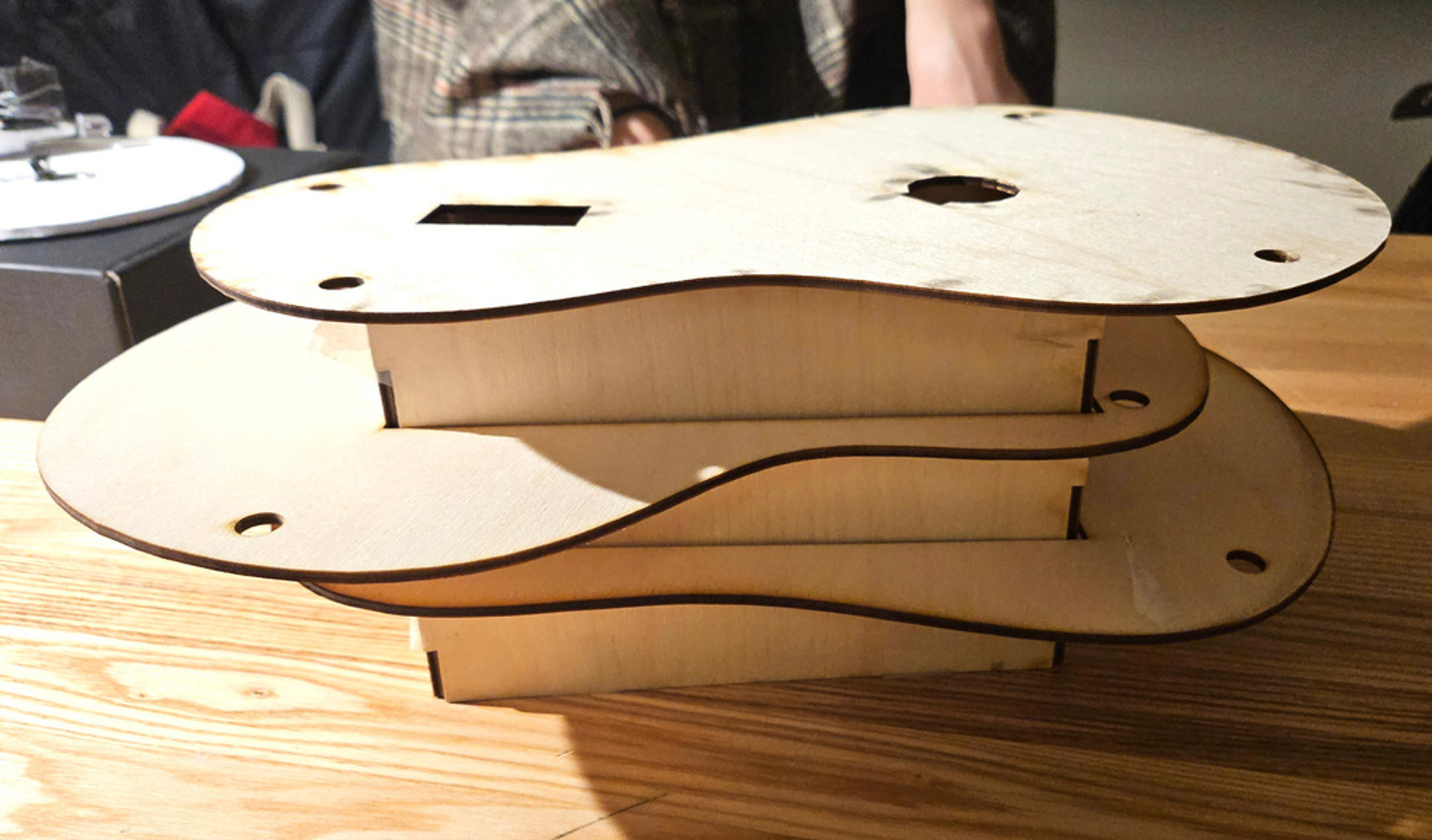
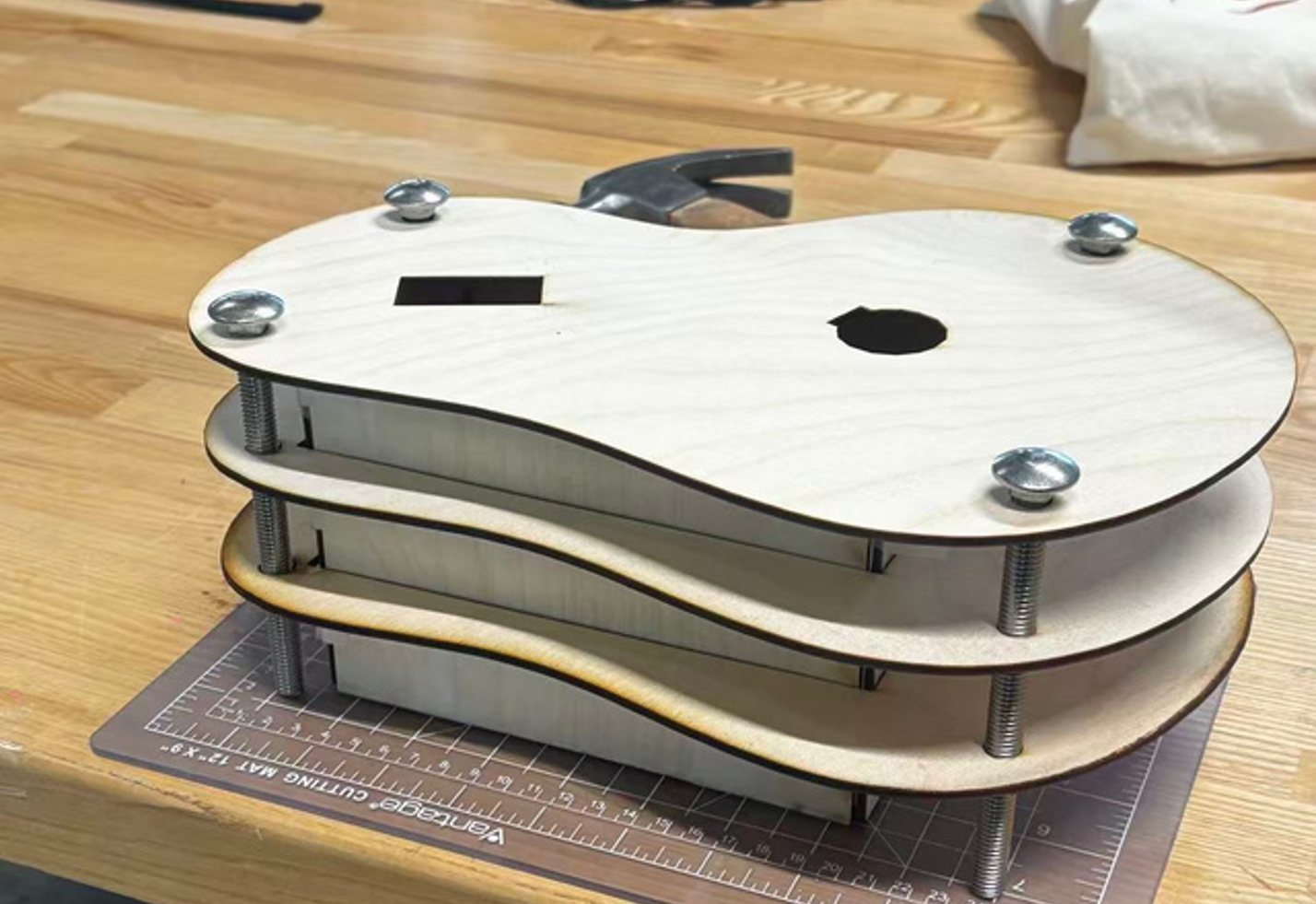
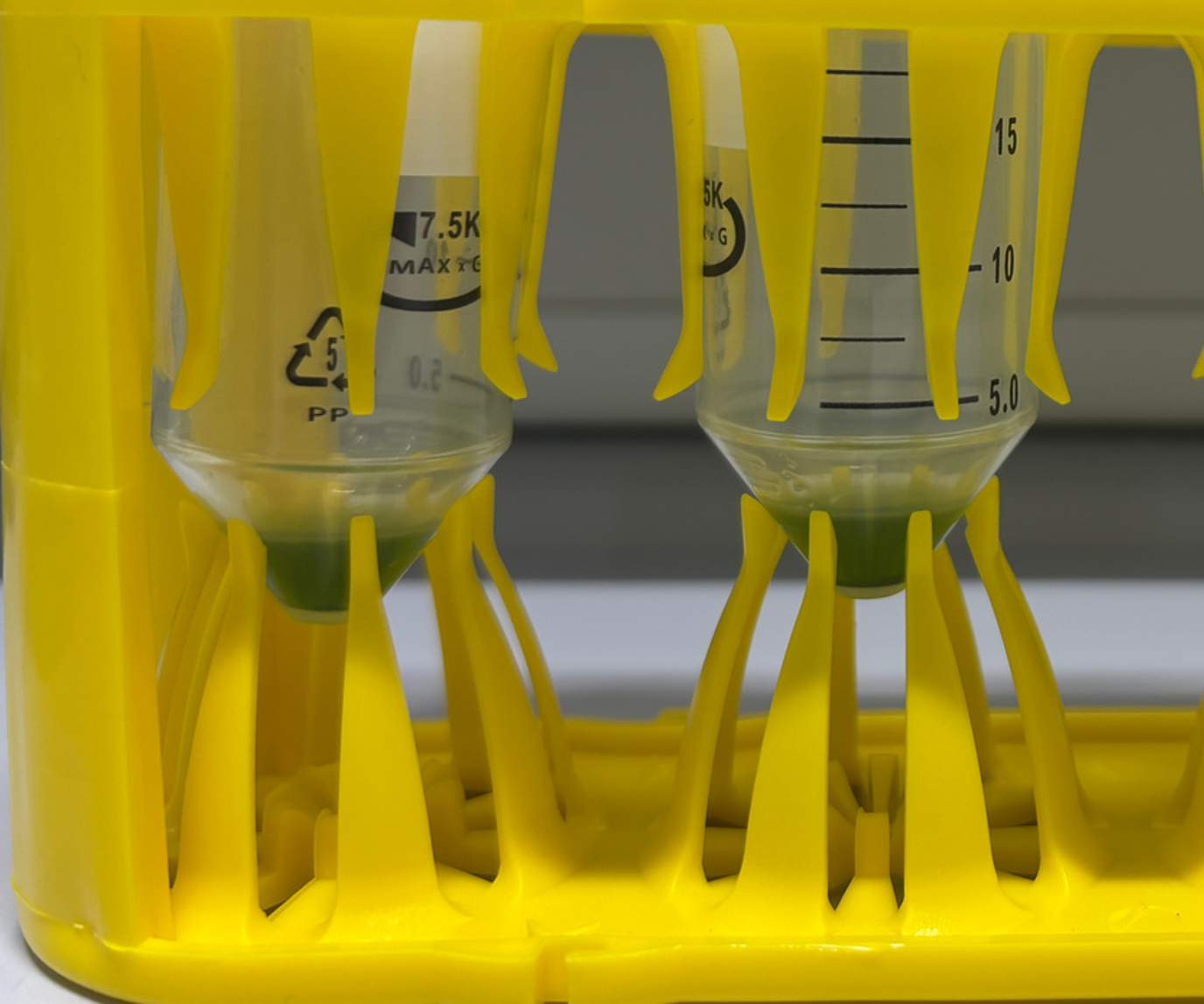
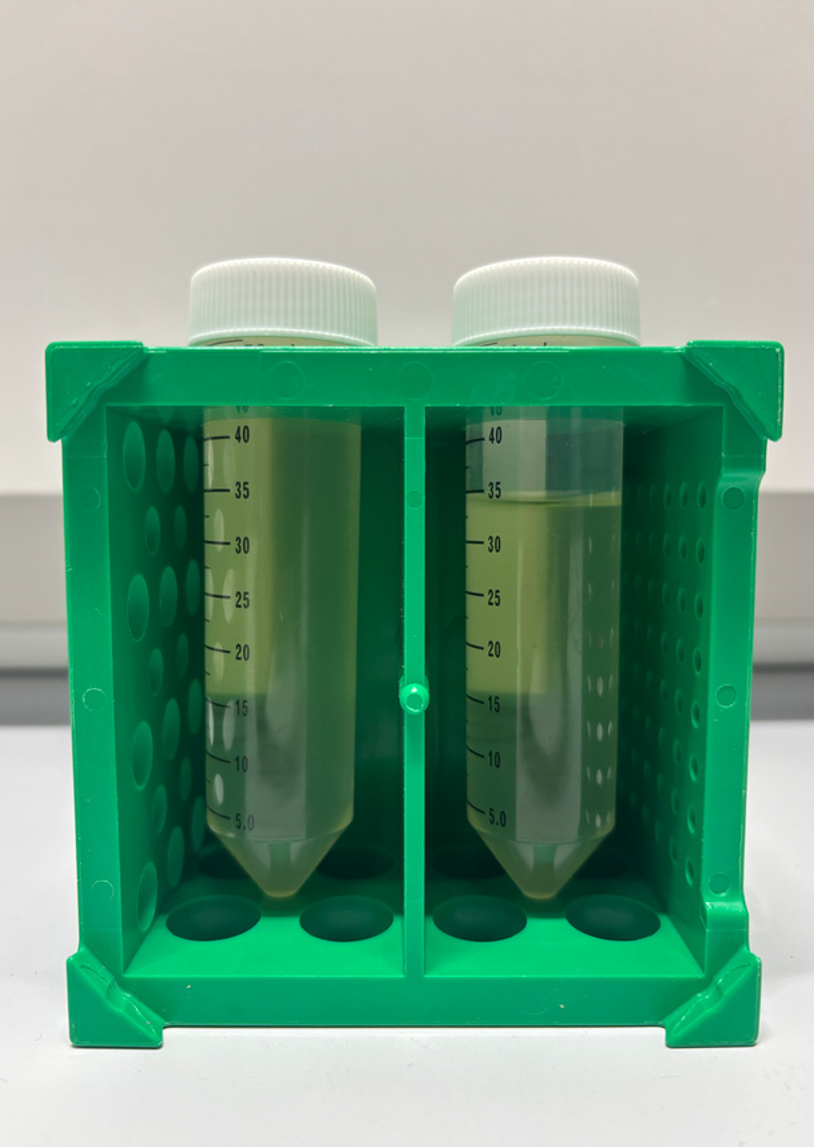
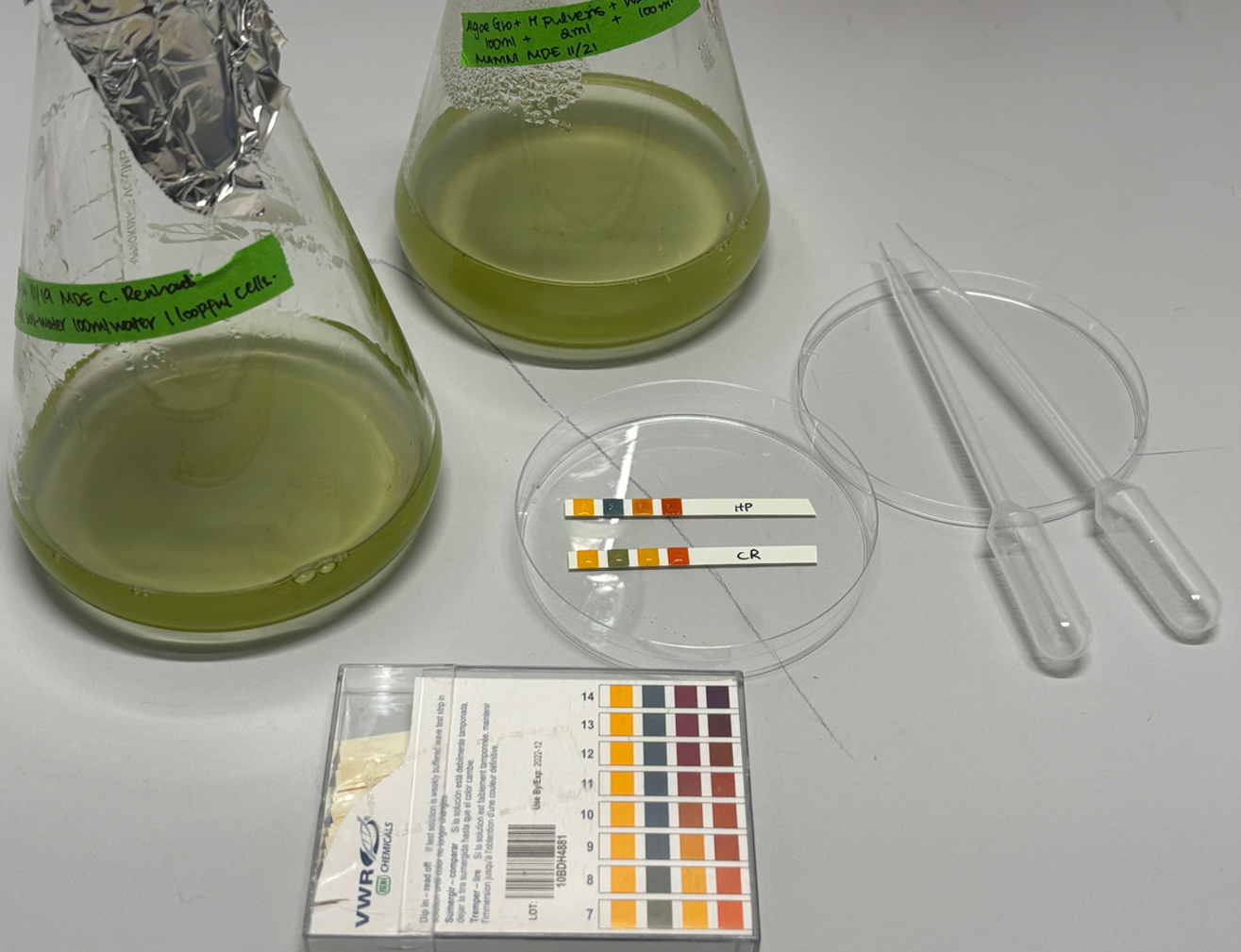
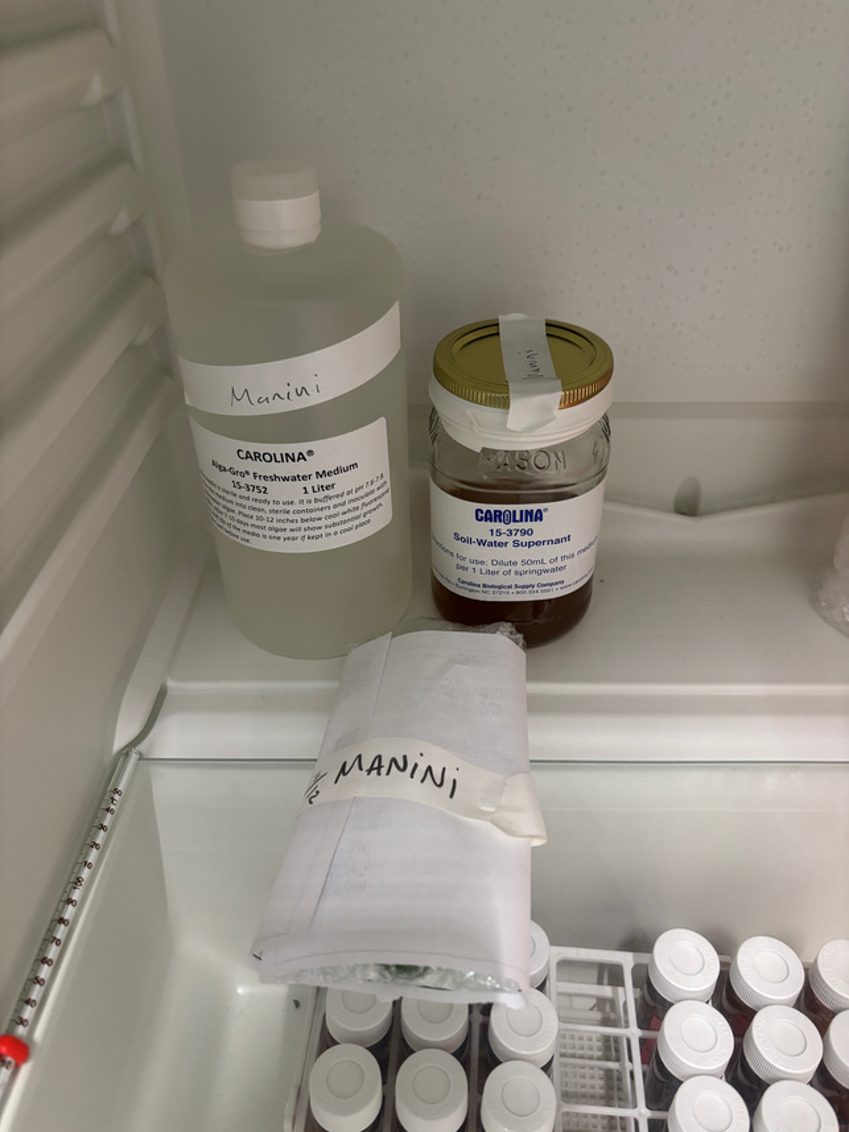
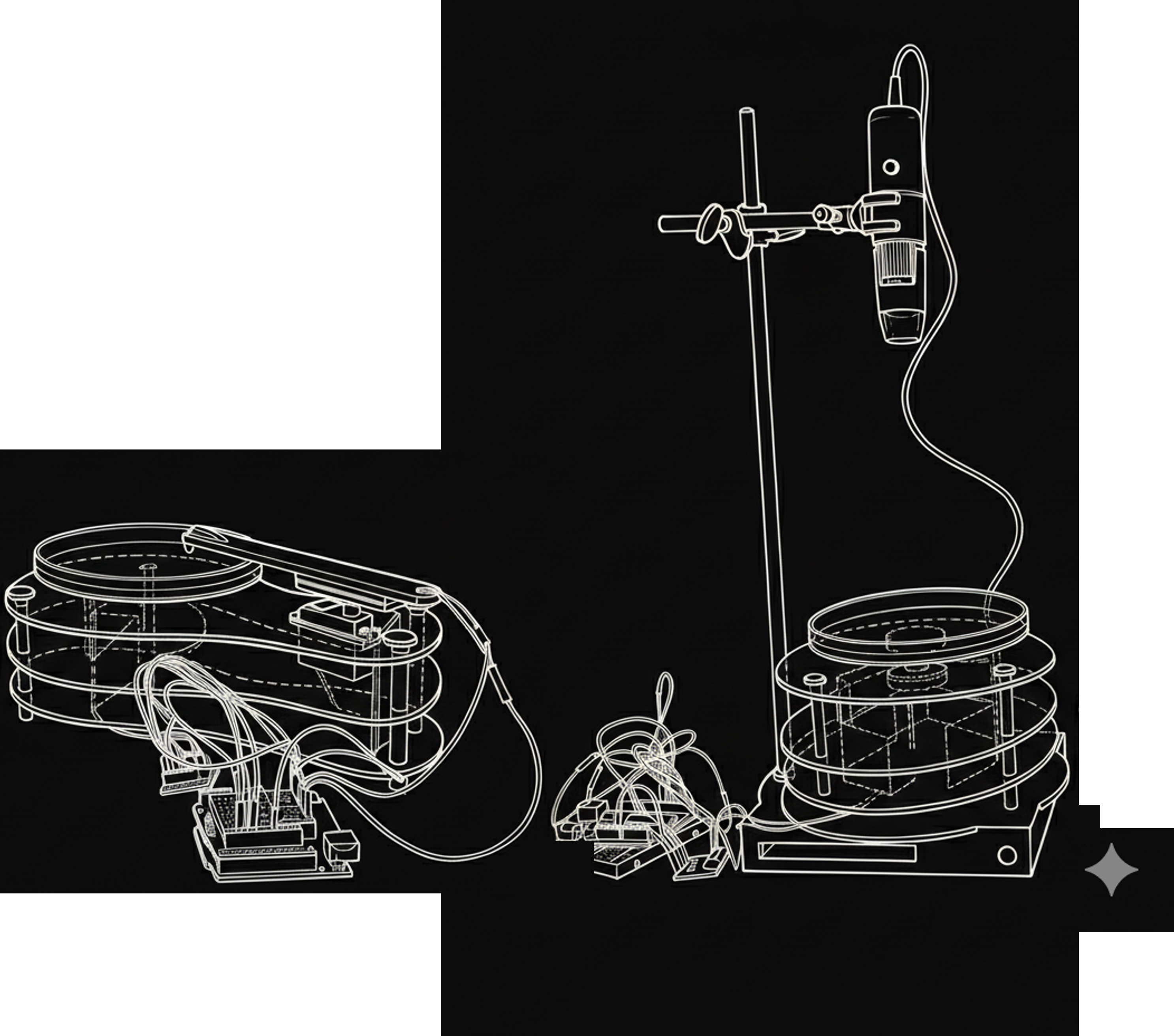
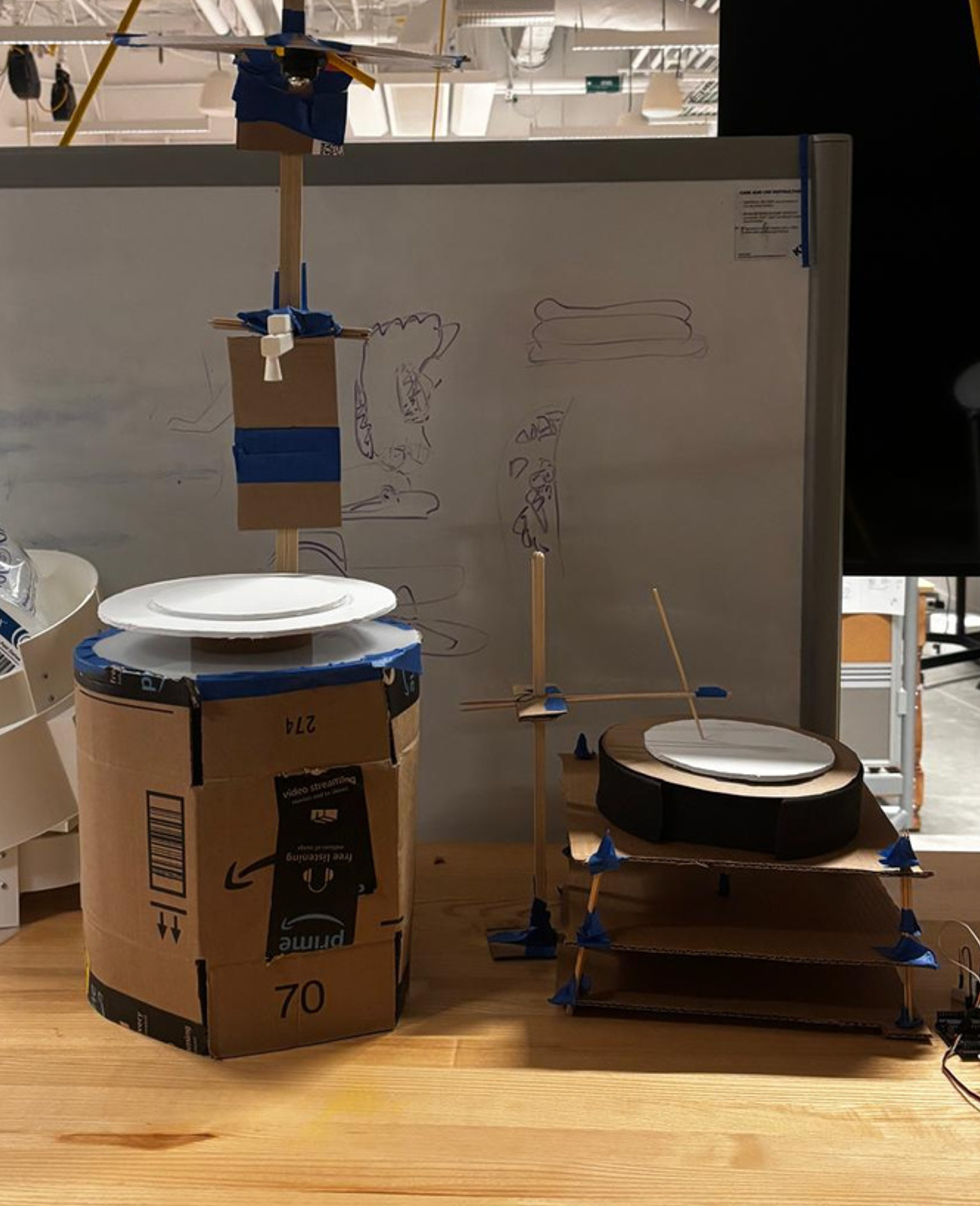
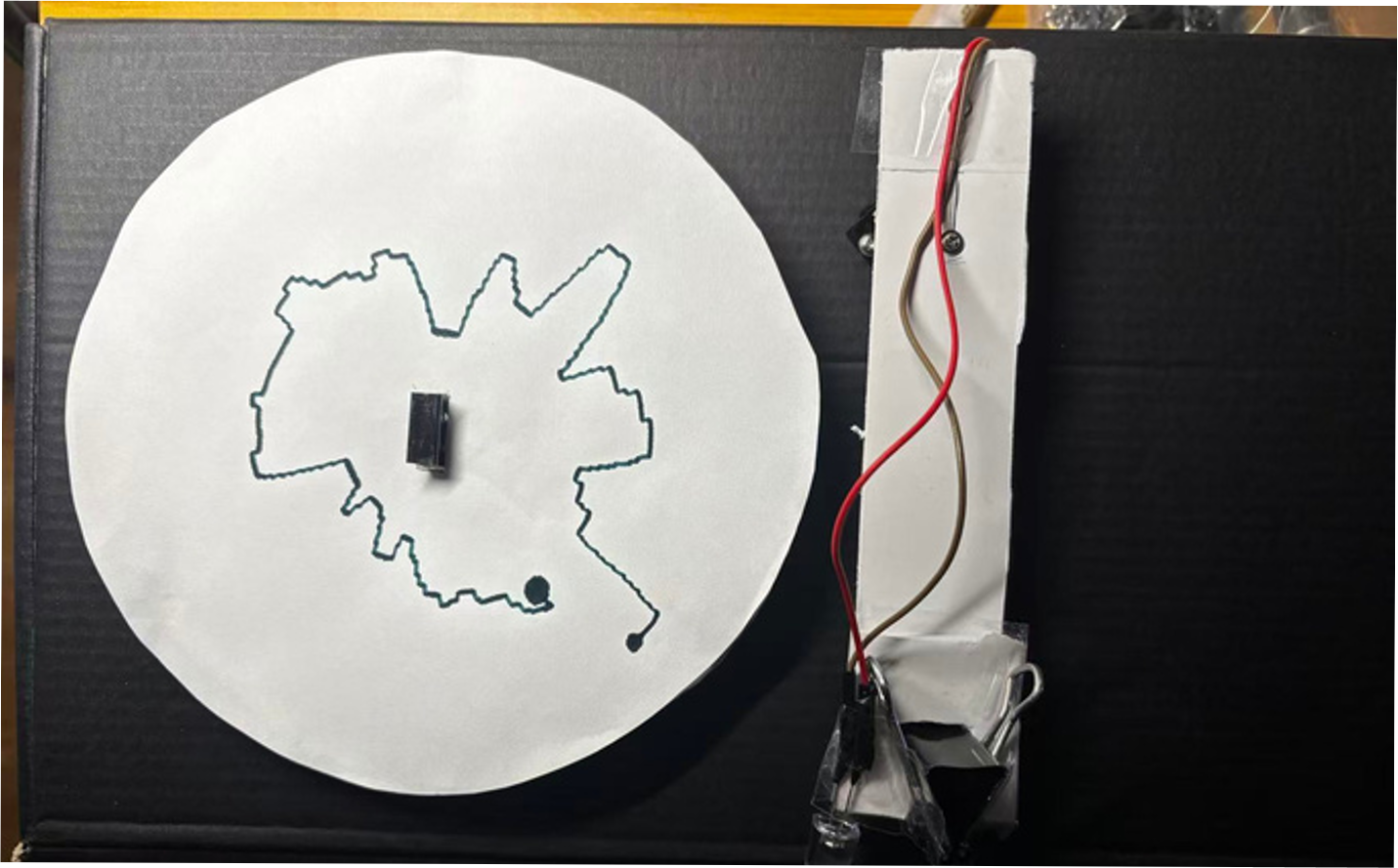
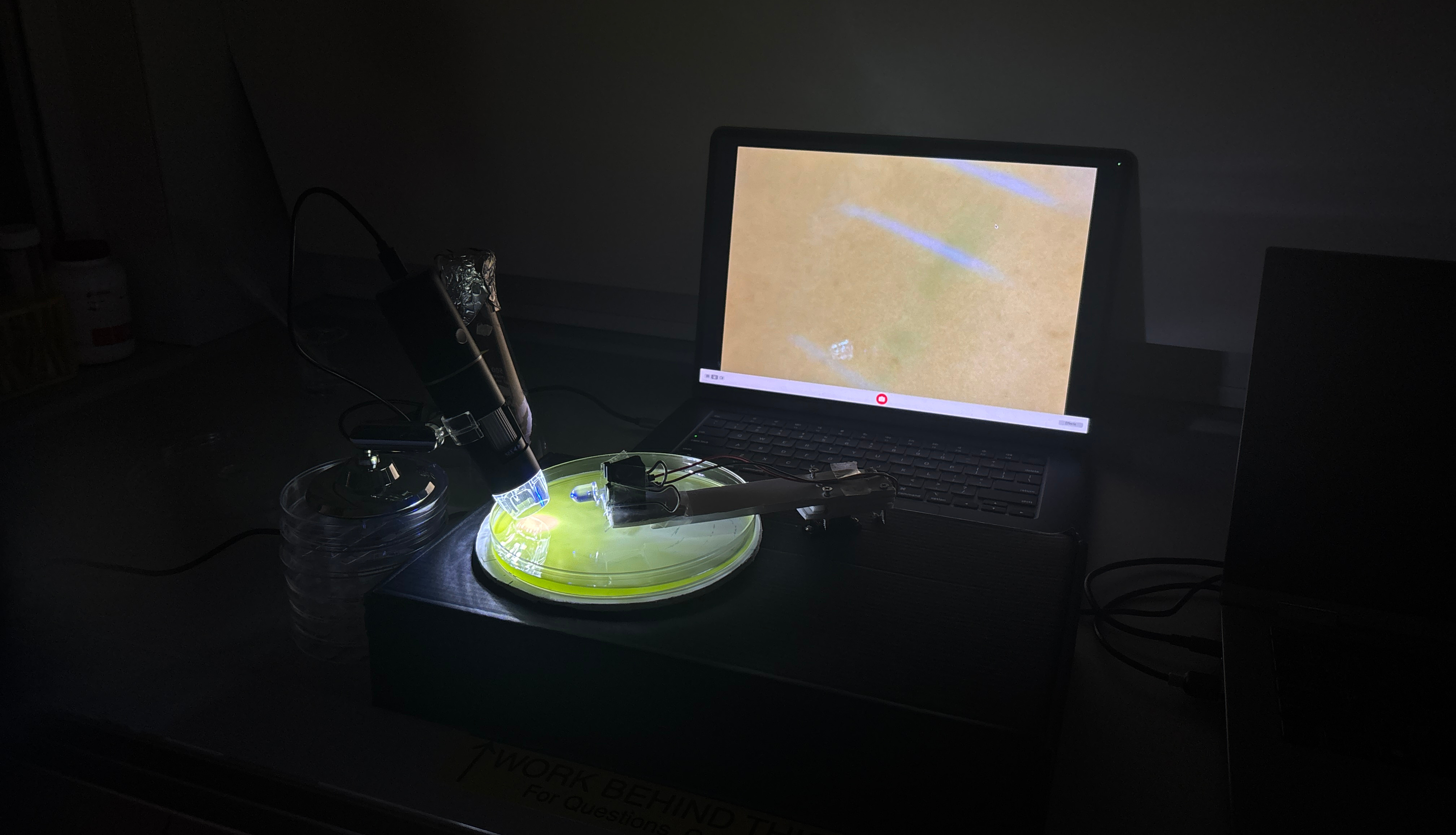
CAD & Technical Drawings
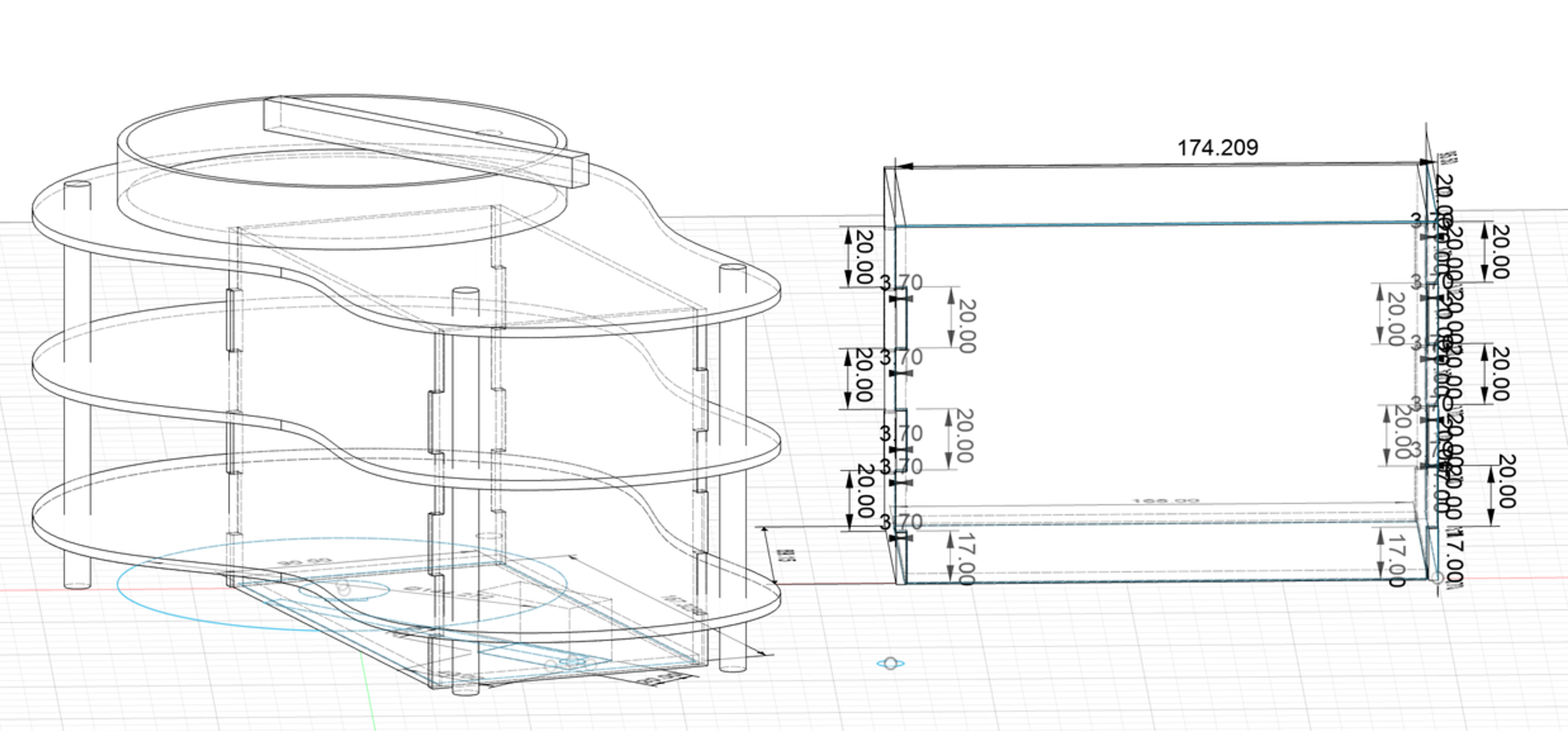
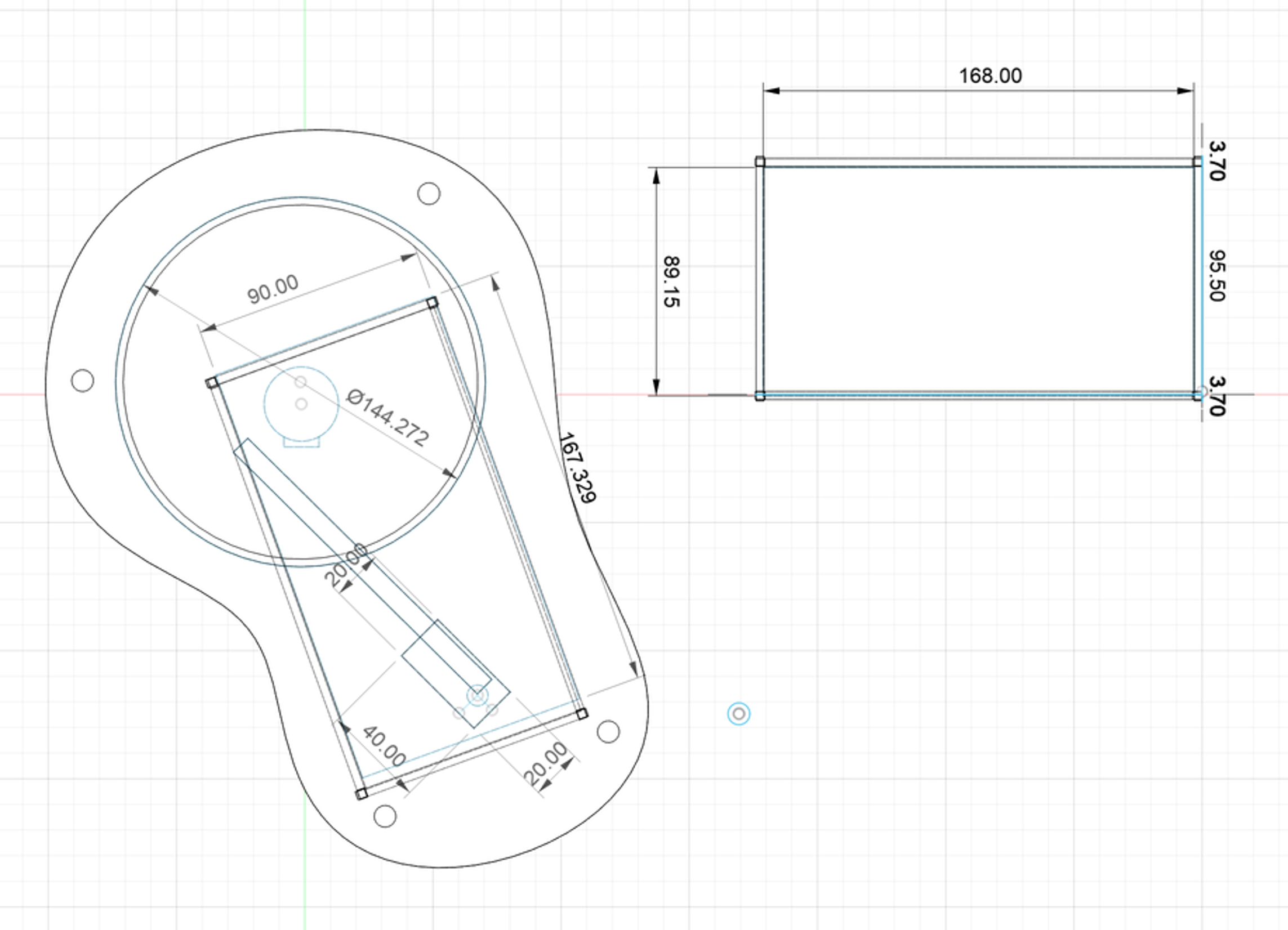
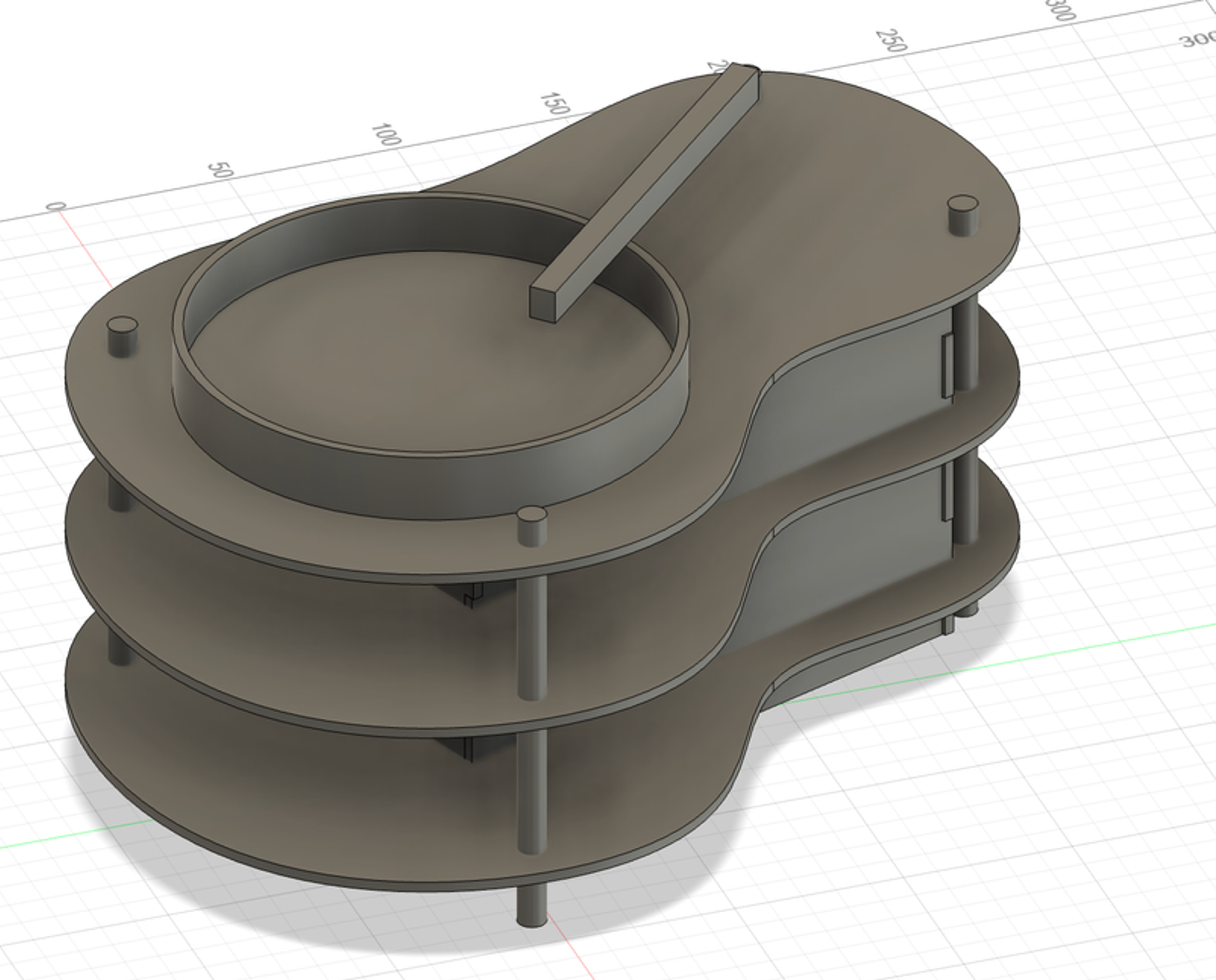
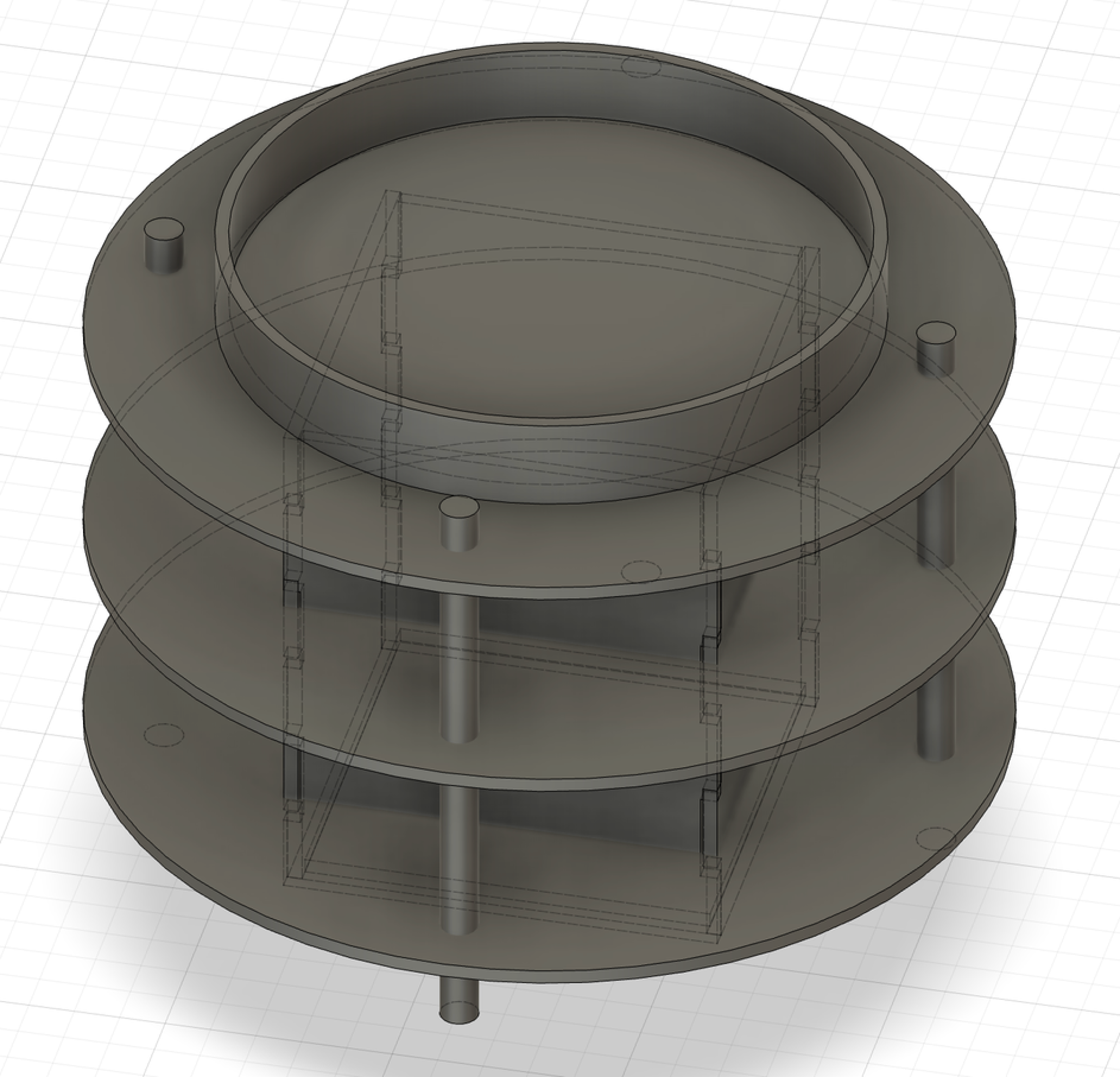
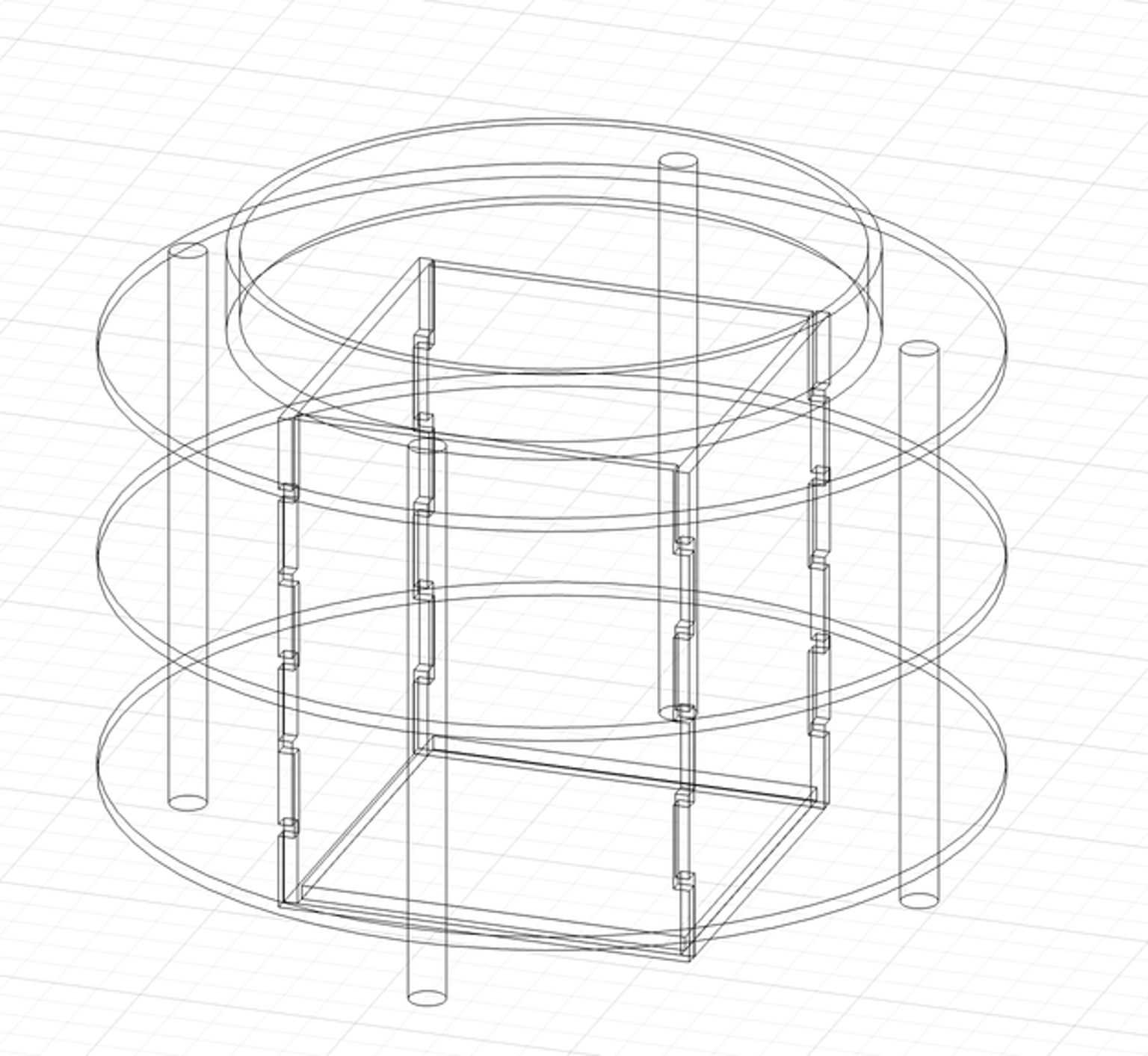
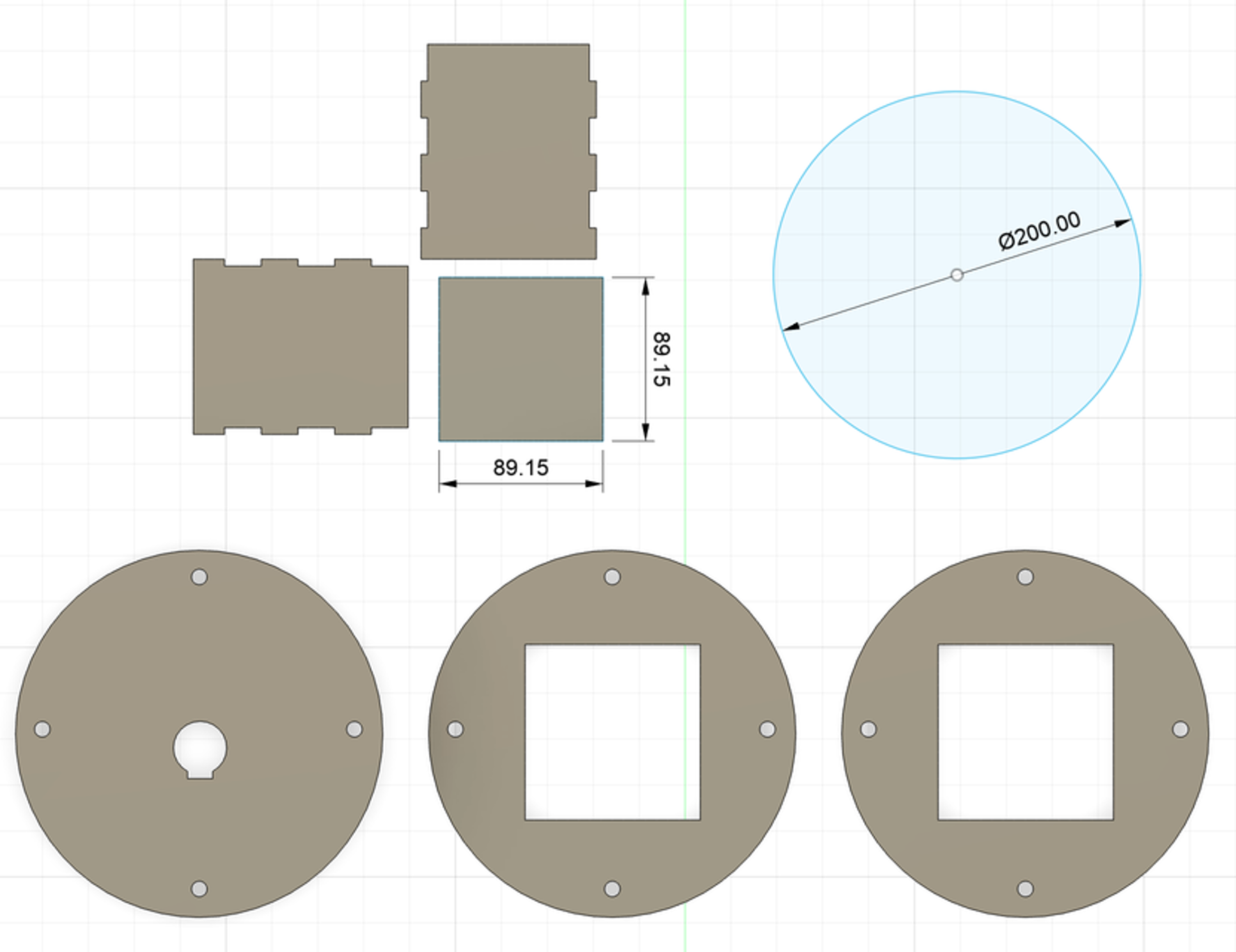
Special thanks to the Harvard John A. Paulson School of Engineering and Applied Sciences Wet Lab for supporting this research.
Results
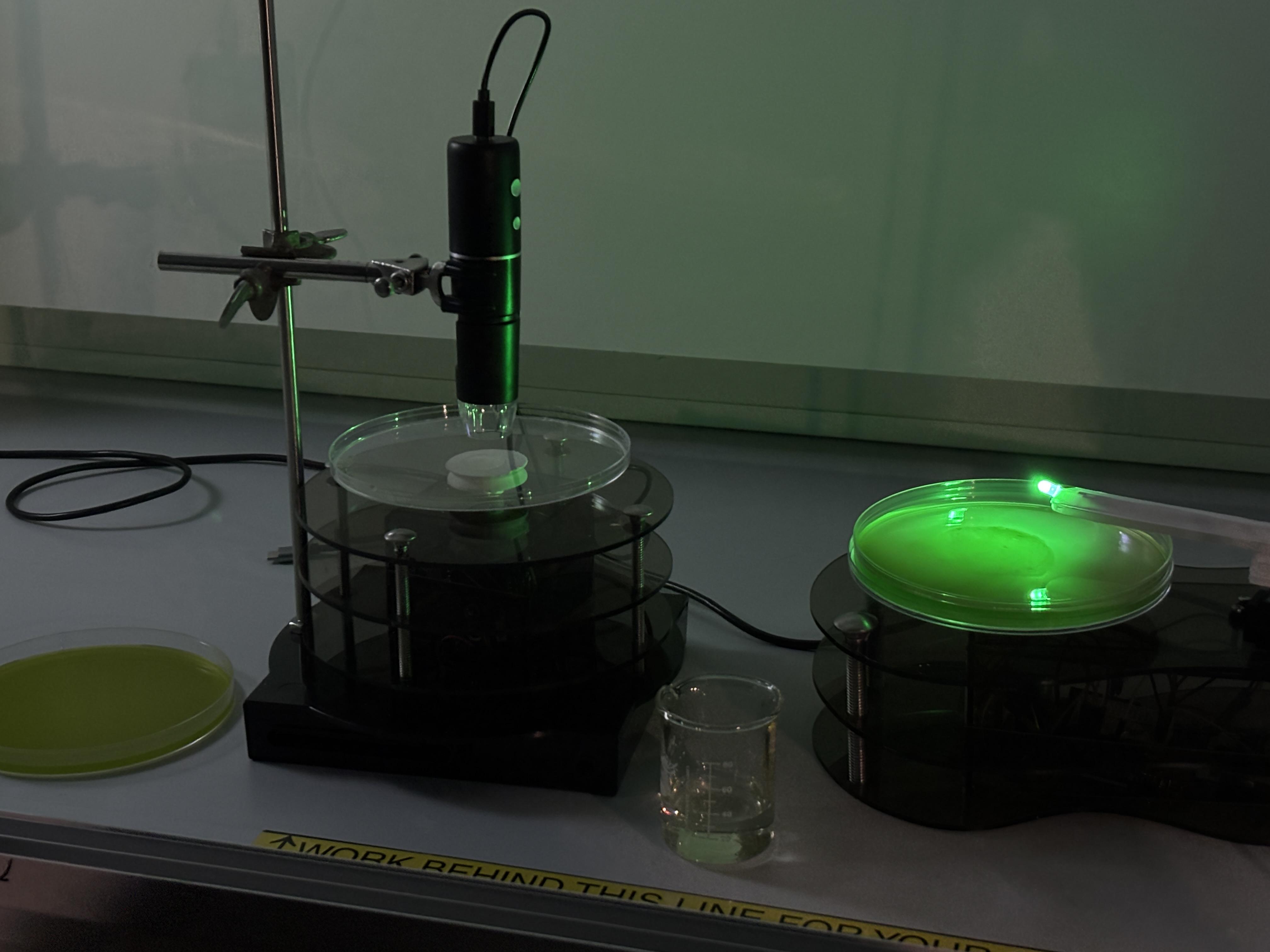
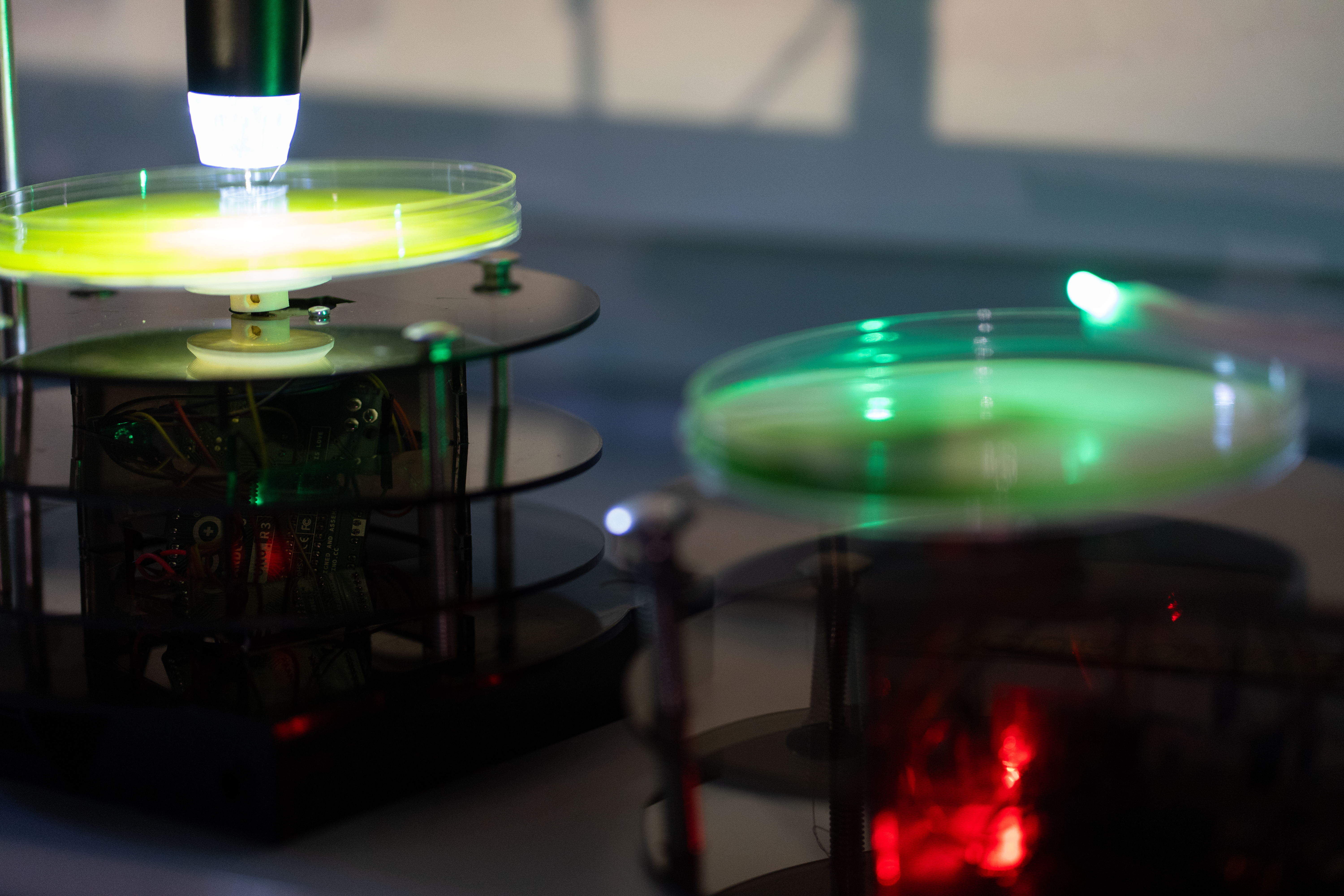
Bibliography
Picard, R. W. (2000). Affective computing. MIT Press.
Farahi, B., Zhang, H., Kim, S., Mutis, S., Wang, Y., & Dai, C. (2025). Gaze to the Stars: AI, storytelling and public art. NeurIPS 2025 Creative AI Track. openreview.net/forum?id=Eh84s4DiSC
Seow, O., Honnet, C., Perrault, S., & Ishii, H. (2022). Pudica: A framework for designing augmented human–flora interaction. Proceedings of AHs 2022. ACM. https://doi.org/10.1145/3519391.3519394
Coan, J. A., & Allen, J. J. (2004). The family of frontal EEG asymmetry: A review. Biological Psychology, 67(1–2), 7–49. https://doi.org/10.1016/j.biopsycho.2004.03.002
Harmon-Jones, E., Gable, P., & Peterson, C. (2010). The role of frontal alpha asymmetry in emotion. Biological Psychology, 84(3), 451–462. https://doi.org/10.1016/j.biopsycho.2009.09.007
Davidson, R. J. (1992). Anterior EEG asymmetry and the nature of emotion. Psychological Science, 3(1), 23–27. https://doi.org/10.1111/j.1467-9280.1992.tb00254.x